
The human-hating troglodytes who want us to freeze in the dark and eat bugs for breakfast, hate nuclear power – with a passion.
Their unhinged antipathy towards the safest, most reliable and affordable power generation system there is, can be traced to the notion that cheap and abundant energy naturally leads to peace and prosperity, which humans tend to embrace.
Those that take their cue from the Communist Manifesto do everything in their power to deny any such opportunity for the unwashed proles. And, these days, that includes railing against nuclear power.
In the first piece, Christopher Akehurst highlights their method; in the second, Michael Asten draws attention to their madness.
Nuclear escalation
Spectator Online
Christopher Akehurst
10 July 2024
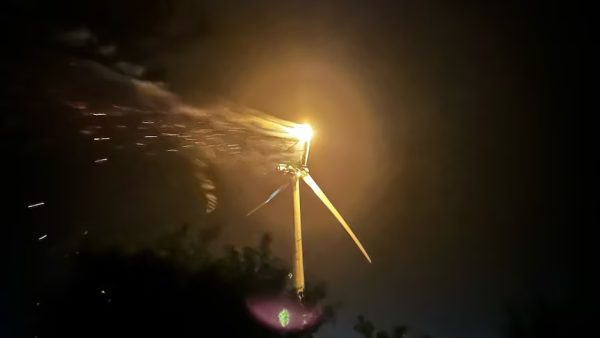
Did you see the pictures of the towering inferno as a Victorian wind turbine went up in flames? What a spectacular show, almost as dramatic as the terrifying 1970s movie. And what an eloquent symbol of the future of the so-called renewables industry if and when we find the courage to switch to nuclear energy.
[Note to Ed: typical legacy media waffle about a wind farm ‘powering’ tens of thousands of homes. Pretty clear that the flaky flibbertigibbet has no idea what powers those 70,000 homes on calm nights]
It was also a reminder of the huge difficulties we can already foresee in 20 years or so when these sinister windmills have reached the end of their working life – if you can call it that, they’re strictly part-time – and the country is littered with great heaps of obsolete rusting junk that will cost billions of dollars to remove, if in fact it can be removed. (This, I understand, will be at the expense of the farmers and other landowners who have so foolhardily allowed these ugly constructions to blight their land.) At least, once the intermittently revolving blades are stopped for good, ornithologists will be pleased, with no more massacred birds.
Going nuclear, as – at last –cautiously proposed by the federal opposition, will be a long and dirty fight. The ‘green energy’ tycoons who are enriching themselves out of taxpayers’ and consumers’ subsidies to wind and solar energy are not going to see their investments fade away – go with the wind, you might say – without doing everything they can to protect their golden geese from nuclear competition. Nor will the ‘global boiling’ ideologues for whom the quest for ‘Net Zero’ gives their stunted lives meaning. Nor will the occult forces of Marxism who dreamed up the whole ‘climate crisis’ as a means of handicapping the West economically – if you don’t believe that ask yourself why they never tell China to stop pumping coal-fired pollution into the atmosphere?
One thing they will play up are the dangers, mainly alleged, of nuclear reactors. We’ll hear a lot about Chernobyl, Fukushima, and Three Mile Island – the ABC will dredge up reels of archival film for one of its mendacious editions of Four Corners– but we won’t be told that the first was a jerry-built reactor, unsafe by any standards, the second caused by an earthquake and tsunami, by neither of which phenomena is anywhere in Australia seriously threatened, and the third the result of employees panicking when a valve broke down. And of course, neither the ABC nor any of the other organs of the Left that largely constitute our news media has ever said anything about the dangers of wind farms, so graphically illustrated in Victoria last week. What if down below, in addition to sheep, there had been one of those guided tours slyly organised by wind-farm operators to ingratiate themselves with local ratepayers who might otherwise object to these grotesque manifestations of ‘clean energy’ blighting their landscape?
Indeed, the aesthetic element of wind power seems to be ignored in communities where ‘planners’ regulate everything else down to the colour you can paint your front door. It’s as though wind farms are regarded as just part of the rural scene. There are more than 300 such farms in Australia and ‘Net Zero’ zealots want to build more. If they get their way it will be almost impossible anywhere to avoid seeing these gaunt towers bristling on the skyline, great rows of them like prehistoric monsters stalking over many a once idyllic country panorama.
The fight to keep nuclear power generation out of Australia will put previous political rows such as the ‘Voice’ into the shade. Misinformation and disinformation will be at fever pitch with tales of risk and disaster, radiation and meltdowns. Our esteemed arbitress of truth, the ‘e-Safety Commissioner’, imported from America presumably to distance federal
Governments from the unpopularity they knew she would incur, will be working overtime – or recruiting platoons of extra staff at public expense – to censor pro-nuclear voices online, who will be routinely described as ‘far right’, ‘fascist’, etc. Indeed, the campaign to discredit nuclear is already getting louder. ‘Economic insanity,’ says that paragon of responsible financial management, the Albanese government. ‘Too expensive,’ says the green-drenched CSIRO. The ABC has conveniently discovered that ‘several’ of the Coalition’s proposed reactor sites are on geological ‘fault lines’, though on one site there has been a conventional power station for decades that’s somehow remained intact.
The Left is utterly unhinged about nuclear energy. This goes back to the days when the grandparents of the kind of people who are now screaming about Palestine or tearing down statues of ‘colonialists’ threw themselves with zeal into campaigns for nuclear disarmament and ‘peace’ movements that turned out to be bankrolled by the Soviet Union and staged by its useful idiots in the West. Since then the very mention of the word is enough to send a Leftist into paroxysms of superstitious horror – look at the fuss New Zealand’s Leftist government made some years ago refusing port facilities to American nuclear submarines (they’d welcome them back soon enough if China was moving south).
Add to this the ever-rolling juggernaut of climate protest and its vested interest in sending us back to the era of sailing ships while siphoning off money from ingenuous or deceitful governments and there is not much motivation among our ruling elite, in Australia anyway, to go nuclear. But it will happen, unless we are prepared for a new dark age of kerosene lamps and cold showers for the sake of ‘saving the planet’. Voters will become fed up with the unreliability of the power supply as more fossil-fuel-based generators are decommissioned and the nuclear option will become increasingly attractive. And as nuclear energy continues to be safely employed overseas, so will opposition to it here be seen as increasingly irrational.
The Spectator

‘Puerile nuclear’ debate makes us look like fools. What will our allies think?
The Australian
Michael Asten
8 July 2024
In opposing Peter Dutton’s proposal for a pro-nuclear national policy, the Albanese government has exposed itself as hopelessly ignorant of overseas trends in nuclear power. This is most apparent when we view the politics of our two AUKUS partners, the UK and US.
Along with 13 countries of the European Union, the UK is part of a “pro-nuclear bloc” working towards implementation of nuclear energy as a major part of their energy strategies. A statement released in March called for stronger EU policies on nuclear energy, urging EU chiefs in Brussels to recognise the importance of nuclear power in the energy mix, and invest in further concrete projects and funding.
A bipartisan approach to nuclear energy has become apparent in the UK, with the then opposition leader, Sir Keir Starmer, calling for nuclear power to be a critical part of the UK’s energy mix. He laid out Labour Party policy to push forward nuclear as a way of boosting energy security, cutting costs for consumers and creating jobs.
Meanwhile, the now vanquished Conservative Party also firmed up its support for nuclear power. Whereas two years ago former prime minister Rishi Sunak told his citizens that renewables were the solution to climate change, in January he spelt out a pro-nuclear government position. He said the government’s latest support for the nuclear industry was “the next step in our commitment to nuclear power, which puts us on course to achieve net zero by 2050 in a measured and sustainable way”.
Sunak went on to say: “Nuclear is the perfect antidote to the energy challenges facing Britain – it’s green, cheaper in the long term and will ensure the UK’s energy security for the long term”.
Looking ahead five years, UK nuclear policy is now set by policies of the new Labour government, as laid out in pre-election documents. These state a goal for clean power by 2030, utilising a list of green power technologies together with nuclear power.
Britain has had nuclear power stations since 1956 and Starmer is not treading softly on nuclear. His policy states: “Labour will end a decade of dithering that has seen the Conservatives duck decisions on nuclear power. We will ensure the long-term security of the sector, extending the lifetime of existing plants.” He goes on to say new nuclear power stations and small modular reactors will play an important role in helping the country achieve energy security and clean power, while securing thousands of good, skilled jobs.
In congratulating Starmer on becoming PM, Dutton said “there is much Australia can learn” from the UK’s nuclear policy.
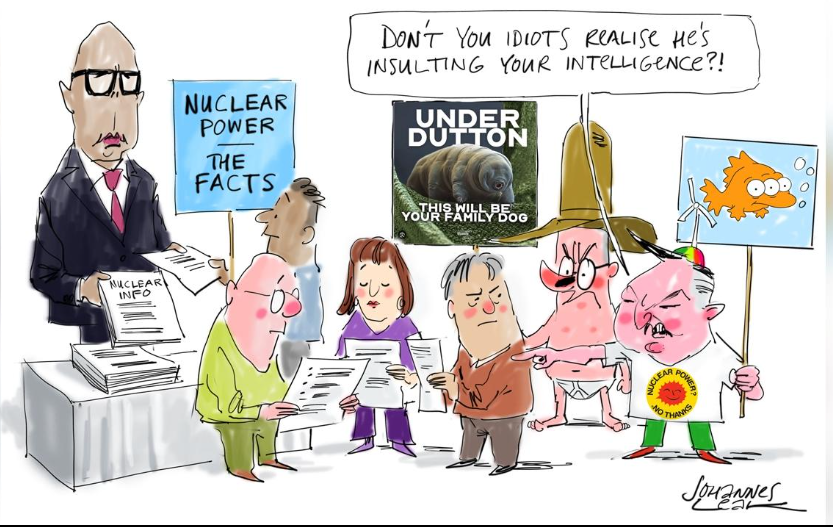
What’s important from Australia’s point of view is that recognition of the need for increasing nuclear power in the UK economy is politically bipartisan and has progressed well beyond the puerile name-calling and cartoon pictures of three-eyed fish, which have characterised our local debate during the past month.
Looking to our other AUKUS partner, the US Senate last month overwhelmingly voted (88-2) for new legislation to accelerate the permitting and creation of new incentives for advanced nuclear reactor technologies. This legislation is highly significant to our local debate in that it too embraces bipartisan support, illustrated by a declaration from the Senate committee chair, Democrat senator Tom Carper, who described it as “a major victory for our climate and American energy security”. A high-ranking Republican member of that same committee observed that “congress worked together to recognise the importance of nuclear energy to America’s future and got the job done”. It is expected that President Joe Biden will swiftly sign this legislation into US law.
Our AUKUS partnership, with its collaboration on nuclear-powered submarines, also addresses two other objections frequently raised against nuclear power in Australia; they being the lack of a qualified workforce and the question of storage of nuclear waste. Both these matters will be resolved as part of the military alliance and hence need not be an impediment to the development of civilian nuclear power.
Within Australia, our government’s contributions to such debate are characterised by Anthony Albanese saying nuclear energy will “drive up power prices, lead to more energy insecurity and lead to less jobs being created”. Likewise, Treasurer Jim Chalmers has said “it might be the dumbest policy ever put forward by a major party”. It appears that the uninformed and myopic views of our present government leaders are seriously lagging behind policies and legislation supported by both sides of the political divide in our AUKUS partners, countries with whom we aspire to work with as equals.
A prerequisite to such a partnership will presumably be an ability to conduct adult conversations on energy matters affecting our industry, trade and foreign policy for the rest of this century. Or perhaps this doesn’t matter to our leaders in Canberra?
The Australian
 STOP THESE THINGS
Testing if a non-reply comment works….
In the entire civilized world, nuclear power is safer than Teddy Kennedy’s Oldsmobile. That doesn’t count the 28 deaths at Chernobyl, built in an uncivilized country that had neither safety culture nor licensing criteria. For those Down Under who don’t keep an eye on American politics, US Senator Teddy Kennedy drove off a bridge into a canal in Chappaquiddick and Mary Jo Kopechne was drowned.
We’ve known what to do with “nuclear waste” for sixty years but refuse to do it (except in France). It’s actually valuable 5%-used fuel. Fission products accumulate at the rate of one tonne per gigawatt year. 9.2% of fission products are dangerous for 300 years. That’s 92 kilograms, or about 46 liters, per gigawatt year. Half of the rest are innocuous before thirty years, and the remainder isn’t even radioactive. Some are worth $500/gram.
Details in my book “Where Will We Get Our Energy?” Everything quantified. No vague handwaving. 350 bibliographic citations so you can check that I didn’t just make up stuff.
Beware of hyperventilating about the merits of nuclear power, for a start it will not be on tap for a decade or two, assuming that we can achieve a bipartisan agreement to make it legal.
We will have to burn coal until nuclear power is in a position to compete and that is ok because it will be cheaper. Also we get CO2 (plant food) as a bonus from coal and that is handy because it is greening the planet and the level in the atmosphere at present is barely above the level required to maintain life on earth.
Sorry Rafe, more chance of a new nuclear plant than a new coal-fired plant. The RET killed the ability of the latter to operate profitably, that’s why state governments like Victoria and NSW are quietly subsidizing them to keep them going. Until the RET ends, or gets scrapped, coal will limp along. The French aren’t great hyperventilators and have been running on nuclear for more than 60 years. Time we followed suit and started exploiting the world’s third largest uranium reserves instead of exporting it to the big industrial powers.
Testing. I haven’t been able to leave any comments for months. I’m logged into WordPress. Typically, when I click “reply” it makes me login again and then my comments go to dev null as far as I can tell. Maybe hitting “reply” instead of making a new comment will be different.
That worked.
Of course the French nuclear programme is an outstanding success although there was a short time when they went green and let the maintenance run down.
We should be running both coal and nuclear power but nuclear is illegal and don’t hold your breath waiting for that to change, followed by a rearguard action by the usual suspects to block the deployment of nuclear at
Coal is practically illegal due to the RET and you point to the absurdity of that situation where Labor governments in two states have to put coal plants on public life support. You can bet there will be more of that or we will soon be officially a Third World nation.
To maintain first world status we will have to burn coal until nuclear is on deck and we should be perfectly relaxed about that.
We could have some more coal burners up in a very small number of years, they don’t need to be state of the art, maybe we could get some out of mothballs in Britain and Germany. After all, the CO2 is a bonus!
Will nobody speak for the plants?
Listen to the trees! They are hungry for CO2.