

As sandal-wearing lefty troglodytes drop off the perch, their tech-savvy replacements are as keen as mustard on safe, reliable and affordable nuclear power.
Whereas their mung bean eating grandparents railed for decades about the purported evils of nuclear power generation, their grandkids are all in.
In a recent Newspoll the number of younger voters in favour of nuclear power was simply staggering.
The surge in support for nuclear power couldn’t have come at a worse time for rent seekers invested in the subsidised wind and solar scam. This crowd are hardly terrified of any mention of government support for nuclear power. They know full well that the unreliables can never compete on price or reliability.
With nuclear there is no need for batteries; no need for back up, which means the total cost of providing nuclear power 24 x 365 is always fraction of the cost of wind solar (which always and everywhere requires an equal capacity of dispatchable power).
Now that the majority of voters have signalled their willingness to embrace a nuclear-powered future, the Liberal/National Coalition have shifted ground and appear ready to give voters what they want.
From here on, wind and solar outfits will struggle to attract sane investors, knowing that wind and solar were never in the race.
The Australian’s Nick Cater reports on the wind and solar industries’ sudden collapse in their (ill-gotten) fortunes.
Nuclear, gas fuel Dutton’s tilt at green madness
The Australian
Nick Cater
26 February 2024
In 2004, Australian electricity bills were the fourth-lowest in the OECD. The wind and solar caper had barely begun, and coal and gas supplied 91 per cent of the National Electricity Market.
Today, after 20 years of subsidy chasing by the renewable energy industry, Australia has slipped to 10th place in the OECD rankings of end-user power prices.
Of the nine countries where electricity is cheaper, six have nuclear power stations. They are Finland, Mexico, Switzerland, South Korea, Canada and the US. Of the remaining three, the wet and hilly ones, Norway and Iceland run mostly on hydropower because that’s the way God made them. Israel, somewhat unfashionably, has stuck with coal and gas but has other things to worry about.
So much for Energy Minister Chris Bowen’s claim that the opposition is using nuclear power as a culture-war distraction. His argument collapses at the first brush with reality.
Nuclear is the only baseload alternative to fossil fuel for the inhabitants of a wide and flat brown land unless we care to drill down 40km through the Earth’s crust to tap geothermal energy, which even Bowen must concede is impractical. The minister’s forlorn grab for supporting evidence in his article in The Weekend Australian suggests he knows he is losing the argument.
Until recently, conventional wisdom held that a pro-nuclear policy would be the kiss of death for the Coalition. Yet Bowen would know how quickly public opinion is changing, even within the green movement. When voters are asked if they favour nuclear power, the numbers are usually tight.
When the pollster asks if they would consider nuclear power, however, a clear majority say yes. The readiness to consider nuclear grows when they are asked about small modular reactors, notably among younger voters.
Bowen’s foolhardy use of statistics is unnerving, given his power to call upon the resources of a sizeable government department to stop him from embarrassing himself. He writes that “by early 2025, renewable energy will surpass coal as the planet’s largest source of energy”. As the Energy Minister should know, energy differs from electricity, which accounts for just 20 per cent of global energy use, according to the International Energy Market’s latest data.
Wind and solar accounted for 2.2 per cent of the world’s energy mix in 2019 if we assume it is what the IEA means by “other”. If we include hydropower in the renewables basket, it rises to 4.8 per cent.
Oil accounts for 31 per cent, down from 44 per cent in 1971, but the gap has been filled by gas (up from 16 to 23 per cent) and nuclear (0.5 per cent to 5 per cent). Coal has remained steady at 26 per cent.
The data does not exactly leap to Bowen’s defence, even if we assume he has conflated energy with electricity. In 2019, wind, solar and biofuels generated 10.8 per cent of the world’s electricity, and hydro 15.7 per cent. Fossil thermal fuel was by far the biggest contributor at 63 per cent.
Admittedly, the IEA’s reporting is somewhat tardy, but it would take a hockey stick curve of Michael Mann-ic proportions for renewables to overtake coal by this time next year, even if it were feasible.
Bowen’s suggestion that nuclear projects fall like skittles is equally hard to substantiate. The World Nuclear Association lists 62 nuclear plants under construction in 17 countries. They include 26 in China. Some 440 more are listed as either planned or proposed, of which 196 are in China, 25 in Russia and five in Iran.
Yet Peter Dutton would be foolish to assume the argument is as good as won, or that a nuclear policy is a substitute for a convincing energy policy.
Even on the most optimistic timetable, nuclear will not be part of our energy mix before the mid-2030s and investment won’t flow without a thorough reform of the energy market.
The short answer to almost every question is gas. The Opposition Leader will have little trouble persuading his own party room, where past battles have instilled a degree of energy literacy. He should prepare for considerable opposition from his own party at the state level, however, where many Coalition MPs have formed a unity ticket with Labor and the Greens in opposition to the imagined climate emergency.
Dutton should not underestimate the quantity of the venom in the hornet’s nest he has disturbed by challenging the orthodoxy that prevails in the media, universities and government departments. As Tony Abbott discovered, these people are not prepared to surrender their dogma in this policy debate without a fight.
An even more formidable opponent will be the energy industry, where a powerful combination of virtue signalling and naked self-interest has set in.
The energy industry with few exceptions is not campaigning for fossil fuel, as renewable advocates often claim. It is busy chasing subsidies and playing with the market. It has worked out easier ways to make money than supplying customers with affordable and reliable electricity. Renewable Energy Certificates have proved be a more dependable source of revenue than the energy itself.
Labor’s planned Capacity Investment Scheme, which is supposed to underwrite 32GW of renewal energy investment, has the added appeal of letting them make money without actually turning the generation plants on. It provides an even stronger incentive to stop nuclear before it eats their lunch.
Over the past 10 years, the renewable energy industrial complex has grown in strength and sophistication. It channels tens of millions of dollars into grassroots campaigns in Australia, creating an almost bottomless war chest to fund lawfare and buy influence in politics. Renewable energy interests almost entirely underwrote the teal campaign in 2022. Dutton shouldn’t expect any of these so-called independents to back nuclear anytime soon, despite their claim to be the heroes putting integrity back into politics.
Big renewables will fight almost as hard against gas, even though quick-start-up turbines are the quickest and cheapest way to firm the supply of the intermittent energy they fitfully supply. Gas threatens their investment in batteries for the same reason nuclear threatens renewables.
The cause of common sense is not just lost. Dutton has defeated the woke Goliath once and could do so again. Corporate support for the voice, however, was mainly motivated by virtue signalling rather than crude financial self-interest.
To use the words that turned boxing announcer Michael Buffer into a household name, “get ready to rumble”.
The Australian

Most Australians would back a move to small scale nuclear power
The Australian
Simon Benson
26 February 2024
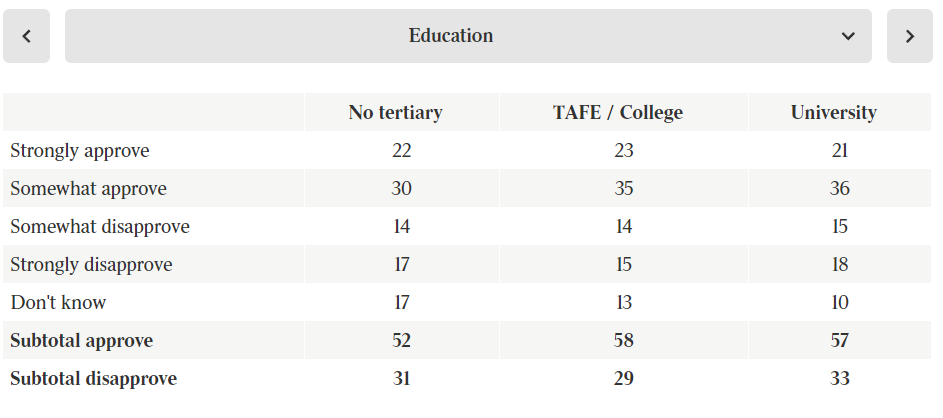
Two thirds of younger Australians would back a proposal to replace retired coal-fired power plants with small modular nuclear reactors, signalling significant and growing community support for nuclear power as a future net-zero solution.
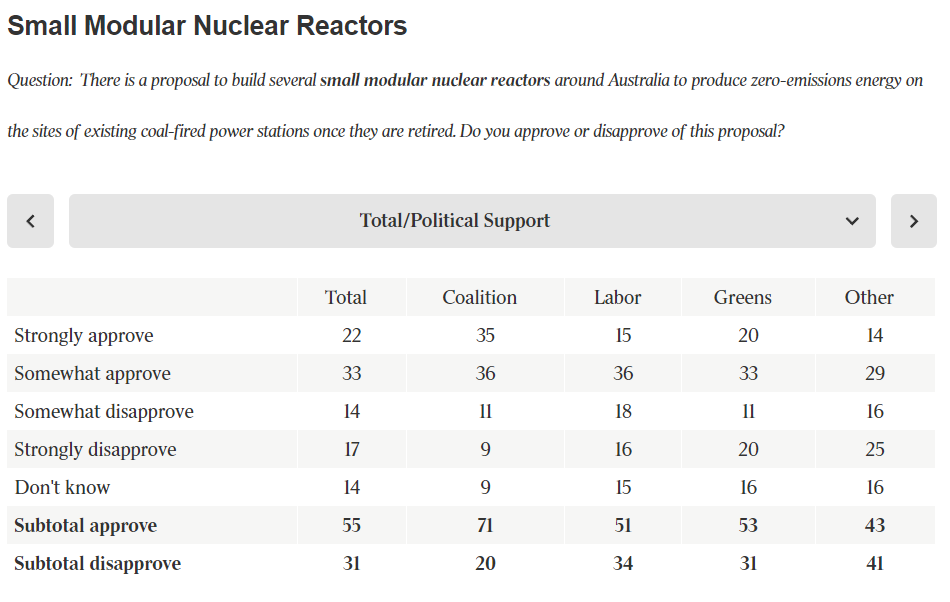
An exclusive Newspoll conducted for The Australian shows 55 per cent of all Australian voters supported the idea of small modular nuclear reactors as a replacement technology for coal-fired power.
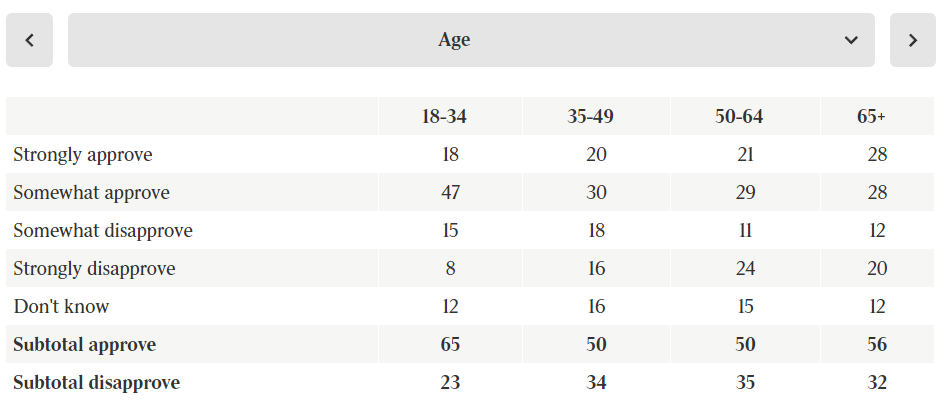
But support was highest among 18 to 34-year-olds – the demographic most concerned about climate change – with 65 per cent saying they would approve of such a proposal.
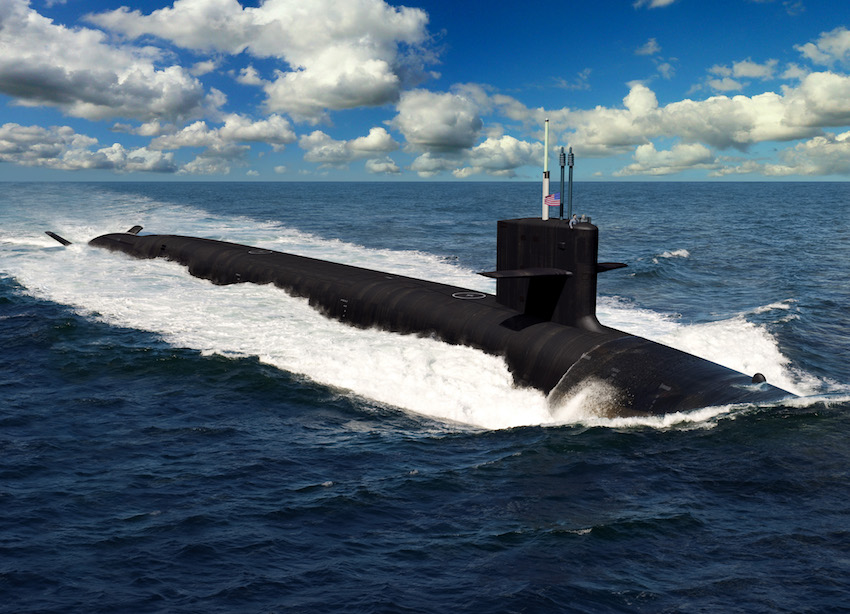
The Coalition is yet to confirm its energy policy but it is widely expected to include a network of several small modular reactors (SMRs) as a firming source of power for renewables once the country transitions away from gas and coal.
This would require overturning the 1998 ban on nuclear power and banking on SMR technology that is not expected to be deliverable until the mid-2030s. Labor has firmly ruled out nuclear as an option, focusing instead on a renewable and battery dominated energy system.
The special Newspoll survey of 1245 voters across the country, conducted from February 19-23, shows strong community support for nuclear power, with a majority across all age groups backing SMRs. More than half of Labor voters, 51 per cent, and 53 per cent of Greens voters also backed the proposal when asked if they would support building SMRs.
The poll showed that while 55 per cent of all voters supported the proposal, 31 per cent were opposed. Support was strongest among Coalition voters at 71 per cent, with 20 per cent opposed. A total of 14 per cent of voters said they didn’t know.
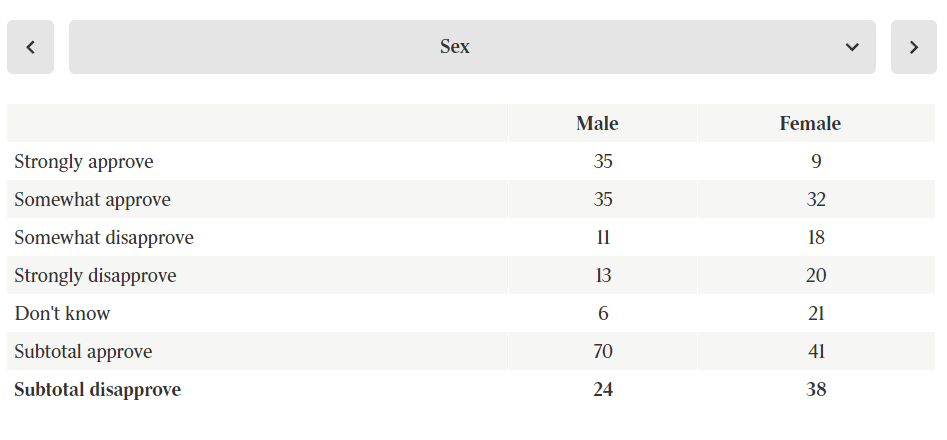
There was also a significant gender gap in support, with 70 per cent of male voters in support but only 41 per cent of female voters. Yet the number of women voters in support was still higher than those opposed at 38 per cent.
Among 35 to 49-year-olds, 50 per cent approved and 34 per cent were opposed.
The findings were similar within the 50 to 64-year-old demographic, with a 50-35 per cent split – the majority in favour.
Support rose again among those aged over 65, with 56 per cent in favour and 32 per cent saying they disapproved.
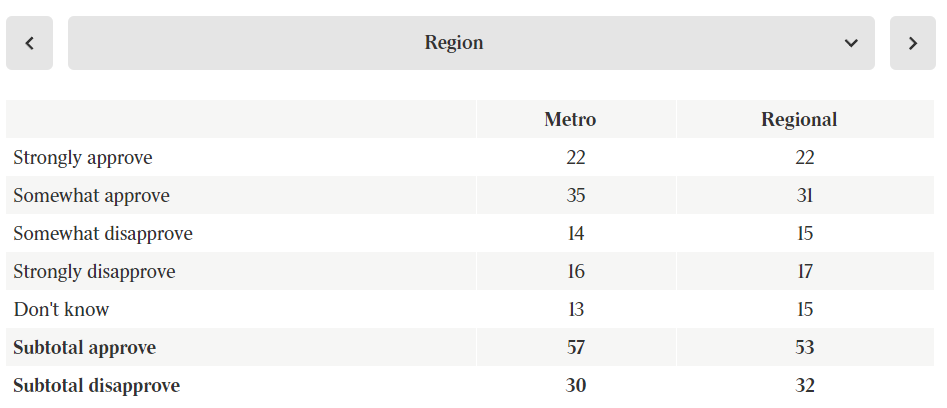
The backing of SMRs was similar across the country, with 57 per cent of metropolitan voters in favour and 53 per cent of regional or rural voters supporting the idea.
Labor argues that the cost of nuclear power is prohibitive, and that the cheapest forms of power will be wind and solar.
But the Coalition has countered that the cost of Labor’s plans is driving up power prices and risking the reliability of the network amid growing community opposition to offshore wind and transmission lines required to connect renewable precincts to the grid.
The Coalition is expected to finalise a policy that will include future SMRs in the belief that technology is rapidly advancing and will become cost effective by the time it is needed.
It also argues that the environmental footprint of SMRS is insignificant when compared to the vast geographic requirements of wind and solar farms.
Deploying them at the sites of retired coal plants would also forego the need for new transmission lines.
The Australian last week revealed that the Coalition was finalising an energy policy that would likely include nuclear power as part of a mix of net-zero energy replacement technology.
Ted O’Brien, the opposition climate change and energy spokesman who is working with Liberal leader Peter Dutton on the Coalition’s election policy, said they were adopting an “all-of-the-above” approach to “practically deliver net zero by 2050”.
“Other nations think we’re nuts as we destroy our world-famous natural environment in an unprecedented radical experiment of a ‘renewables-only’ grid while ignoring zero-emissions nuclear energy, especially given no one has more uranium reserves than us,” the Queensland MP said.
The Australian

 STOP THESE THINGS
well the concert FIFO pretty ugly boy. has announced 2 billion for the renewable carpet baggers. They are going to spend 400 million on a battery at mortlake right next to the 500 million switch on gas plant they built. instant 24 7 500mw of power. Well at least the gas will keep the battery charged for its 5 minutes of power. They are going to make regional Victoria unlivable with the 70 percent saturation of turbines solar panels on our country required for their obsolete turbines. 7 year lifespan if they don’t get a hailstorm solar panels. I am getting to the end of my working life so we can at least sell up and move to a quieter area such as ours used to be. Pity our younger generation if they try and stay.
Holland’s tulip mania began in 1634 and collapsed in February 1637 when a sailor who’d been hard at work at sea the whole time returned and, having no idea what had been going on, ate the last bulb at a sales stall. Scottish journalist Charles Mackay wrote a book about it, first published in 1841, entitled “Extraordinary Popular Delusions and the Madness of Crowds.” It’s still in print, and considered one of the six classics of economics.
He could write such a book today about many other things.