
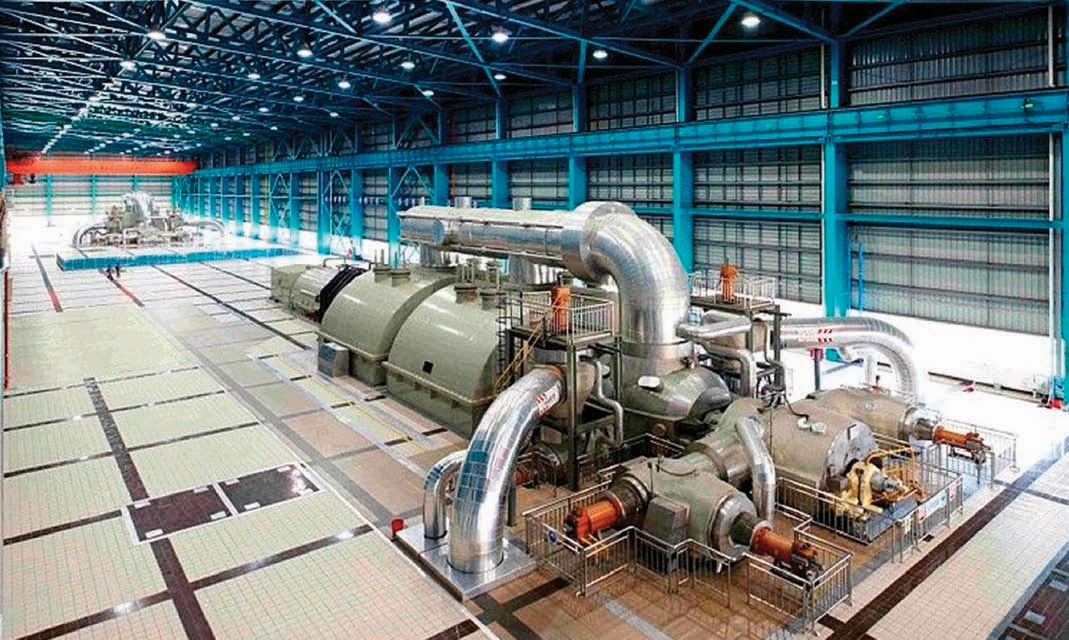
When it comes to reliable and affordable power, big truly is beautiful. There has been plenty of focus on Small Modular Reactors which, in time, promise to revolutionise the generation and distribution of electricity. However, in the here and now, in Australia the heavy lifting is being done by large-scale coal-fired generators, with gas, diesel and kerosene being used for turbine and piston-engined generation.
Occasional bursts of wind power and solar power (weather and wind permitting) get thrust into the grid, allowing operators to collect $billions in subsidies every year.
Those subsidies are helping to destroy what’s left of Australia’s reliable coal-fired power fleet.
What replaces those reliable 24 x 365 generators is a matter of delusional faith (on the one hand) and unmitigated anxiety-filled realism (on the other).
The cult that thinks chaotically intermittent wind and solar, backed up by mythical mega-batteries, can replace coal-fired power plants have another thing coming.
However, as Peter Smith explains below, those pinning their hopes on SMRs as an immediate fix to Australia’s power woes also need a reality check.
What Smith has to say about maintaining Australia’s coal-fired power generation fleet, and progressively upgrading it with High Efficiency Low Emission plants makes perfect sense. However, over the longer term, large-scale nuclear power plants are an obvious choice for a uranium rich country like Australia. Whether Australia’s notionally conservative Liberal party has the stomach for either path is an open question.
Nuclear or Net Zero. It Can’t be Both
Quadrant
Peter Smith
30 October 2023
It seems clear that the Coalition will go to the next election with an incoherent energy-cum-climate change policy. Sticking with net zero and going nuclear won’t mix. Pursuing the first will effectively rule out the second.
The Coalition is very unlikely to propose building any conventional large-scale nuclear reactors. It will punt for Small Modular Reactors (SMRs), each providing up to 300MW. For example, numbers of them would have to be linked to provide the comparable electricity supply of our largest coal power station. At full capacity, Eraring generates 2880MW.
Westinghouse, which is developing SMRs, recently provided a projected cost of US$1 billion for its 300MW model. That’s about $1.5 billion in Australian dollars. So Eraring’s power generation could be replaced for something upwards of $15 billion once all costs have been factored in. A lot of money, but a lot less than the $25 billion or more it would likely eventually cost (including transmissions lines) for storing much less power via Snowy 2.0. Assuming Snowy 2.0 is completed; which, clearly, it won’t be. It’s simply a case of when it will be put out of its misery. Cancel Malcolm Turnbull’s prime ministerial pension in small recompense for the sunk cost? Just an idle thought.
Of course, Eraring is just one of the remaining coal-power plants for the chop. Speaking at climate “summits” in July and again in October, Daniel Westerman, the CEO of AEMO, said that the “historic mainstay of the power system — coal-fired generation — is on the way out … two-thirds of coal, or 14GW, could exit the market in six-and-a-half years’ time.”
Relacing fourteen gigawatts of coal would take some 47 SMRs at a cost of about $70 billion-plus. Now we’re talking real money? Not so much. After all, Net Zero Australia, a partnership between the University of Melbourne, the University of Queensland, Princeton University and an international consultancy group, reported, also in July, that Australia would need to spend “up to $9 trillion on the transition in the next 37 years;” and, of this, $1.5 trillion by the end of the decade. Silly, unachievable, amounts of money. Still, it puts a mere $70 billion in perspective. It’s peanuts. So the Coalition and Australia are on a nuclear winner? Not so fast.
Westinghouse said it hoped to have its first (300MW) SMR operating in the United States by 2033. That’s ten years away and we are a long way from adding Australia to the queue of orders. And I assume that Westinghouse won’t be a laggard among the major companies developing SMRs.
What will Australia need to do before joining the queue and putting in its order? First, the Coalition will need to win the next election and probably the one after that. Second, it will need have the existing legal prohibition on nuclear energy overturned by the Parliament. That means getting a bill passed by the Senate. Third, it will need to identify sites for the SMRs and, critically, for high-level waste disposal. Watch out for underground bones, spiritual connections, and leftist judges of a development-denying turn of mind. Good luck.
But suppose a miracle happens and Mr Dutton eventually puts in an order. I would say you could put things on the same footing as the delivery of the first Australian-made SSN-AUKUS nuclear submarine. To wit, the early 2040s.
Before I go on, let’s never forget, when logically preferencing reliable and continuous nuclear power over unreliable and intermittent wind, solar and pathetic battery power, that refurbishing existing coal-power plants and building new efficient ones is much the best option. It is a tragedy of our age that the climate-change hoax has pretty well ruled that out. The United Nations, the EU, the ABC, the Greens, inner-city latte-sippers, Greta Thunberg, renewable-energy carpetbaggers, and many notables, would all howl. One Nation might stand up to it. The Coalition? Hardly.
But back to where I left off, nuclear by the early 2040s. Not so bad? Sadly, it is so bad. It’s too late. Westerman’s not for waiting. He’s a glass half-full man to whom dire predicaments are opportunities. Apropos:
Our Integrated System Plan is clear that investment is needed at scale. Generation from wind and solar, energy storage systems and other firming capacity, and transmission, all need urgent investment to ensure the lights stay on as our coal-fired power stations retire … the east coast power system needs to triple the amount of grid scale solar and wind by 2030, and triple it again by 2050, from 16 GW today to 141 GW by 2050, while storage needs to expand by a factor [of] 30…to 60 GW. That’s a big economic opportunity in anyone’s language, all in the best interests of energy consumers.
Letting this “big economic opportunity” slip is not on Westerman’s agenda, nor more broadly is it on the agenda of climate influencers and potentates. While things aren’t going nearly as well as hoped. Increasing costs, shortages of skilled manpower and pesky objections to ugly wind, solar and transmission eruptions are slowing progress. Nonetheless, the ship has sailed and, even if they win, no bunch of pantywaist Libs, hitched to net zero, will take enough wind out of its sails (if you’ll forgive the metaphorical pun). By the 2040s, the nuclear option will have come too late to save the day. Too much will have been invested in destroying coal and erecting wind and sun totems to reverse course.
Picture if you will an elderly Dutton weeping over the energy carnage as he pens his memoirs. If only he’d ditched net zero and plumped for coal until nuclear arrived. Yes, he won the 2024 election with a nuclear pitch. Alas, that net-zero albatross eventually did him in. What, not another blackout, he sighed, as he put down his quill in the dark.
Quadrant

 STOP THESE THINGS
GE/Hitachi have proposed re-powering coal-fired plants using up to six PRISM cores (total 1.8 GWe). Maybe they could combine more than six. Turbine, condenser, grid connection are already in place.
Nuclear waste is a much much smaller problem if you separate unused fuel (95% of spent fuel) from fission products, and then separate caesium and strontium. Caesium and strontium produce 99.4% of radiotoxicity but constitute only 9.26% of fission products (0.46% of spent fuel) and need custody for 300 years, not 300,000. Europium is 0.45% of fission products (0.023% of spent fuel), produces 0.4% of radiotoxicity, and needs 100 years’ custody. Half the rest of fission products are innocuous before thirty years, and the remainder aren’t even radioactive. Read “Rethinking High-Level Waste Disposal” by Charles W. Forsberg in “Nuclear Technology 131, 2 (August 2000) pp 252-268. https://10.13182/NT00-A3115.
PRISM is a fast-neutron breeder reactor, so ALL the unused fuel, mostly U-238, is future fuel. Contemporary reactors use only 0.6% of the energy in mined uranium; breeders can use it all. And the plutonium it produces is NOT SUITABLE for weapons! Read “Plentiful Energy” by Charles E. Till and Yoon Il Chang, for which Dr. Chang has generously given permission to post it on my web at http://vandyke.mynetgear.com/Plentiful_Energy.pdf (or you can buy it on paper from Amazon).
Dutton and the Liberals are not worth even considering voting for.
If the Libs get in at the next election they will continue with the insane madness of renewables.
Most of the meejia are just as bad as the political parties.
Very few call out the lie that renewables are cheap.
Only when blackouts occur will we see any change in policy. This will be forced onto government by an outraged population. For that reason I wish they would close down eraring power station in 2025 as originally proposed. Then I would sit down via candle light and laugh at the back pedalling by both politicians and the meejia.
This is a good article and seems an accurate analysis of the facts. Build big nuclear now for baseline power and keep an eye on Small Modular Reactors (MSR). I’ve written about nuclear energy in both non-fiction and fiction (See Chain Reaction, A Story About Power in the Age of Climate Change). SMR’s have the same regulatory hurdles that the big reactors have. But I think their prices are going to fall through the floor in the next couple years. Some SMRs are advanced miniatures of the big nuclear reactors. They will be the first commercial reactors employed. But the next round of SMR’s being tested by the hundreds around the world now, use molten fuel / coolant so they can’t melt down because they’re already melted down as part of their operating physics. They also operate at one atmosphere, what you experience at sea level. This feature makes them very safe, and allows for them to be sited along side population centers. Think of them as very powerful, small generators. I think all the classes of SMR’s are much closer to safe deployment than most people think. Understandably, we have to use the data at hand. But a price tipping point is in nuclear energy’s near future thanks to decades of fission experience, advanced alloys and chemistry , artificial intelligence (AI), and innovation. The collapse of wind and solar is inevitable, and SMRs will fill that void. Meanwhile think N2N, Natural gas to nuclear energy.
Except for nearby residents and animals. Burning chemical carcinogen causing waste is bad news and very unpopular especially for those downwind because try as you might you will never get rid of the stink. A truely bad idea.
Unfortunately QUADRANT were only able to produce the gloom & doom with this article titled “Nuclear or Net Zero. It Can’t be Both” dated 6 Nov 23. They have thrown this article out there for all and sundry and offered not one iota of a solution.
Well considering the major problem that household waste is for all councils in every state, would it not be a very cost effective solution to build fusion furnaces to dispose of municipal waste, salvage recyclable items and with the heat generated, drive steam turbines to generate reliable power and assist the community.
In simple terms a contained bed of molten sand will burn the bulk of household waste and provide sufficient power to support each community.
This concept will require manufacturing, construction, and operating jobs and would be a win – win situation for all concerned.
Randall Riseley
imepl@bigpond.com