

When Finland powered up its latest nuclear power plant in April wholesale power prices dropped 75%, almost overnight. The Olkiluoto 3 plant (above) is fully operational, generating 1,600 MW of electricity on demand (irrespective of the weather), and delivering 15% of the country’s power needs. Nuclear now provides around half of the country’s total electricity generation.
The result of adding Olkiluoto 3’s ever-reliable output to the Finnish grid was a decline in average spot electricity prices from €245.98 per MWh in December to €60.55 per MWh hour in April.
So much for the wind and solar cult meme about nuclear power being ‘too expensive’.
No, the principal problem for rent-seekers chasing wind and solar subsidies is that nuclear power works, and works, and works. It doesn’t need batteries and it doesn’t need backup.
And, because it does not generate carbon dioxide emissions during the power generation process, it provides a complete answer to those worked up about man-made CO2 emissions.
And therein lies the problem for those seeking to profit from the wind and solar scam.
As The Australian’s Nick Cater reports, the wind and solar industries see nuclear as an existential threat, with very good reason.
‘Moral’ deflections show the anti-nuclear lobby is losing power
The Australian
Nick Cater
22 May 2023
More than 17 years have elapsed since Anthony Albanese gave a keynote speech to the Sydney University Labor Club ruling out nuclear power in the fight against climate change.
Nuclear power was capital-intensive and would take 12-15 years to come online, he argued. Instead, Australia should invest in what he called “the clean and proven alternatives”. “A wind turbine can take days to install,” he said, “a solar panel only hours … We need to begin to make cuts in emissions today, not in 15 years.”
The tens of billions of dollars that have been invested in wind and solar since 2006 are just a tiny down payment on the cost of meeting the Albanese government’s target of 82 per cent renewable energy capacity by 2030.
Wind and solar have proven to be a remarkably inefficient way of reducing emissions. On the weekend, wind and solar were generating just 12 per cent of the electrons flowing to customers in the eastern states. Another 12 per cent came from hydro. The rest came from sources environmentalists have cleverly rebranded as fossil fuel. The carbon intensity of the system was well above 750g/kWh for long periods of the day.
Which begs the question: How much larger would our carbon footprint be if an ambitious, headstrong inner-western Sydney MP had not decided to make cheap electoral capital (while leading an anti-nuclear scare campaign) against the Coalition in the run-up to the 2007 election?
What if he and then opposition leader Kevin Rudd had decided to follow the Finns who were, at that moment, placing an order for a 1.6GW French nuclear reactor?
The extraordinary delays in the construction of Finland’s Olkiluoto 3 nuclear reactor have been an epic source of frustration for the Finns and an abundant source of joy for the nuclear-phobic green left. Yet all good things come to those who wait and Olkiluoto 3 finally went online in March.
On Sunday, nuclear was generating 42 per cent and hydro 23 per cent. Biomass, wind and imported hydro from Sweden made up the rest. Finland’s electricity system was 96 per cent emissions-free, a level Australia won’t reach until 2043 when the last coal generator shuts down under the plan drawn up by the Australian Energy Market Operator.
The escalation in the cost of Olkiluoto 3 from an original estimate of $5bn to $18bn was undeniably steep. Yet a 1.6GW modern nuclear reactor with a lifespan of 60 years is arguably better value for money than the $20bn or so the Albanese government is spending on new transmission lines to connect disparate sources of wind-dependent energy sometime in the future.
The Finns are reaping the returns on their investment right now. The carbon intensity of electricity to a customer in Helsinki is less than 50g/kWh, 15 times smaller than that of customers in Melbourne, Sydney or Brisbane. Which should make us wonder how serious the Albanese government really is about climate change. Is it really the most important challenge the world faces, as it sometimes likes to tell us, or merely another way of showing it cares about voters spooked by warming planning?
Digital technology allows us to track the foolishness of Labor’s energy policy in real time. Electricitymaps.com reveals that hundreds of millions of electricity customers worldwide burn electricity to their hearts’ content with barely a pang of conscience.
Some, such as the 44,000 hardy Canadians in the Yukon, are blessed with the landscapes and precipitation that allow them to operate hydro around the clock. Others, such as the French, Slovenians, Belgians or Canadians in Ontario supplement hydro with nuclear.
While most countries have some wind and solar capacity, nowhere in the world is it relied upon as the mainstay as envisaged by the Australian Energy Market Operator’s plan. Countries that have made futile attempts to decarbonise without substantial hydro or nuclear baseload capacity have paid a heavy price. In Germany, Italy and Denmark electricity costs more than 80c per kWh, more than twice the rate Australian households pay, and five times more than the Canadians.
If, however, this really is a climate emergency, then the burning question is not which technology is cheapest, but which will do the job in the quickest possible time. A trickle of environmental activists has come to the conclusion nuclear must be part of the energy mix if we are going to get anywhere close to reaching the net-zero nirvana we’ve persuaded ourselves we can reach by 2050.
Finland’s Green Party became first the green party in the world to officially let go of anti-nuclearism last May when it reclassified nuclear as “sustainable energy”.
But Australia’s environmental activists stubbornly refuse to budge, and look certain to orchestrate a formidable campaign against the Coalition at the next federal election now that Peter Dutton has put small modular reactors on the agenda.
They are fast running out of fresh arguments, however, as the mild reaction to Dutton’s reply to the budget indicates. Greens MPs failed to turn up to last week’s Senate inquiry in which a series of energy and nuclear experts, with well over a century of experience between them, made a cogent case for lifting the state and federal moratorium on nuclear at the earliest opportunity.
The Albanese government may or may not take comfort from the joint submission to the inquiry by Greenpeace, Friends of the Earth, the Australian Conservation Foundation, The Wilderness Society and seven other environmental NGOs. It was standard fare: nuclear costs a bomb, takes too long and causes accidents like Chernobyl, which resulted in thousands of deaths.
No progressive argument is complete these days without a reference to First Nations people, and documents from Greenpeace and others suggest this is no exception. “The pursuit of a nuclear power industry would almost certainly worsen patterns of disempowerment and dispossession that Australia’s First Nations communities have and continue to experience from uranium, nuclear and radioactive waste projects,” it asserts.
When activist movements start veering off on moral tangents it’s a sign they’ve given up arguing the facts. There will no doubt be more of this to come. The policy choice at the next election will be between a clean-energy future founded in practical reality or one infected by wishful thinking.
The Australian
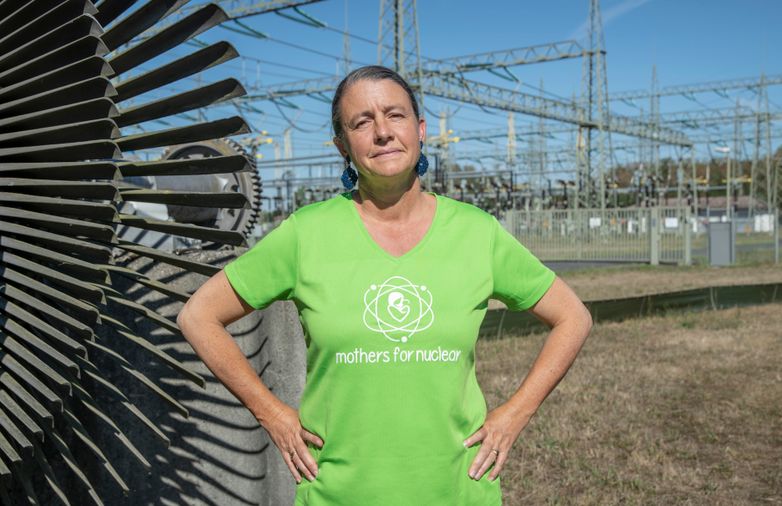
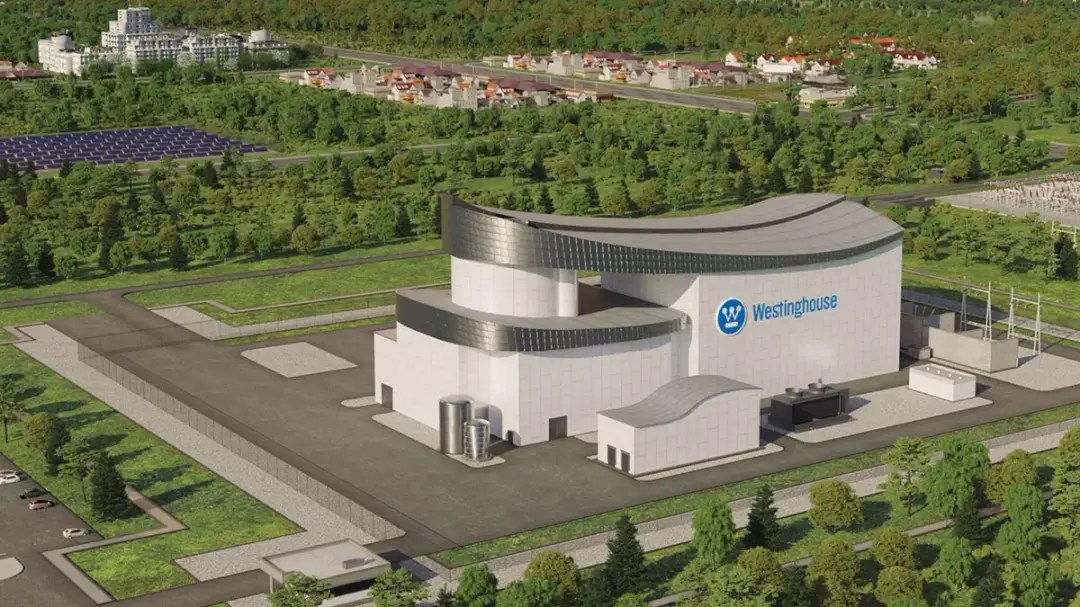
Meanwhile, in places where grown-ups are in charge, the move to build and invest in latest nuclear power generation technology is gathering pace. Westinghouse has announced the construction of 300MW nuclear reactors with enough juice to power 300,000 homes continuously, whatever the weather.
US firm unveils game-changing small nuclear reactor that can power 300,000 homes
Interesting Engineering
Baba Tamim
5 May 2023
US tech company, Westinghouse, has announced the launch of the AP300, a smaller version of its flagship AP1000 nuclear reactor, in an effort to extend access to nuclear power as demand for clean energy rises.
The AP300 nuclear reactor is scheduled to be operational in 2027 and will provide roughly one-third of the power of the flagship AP1000 reactor, according to an official press release by the firm on Thursday.
“The AP300 is the only small modular reactor offering available that is based on deployed, operating, and advanced reactor technology,” President and CEO of Westinghouse, Patrick Fragman, said in the statement.
“The launch of the AP300 SMR rounds out the Westinghouse portfolio of reactor technology, allowing us to deliver on the full needs of our customers globally, with a clear line of sight on schedule of delivery, and economics.”
Westinghouse’s decision marks a significant turning point in the nuclear industry’s effort to reinvent itself in response to climate change.
Nuclear fission reactor electricity produces no greenhouse gas emissions, and smaller nuclear reactors are less expensive to develop.
The AP300 is expected to cost around $1 billion per unit, compared to the AP1000’s anticipated cost of $6.8 billion.
It will produce about 300 megawatts of electricity, compared to the AP1000’s 1,200 megawatts, and power about 300,000 households.
AP300, a ‘game-changer’ technology
Industrial companies consider smaller nuclear reactors as carbon-free heat sources because they are more adaptable and versatile.
The Nuclear Regulatory Commission must approve the AP300 before it can be made accessible to customers in the US by 2027, but Durham feels optimistic.
“We have absolute confidence, because the NRC has already licensed every bit of this technology,” Durham told CNBC.
Transmission lines are essentially exhausted in the United States. And small reactors can be connected to the electrical grid more efficiently.
New power sources frequently require an update in transmission capacity; thus, connecting them can take years.
It would be simpler to replace one coal plant with an AP300 nuclear reactor since it will generate nearly the same amount of power as a typical coal plant, said a CNBC report.
“Unlike the previous generation of nuclear power plants, which were only used by large integrated utilities, the sizes of the advanced reactors which range from microreactors of a half-megawatt to 300 megawatts or more,” Jeffrey S. Merrifield, a nuclear energy lawyer and former commissioner of the US Nuclear Regulatory Commission, told CNBC.
This “means that there is a significantly larger number of utilities that can utilize these technologies.”
The AP300 has the same security measures as the AP1000, said Durham. Both types of passive cooling systems are extremely important, and if the AP1000 had been in use at Fukushima, the incident would have been no issue.
“This is a game-changer technology,” he told CNBC. “If the AP1000 had been in operation at Fukushima, it would have been a total non-event.”
The AP300 is an important step in extending access to nuclear electricity for the US market, even if there is still a strong demand for large reactors outside of the United States.
Interesting Engineering
 STOP THESE THINGS
When ever I post a comment it always shows up as coming from RATIONAL POWER PRODUCTION which is something I know nothing about!
Nick Carter has provided a very good article publicizing Finland’s nuclear power progress, however, has missed the opportunity to highlight their nuclear waste solution. The Onakalo nuclear waste facility is the first facility to gain IAEA approval as a perminate storage solution for nuclear waste.
Nick Cater writes…”Finland’s electricity system was 96 per cent emissions-free, a level Australia won’t reach until 2043″
What a load of drivel! This is BS!
I would suggest that he does the math. Stop repeating the propaganda from insane politicians.
Unreliables require backup. Battery technology and storage are not the answer. This is like taking a bucket of water to put out a bushfire. As for “the battery of the nation”? Snowy 2.0 will consume more power than it delivers – so it is a nett consumer of electricity.
If Eraring power station closes down in 2025 as proposed, (which is looking less likely), I guarantee that blackouts will become a regular occurrence.
I wish journalists knew at least a little bit about the topic on which they are opining/reporting about.
The GE/Hitachi PRISM (Power Reactor Innovate Small Modular, or Power Reactor Inherently Safe Modular), available in 150, 300, and 360 MWe sizes, was approved by the US Nuclear Regulatory Commission in 1994. GE/Hitachi await orders.
Van Snyder, I believe that GE Hitachi are marketing their BWRX 300 SMR and have their first contract with Ontario Power. It is to be installed at their existing Darlington power station site.