
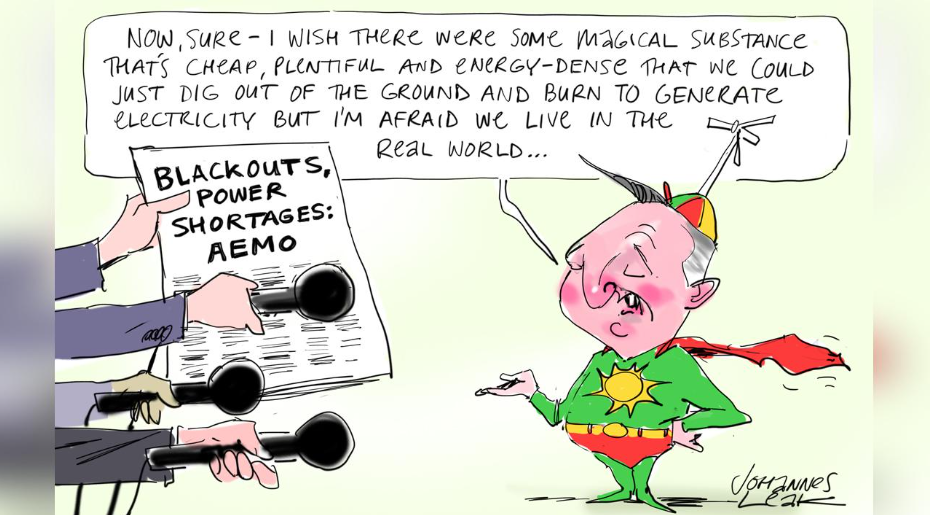
Around the globe, the proles are on the march. They’ve worked out that the wind and solar ‘transition’ is the cause of their crushing power bills. In the US, contrary to almost every pundit’s prediction, Donald J Trump stormed home with a very convincing victory, grabbing control of every level of government. Trump’s promise of policies that will provide Americans with reliable and affordable energy was seized on by working-class voters, of all shapes and sizes. The intelligentsia, predictably enough, have gone into total meltdown. And the ramifications of a Trump administration are not limited to making America great again. Every country in the world is taking serious notice and preparing for what comes next.
Ditching the suicidal net-zero carbon dioxide emissions targets set by his predecssors will be first on the President’s agenda come January.
While Europe and Britain continue to pay lip service to the net-zero mantra, their policymakers have all announced a major shift in attitude to nuclear power. Across Europe, countries with any interest in peace and prosperity are increasing their nuclear power generation capacity or moving fast to build their first plants.
Meanwhile, Australia’s hard-green-left Federal government maintains that Australians will soon be powered by nothing but sunshine, breezes, batteries and water being pumped uphill to generate occasional power on the way back down. Never mind that Australia is the driest continent on Earth; and mostly flat as a tack.
Chris Uhlmann is rare amongst his peers, in that he has actively endeavoured to understand the energy system – engaging his brain well before activating his mouth. The results show. Unlike his compatriots, Chris didn’t drink the Kool-Aid and is quick to point out the bleeding obvious. Namely, that chasing an all wind and sun powered future is not only staggeringly costly, it is, thanks to the weather and sunset, technically impossible.
The astonishing cost of our net-zero delusion
The Australian
Chris Uhlmann
16 November 2024
The discord between reality and rhetoric is playing out in real time as the politics driving a warp-speed shift from predictable electricity generation collides with the physics of delivering constant power with inconstant supply.
It is impossible to overstate the stakes if the energy transition runs off the rails. Electricity is civilisation’s nervous system; without it, everything will collapse. What is happening is akin to conducting a proof-of-concept experiment on an incubator with a child inside.
And red lights are flashing on energy transitions here and around the world.
In Australia, the target for the eastern grid is huge: Labor wants 82 per cent of generation on the National Electricity Market to come from wind, solar and hydro power in the next six years. That’s more than double what it is now.
In fact the gap is bigger than it first appears, because the maximum generation capacity boasted by weather-dependent energy gatherers is no measure of the power they typically harvest. At best, onshore wind farms will deliver 40 per cent of their nameplate capacity. Solar panels sit at under 30 per cent. So at least twice as much random generation must be built to cover the retirement of every reliable power producer.
Labor’s ambition is also built on a promise: the future will be greener and it will be cheaper. Showcasing his formidable rhetorical skills, Climate Change and Energy Minister Chris Bowen has distilled this to a soundbite: “Renewable energy is incredibly cheap because its fuel is free, because it’s the sunshine and the wind.”
In another flourish, he muses: “The sun doesn’t send a bill. The wind doesn’t send a bill.”
Alas, electricity retailers do send bills and everyone who owns or rents a property, and every business, knows they are getting bigger. Turns out, turning sunshine and wind into electricity costs money. And converting widely dispersed on-and-off generation into a reliable power supply is staggeringly expensive.
Working on a documentary about the energy transition for Sky News, our team set out to speak to people who have real-world experience with energy and in running electricity systems.
What we found was everywhere wind and solar displace reliable generators to become a dominant source of power, two things happen: electricity prices rise and energy security falls.
The reasons are at once complex and simple. In essence, it’s all about balance. The iron law of a bulk electricity system is that supply must perfectly match demand, every second of every minute, 24 hours a day, seven days a week. That finely tuned balance is reflected in the system frequency.
Energy gatherers cannot match power demand with supply because their fuel is literally as predictable as the weather. To turn occasionally available power into a reliable electricity system, the gatherers have to be connected to a complex and expensive life-support system the old grid did not need.
Wind and solar plants cannot set the grid’s frequency, or maintain its stability. So essential system strength services that were once delivered as a by-product of generating electricity also have to be recreated and financed.
In North Carolina, Michael Caravaggio is a head of research and development at the world-leading Electric Power Research Institute.
“We built our electricity systems around the world with essentially dispatchable technologies for matching frequency,” Caravaggio says.
“What do I mean? If you use more electricity, I can give you more electricity. Use less, I can turn them down. With wind and solar it’s not like that. So the sun rises, that’s when we have electricity. The wind blows, that’s when we have electricity. Doesn’t care what you or I do in terms of that electricity. That’s a small problem when we build some wind and solar. But that becomes a bigger and bigger problem as these technologies scale.”
Sitting in the real world is Jim Robb, chief executive and president of the North American Electric Reliability Corporation. Appointed by congress, his unique job is to oversee the reliability and security of the bulk power system across the entire interconnected American grid, which includes all of the United States and parts of Canada and Mexico.
“There’s a line that a lot of people will latch onto that as we move toward more renewable sources of energy, that costs will decline because we don’t have to pay for fuel,” Robb says. “But we do have to pay for the capital required to convert free wind and free sunshine into electricity. We’re going to have to pay for the capital to distribute it to customers, and we’re going have to pay for the creation of those reliability services.”
This is no surprise. Anyone watching the cautionary tales of South Australia, Germany and California could read the signals years ago that the rhetoric of a cheap, reliable green power was a fraud. It was obvious when Labor produced its energy policy, including the mythic figure of a $275 drop in power prices. Bowen was privately warned not to claim prices would fall.
And the dirty little secret in the construction of the green grid is that it cannot work as an electricity system without gas.
Daniel Westerman, chief executive of the Australian Energy Market Operator, is the man tasked with developing the system plan to deliver Labor’s pledge to decarbonise the eastern National Electricity Market. He says gas will be essential to ensure the reliability of the grid – to 2050 and beyond – as the cost of trying to cover long periods of low wind and solar generation without it would be prohibitive.
“We will have batteries, we’ll have pumped hydro,” Westerman says. “But we’ll have times like we’ve seen earlier this year where there’s not much wind and there’s not much sun, and the gas-fired power stations are really required to back up the reliability of the grid. They are there as the ultimate backstop.”
The energy transition road map is the Integrated System Plan developed by AEMO. It shows that, as coal retires, 15 gigawatts of gas will be needed for the eastern grid to operate securely to 2050 and beyond. This is not just a little bit of gas, it’s enough to power 15 million homes. As a future grid dominated by wind and solar generation cannot form a reliable electricity system without gas, the fossil fuel’s role is more backbone than backstop.
This plan is being built on the railroad tracks laid down by the government. And, lest we forget, last year Bowen told the world climate summit that “fossil fuels have no ongoing role to play in our energy systems” if the Paris targets are to be met.
One begins to wonder if the minister understands that words have meaning. The distance between what he says and what is real is as vast as the generation gaps Labor’s decarbonisation ambitions are punching in the electricity system.
There is another, terrifying, possibility that would explain this reality gap: that the minister, his staff, his department and all the states and territories that have been pushing ambitious renewables targets for a decade have no idea what they are doing.
That Australia’s political class, and the bureaucrats who advise them are breathtakingly, stunningly energy illiterate. That they have been ruled by virtue signalling and not facts.
This is now my working theory. Here is the evidence.
If any of them did understand the limitations of the technologies they champion, then all states building a wind and solar-dependent grid would have also vigorously pursued the development of domestic gas supplies.
As they raised their targets for more wind and solar, they would have raised their ambitions to secure plentiful gas.
More supply would mean lower electricity costs and would have buttressed the grid, to allow for the orderly retirement of coal generation.
They did the opposite. Victoria imposed a ban on gas exploration and NSW did nothing to encourage it. Worse, energy ministers demonised the fuel. The critical gas shortages all now face is entirely a product of not just bad, but culpably ignorant, policies.
If any of the energy ministers who signed up to Labor’s Capacity Investment Scheme actually knew what they were doing, then gas would have been on the menu of vital technologies needed to support the energy transition. Yet they delivered a plan which specifically excludes gas. Uniquely in the world, Australia has a capacity investment scheme which forbids investing in dispatchable capacity.
If the politicians and bureaucrats had paid attention to what is happening in any jurisdiction attempting a similar transition, then they might have picked up a pretty significant signal.
In June 2022, The New York Times reported that the EU had “endorsed labelling some gas and nuclear energy projects ‘green’, allowing them access to hundreds of billions of euros in cheap loans and even state subsidies”.
Matt Kean was the NSW energy minister and is now Climate Change Authority chairman. As recently as last month he said “people calling for gas to be included in the capacity investment scheme are trying to stop renewables”.
“That just seems like a recipe for much higher electricity bills for Australian consumers, and they’re bills that we can’t afford to pay,” Kean said.
So one of the key figures pushing for a weather-dependent grid appears not to have read, or does not understand, the future system plan he champions.
For his benefit we will return to Westerman: “What we know is that as we get to a net-zero system, it’s really expensive if we don’t have a dispatchable source like gas.”
Is it not just a tad disturbing that Kean’s views are so profoundly discordant with the analysis that underpins the system he is promoting? Again, for his benefit, his preferred grid does not work without gas. And, without gas, it will be even more expensive.
Kean also clearly has no knowledge of what’s happening in other countries attempting the same transition, unless he now believes that by subsidising gas the EU is “trying to stop renewables”.
It gets worse. Under questioning before a recent Senate estimates hearing, Kean repeatedly asserted that the system plan “is a look at the counterfactuals as to other sources of generation to provide the cheapest replacement cost of an existing system”.
This is wrong. Examining the cost of coal and nuclear power is explicitly prohibited because the plan is confined by the guardrails of every state and federal policy, including the 82 per cent renewable target. What is being built is not the cheapest system for consumers, it’s the “lowest-cost pathway”. They are two very different things, which is why Westerman will not follow his political masters’ lead in promising lower power prices.
The thought that those leading the net-zero charge might be clueless has clearly occurred to another inhabitant of the real world, Woodside chief executive Meg O’Neill.
“One of the things that I think has been challenging is we’re not using data to have the conversation,” O’Neill says.
“We’re using aspiration. We’re using goals. But the fundamental data that will help us understand what’s required to get to the place we want to be, that’s not been laid up for the Australian people.”
And how much back-up of gas, batteries and pumped hydro will be needed to support the so-called net-zero grid?
“What we’ve seen is that you need to manage those zero output hours from wind and solar,” Caravaggio says. “Unfortunately they always happen. So you need essentially a hundred per cent back-up for different periods to cover that need. That is an evolving challenge to figure out the economics and how to make that affordable. Right now, what we typically see is a significant gas build out.”
One hundred per cent backup.
So we are building two systems. The one being advertised and the shadow system needed to ensure the security of supply. And, in a profound irony, the crucial second system has been actively undermined by those championing the first.
In an electricity system, the term for a catastrophic event is cascading system failure. It begins with an initial fault which amplifies through the grid and ends in a widespread blackout. The lights can go out within a minute.
If the mob wakes up to the fact that what was promised by Bowen can never be delivered, or the lights go out, then Labor will learn what a cascading system failure looks like when it is applied to politics. It will put the lights out on the government in a heartbeat.
The Australian

Clearly on a roll, Chris backed up his op-ed above, with a brilliant documentary on Sky: The Real Cost of Net Zero, which we highly recommend.
Those with a Sky subscription shouldn’t hesitate to tune in. Those without, can watch if you sign up for a 1 month subscription for AU$5 – using this link Sky News Australia documentary ‘The Real Cost of Net Zero’,
Chris provides a précis of the documentary in the piece below.
‘The Real Cost of Net Zero’: Inside the Albanese government’s renewable energy push and what it means for struggling Australians
Sky News
Chris Uhlmann
18 November 2024
Australia is in the middle of an energy revolution.
The Albanese Government wants over 80 per cent of electricity to be generated by wind, solar and hydro power in the next six years.
That’s over double what it is now.
And both major parties have committed to cutting carbon emissions to net zero by 2050.
It all comes wrapped in a guarantee of a greener – and cheaper – future.
But will it be?
If the cost blows out, who pays?
If the lights go out, who will be responsible?
And the rush to net zero goes well beyond reengineering the electricity grid to reach into every aspect of our lives.
So a team from Sky News Australia set out to look at the task ahead and to ask, what is the real cost of net zero?
The system operator
The journey began in an interview with the chief executive of the Australian Energy Market Operator, Daniel Westerman. His organisation has been tasked with mapping out the pathway to building a grid where the dominant form of generation moves from coal to wind and solar.
We concentrated on the National Electricity Market, which is the eastern grid that runs from Cooktown in far North Queensland all the way to Port Lincoln west of Adelaide. It also crosses the Bass Strait to Tasmania. Along the way it connects 85 per cent of the nation’s population to generators in five states, linked by 40,000 kilometres of transmission lines.
Mr Westerman says gas will be essential to ensure the reliability of the grid – to 2050 and beyond – as the cost of trying to cover long periods of low wind and solar generation without it would be prohibitive.
“We will have batteries, we’ll have pumped hydro,” Westerman says. “But we’ll have times like we’ve seen earlier this year where there’s not much wind and there’s not much sun, and the gas fired power stations are really required to back up the reliability of the grid. They’re there as the ultimate backstop.”
As coal retires, 15 gigawatts of gas will be needed for the eastern grid to operate securely to 2050 and beyond. This is not just a little bit of gas, it’s enough to power 15 million homes. As a future grid dominated by wind and solar generation cannot form a reliable electricity system without gas, the fossil fuel’s role is more backbone than backstop.
The reason for this is that unreliable energy gatherers, like wind and solar, cannot form a 24/7 electricity grid without being connected to a complex and expensive life support system of batteries and pumped hydro. Those won’t work at scale during long wind droughts, so the system can’t function reliably without something that burns fuel to generate electricity. There are two options, coal and gas. And new coal is forbidden.
Let’s underline this point: the government plan to build a weather dependent grid won’t work without gas and will be much more expensive if we can’t get enough of it.
So, we went in search of gas.
The gas guru
In Perth we met Meg O’Neill, chief executive of Woodside, the company that began liquified natural gas exports from Western Australia. Woodside also owns half of the Bass Strait joint venture which supplies domestic gas to NSW and Victoria, but it is running dry.
The gas shortage on the east coast is, in part, a direct result of the Victorian Government’s decision to ban onshore gas exploration in that state for a decade. It has now lifted the ban, as the reality of the technical limitations of wind and solar finally dawn.
This, late conversion, has come a little too late.
“It’s hard to make a long-term investment decision when you have 10 years of history saying you’re not welcome,” Ms O’Neill says.
The company is doing what it can to keep the gas flowing and the lights on.
“So there’s things that we’re doing, you know, trying to just squeeze as much gas out of the fields as we possibly can to maximise recovery. You know, that’s good for us as a business. It’s good for the state as our customers. But to do anything more material, you know, it’s a five plus year lead time.”
Ms O’Neill is also a chemical engineer by training. She points out that the journey to net zero goes well beyond just retooling the electricity grid because fossil fuel is buried in all aspects of our built environment.
“It’s in our clothing, it’s in the furniture we’re in, it’s in our cars. It’s, it’s in our cell phones. Um, it’s a feedstock to so many products and I, I think most people just don’t understand, uh, how oil and gas is part of everything we do in our modern life. And what’s being proposed is to ramp that back dramatically in the upcoming 25 years.”
The chocolate maker
Most of us never stop to consider how the world actually works. How things are made. How fossil fuel is so deeply embedded in our built environment that we never actually see it.
Take chocolate.
The ovens and boilers that make Cadbury’s Freddo frogs run on gas.
Cabdury is owned by Mondelēz International and its Australian president is Darren O’Brien.
“Yeah, it’s not something that logically comes to mind,” Mr O’Brien says. “But certainly in a lot of food manufacturing environments steam and hot water are critical requirements. To be able to do that, you normally have boilers because you need to get to 90 degrees or more, and boilers are most efficiently run and in most environments these days are run on gas.”
The long run plan of the Albanese Government is that most users of industrial gas shift to electricity. Mr O’Brien says that is easier said than done.
“Electrification is certainly an attractive option, but it hasn’t been perfected. The technology, it’s certainly not as efficient, it doesn’t have the speed. So there’s still advances required to be able to electrify the boilers.
Then there is the cost, which business would have to bear and which would, ultimately, be passed on to consumers.
“I know when we look at the boilers, we start talking numbers in the tens of millions of dollars and that’s just at the one site down in Claremont.”
And the cost of energy is already crippling.
“Our energy prices in the last five years have gone up more than one third and our gas prices have doubled.” Mr O’Brien says “I know talking to all my peers across the manufacturing sector, energy is one of the key topics that they will talk to first.”
The reliability czar
In Washington is a man with a job that is unique in the world of electricity generation.
Jim Robb is chief executive and president of the North American Electric Reliability Corporation. Appointed by Congress his corporation oversees the reliability and security of the bulk power system across the entire interconnected American grid, which includes all of the United States and parts of Canada and Mexico.
He is dubious about the call to electrify everything.
“If we were to electrify everything that would mean we would have to quintuple the size of the electricity grid in North America,” Mr Robb says. “I just don’t see that happening.”
He notes that as wind and solar generation has grown across North America the systems have suffered challenges with integration.
“The grid we inherited from our grandfathers, with largely firm fuel supply, you knew within a high degree of confidence that a particular asset would be available to serve load at any point in time. Now we’ve moved towards a system that has much more uncertainty in fuel supply. In this case the fuel is the sunlight and wind. And those are both difficult to forecast at the level of precision that we need for the electric grid.”
His job is to make sure these technologies are matched with the existing system and is agnostic about the form of generation. His key concern is that electricity meets all of the demands its customers have for it.
“We clearly have been putting a very significant priority around carbon and the environmental footprint of those assets entirely appropriate given the implications of carbon in the atmosphere. But we’re now realising that, hey, we’re creating reliability issues for ourselves and we’re creating affordability issues as well. So… I believe we’re going to have to get those back in balance.”
Part of the problem with making the system affordable is technical difficulty, and breathtaking cost, of trying to cover wind and solar supply gaps with grid-scale storage.
“My personal view is that natural gas is going to play a very key role in the electric sector for a very long period of time. At least until we have a viable technology for long duration energy storage that can be scaled to the level of terawatts of capacity. Right now, we don’t have a technology that can do that in any sort of an affordable way at that kind of scale.”
The electricity man
In North Carolina, Michael Caravaggio, is a head of research and development at Electric Power Research Institute.
This not-for-profit body has spent 50 years leading the world in researching how to deliver “safer, more reliable, more affordable, more environmentally responsible electricity for society”.
Mr Caravaggio walked the Sky documentary team through the basics of electricity generation.
“We built our electricity systems around the world with essentially dispatchable technologies for matching frequency,” Mr Caravaggio said. “What do I mean? If you use more electricity I can give you more electricity. Use less, I can turn them down. With wind and solar it’s not like that. So the sun rises, that’s when we have electricity. The wind blows, that’s when we have electricity. Doesn’t care what you or I do in terms of that electricity. That’s a small problem when we build some wind and solar. But that becomes a bigger and bigger problem as these technologies scale.”
He says that decades of research at EPRI have underlined one thing, the need to have a blend of different generation sources.
“If you go too significant on any one technology, you’ve a lot of risk and a lot of incurred costs. If I want to go to higher and higher penetration because the issue with that generation grows bigger. The fact that the sun sets every night is not a problem if I have five per cent of my energy from solar. It is a significant issue if I get a hundred per cent of my energy from solar.”
He points out the limitations of grid-scale storage, saying there is no battery technology that can run a city like San Francisco for four or five days.
“When we’re talking about battery technology, we’re really looking at four, maybe ten hour technologies and they’re nowhere near size to run large metropolitan areas or regions for days on end.”
So, what do you do if you want to build a grid around on-again, off-again wind and solar energy gatherers?
“So what we’ve seen is that you need to manage those zero, those near zero output hours from wind and solar. They happen. Unfortunately they always happen. So you need essentially a 100 per cent backup for different periods to cover that need.”
Let’s underline that: 100 per cent backup.
Stream the Sky News Australia documentary ‘The Real Cost of Net Zero’, where Political Contributor Chris Uhlmann investigates the true cost of Australia’s race to renewable energy.
Sky News

 STOP THESE THINGS
The Labor governments in Australia will not listen to reason simply because it would be embarrassing for them to reverse the pro renewable rhetoric or admit failure to achieve hyped objectives and there are too many vested interests that may need to be accommodated with deals that have not been transparent to the voting public.
Michael Caravaggio said there is no battery technology that can run a city like San Fran Sicko for three or four days. The problem is much worse. Using real data from the California Independent System Operator I calculated the requirement is closer to fifty days. Read http://vandyke.mynetgear.com/Worse.html . The problem is similar in USA as a whole, Denmark, German, and EU as a whole. I tried to analyze Australia using the same methods, but AEMO data are a confusing mess, and nobody responded when I asked for help.