
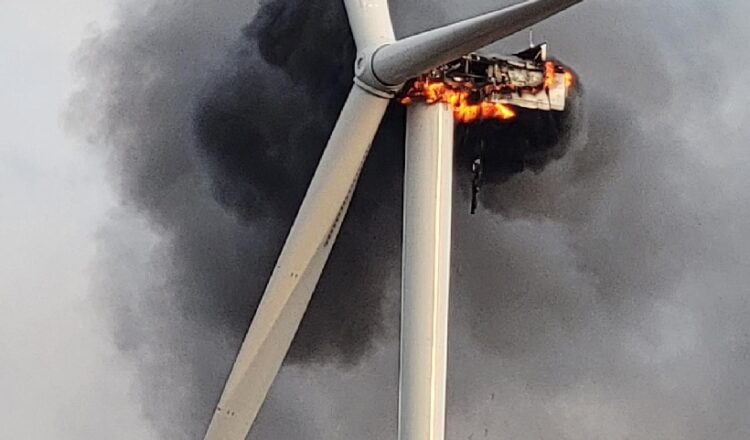
The CCP is on the perfect path to destroy the West, thanks to our ludicrous obsession with intermittent wind and solar and overpriced electric vehicles.
China dominates the production of solar panels, is top-level when it comes to the production of wind turbines (certainly by number of units produced) and is the key producer of the lithium-ion batteries that you’ll find in every EV. And it’s producing EVs hand over first – whether badged as Tesla or MG, or under Chinese brand names.
American policymakers on the left hold the delusional belief that they can compete with China when it comes to EV’s.
In Australia, the current Labor government holds an equally ludicrous belief that this Country (with high and rising wages and crippling energy costs) can compete with China in the production solar panels.
As Robert Bryce explains below, the attempt to challenge China’s dominance of the EV market is positively bonkers and the West’s increasing reliance on China as a supplier of the wind turbines and solar panels needed for the grand ‘transition’, totally insane.
Shanghaied: A new IEA report spotlights China’s stranglehold on supply chains for EVs, wind turbines, and solar panels.
Substack
Robert Bryce
29 May 2024
On Sunday, Transportation Secretary Pete Buttigieg appeared on CBS’s “Face The Nation” to promote the Biden administration’s electric vehicle mandates and defend the tariffs the administration is imposing on Chinese-made EVs. During the interview, he said, “The most important thing is that the EV revolution will happen with or without us. And we’ve got to make sure that it’s American-lead.” Buttigieg went on to make some claims that are — I have to use the right words here — complete and utter bullshit.
According to a transcript published by CBS, Buttigieg said:
That’s what the president is focused on. We don’t want China — look under the Trump administration, they allowed China to build an advantage in the EV industry. But, under President Biden’s leadership, we’re making sure that the EV revolution will be a made-in-America EV revolution, that is critically important.
Those claims bring to mind President John Adams’ famous line: “Facts are stubborn things.” And the facts are clear: Over the past three decades, China has built such a dominant role in the production of EVs — and the supply chains needed to manufacture them — that the U.S. cannot, will not, be able to catch up, not for decades to come. Indeed, China has Shanghaied the supply chains for everything from EVs and batteries to wind turbines and solar panels.
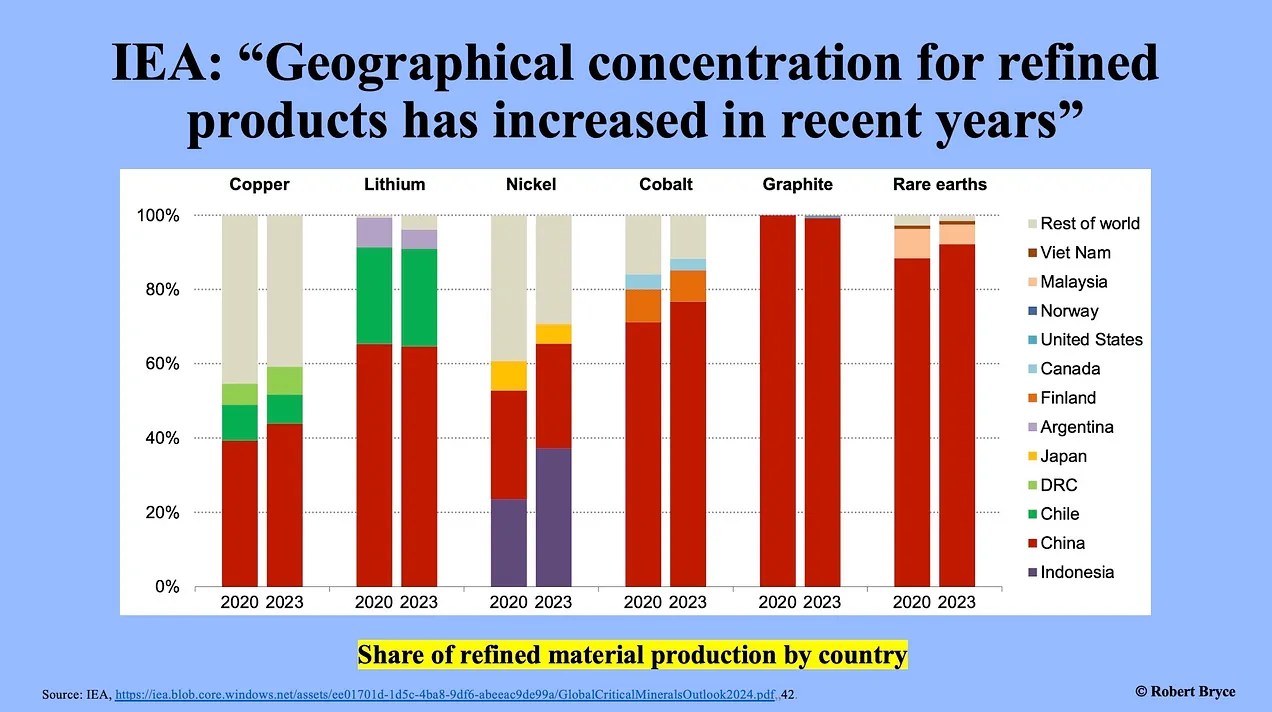
That’s not an opinion. It’s a stubborn fact. On May 17, just 10 days before Buttigieg appeared on Face the Nation, the International Energy Agency published a report called “Global Critical Minerals Outlook 2024,” which shows that China has a near-monopoly on the metals, minerals, and magnets needed for the over-hyped “energy transition.”
The IEA’s 282-page report details China’s dominance of markets for nickel, graphite, copper, lithium, polysilicon, and neodymium-iron-boron (NdFeB) magnets. In a remarkable bit of timing, the report came out almost exactly one month after Biden’s EPA published a new mandate in the Federal Register called the “Multi-Pollutant Emissions Standards for Model Years 2027 and Later Light-Duty and Medium-Duty Vehicles.” The mandate, published on April 18, is facing numerous legal challenges. If enacted, it will wreck the U.S. auto sector. As the Wall Street Journal explained last week, the EPA rule will:
Effectively require that EVs and plug-in hybrids make up roughly 70% of auto-maker sales by 2032, up from about 9% last year. Companies will have to produce one to two electric trucks for every gas-powered one in 2027, and closer to four to one by 2032…The EPA’s quotas will also result in higher prices for gas-powered cars, as auto makers seek to offset EV losses.
Those losses are already gobsmacking. As I reported here a few weeks ago, Ford Motor Co. lost over $65,000 for every EV it sold during the first quarter.
In 2023, Ford lost more money on EVs than it made in net profit. In addition, there’s clear evidence that the market for EVs is small. As I explained last October, “EVs have long been a niche-market product, not a mass-market one. Further, that niche market is primarily defined by class and ideology.” I pointed to a study published last fall by researchers at the University of California, Berkeley, which concluded that “about half of all EVs went to the 10% most Democratic counties, and about one-third went to the top 5%.”
Buttigieg can hype EVs all he likes, but sales are declining. Last month, Volkswagen reported that its EV sales in Europe fell by 24% during the first quarter, and Mercedes-Benz reported an 8% drop in EV sales. Last week, Ford told its dealers to halt EV-related investments until after the company completes a “review” sometime next month.
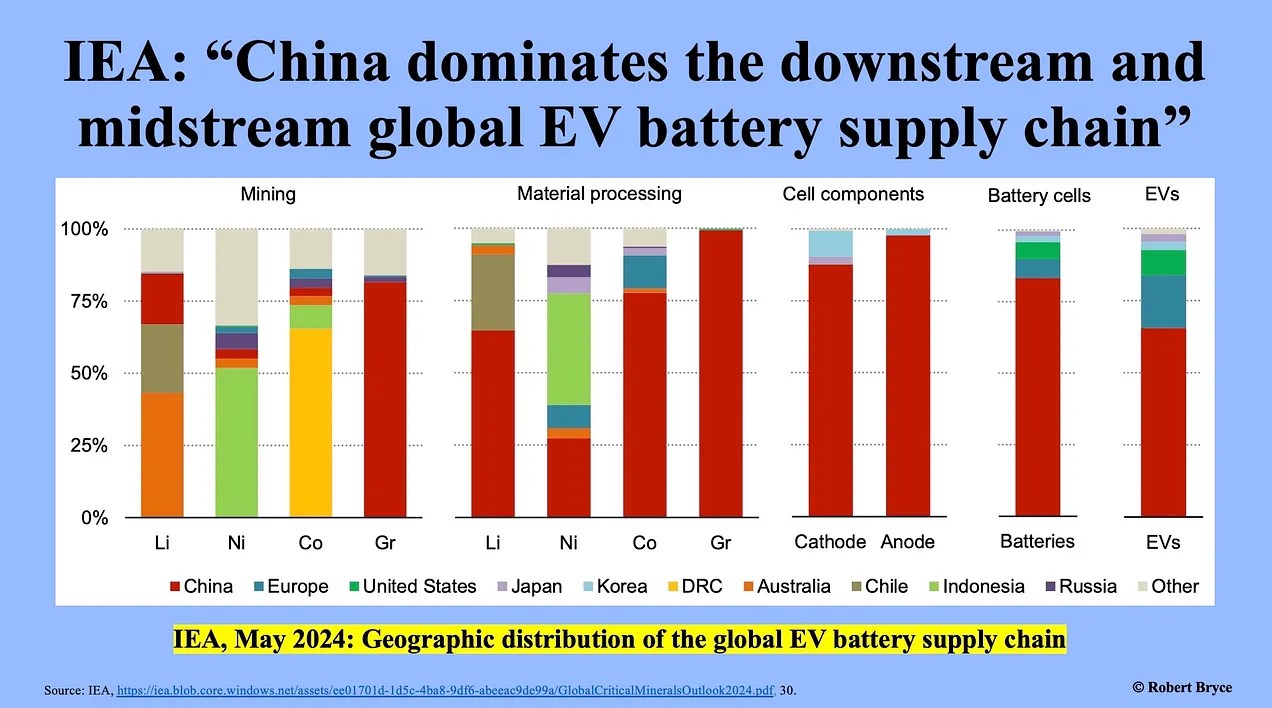
The new IEA report shows that U.S. automakers cannot build EVs without depending, wholly or in large part, on Chinese suppliers. The report says demand for “energy transition minerals is set to expand significantly across all scenarios,” over the next few years, with demand for commodities like nickel, cobalt, and rare earths showing “robust growth, increasing by 65 to 80% by 2040.” It continues, noting the market for transition minerals is:
Concentrated, with China claiming nearly 50% of the market value in 2030. China also sees a rise in market value for mined materials as the country’s production of copper, lithium, and rare earth elements undergoes rapid expansion…Global mineral supply chains are not well diversified, and recent progress on diversifying supply sources has been limited…These high levels of supply concentration raise risks of potential supply disruptions due to physical accidents, geopolitical events or other developments in a key producing country, with major potential implications for the speed of energy transitions.”
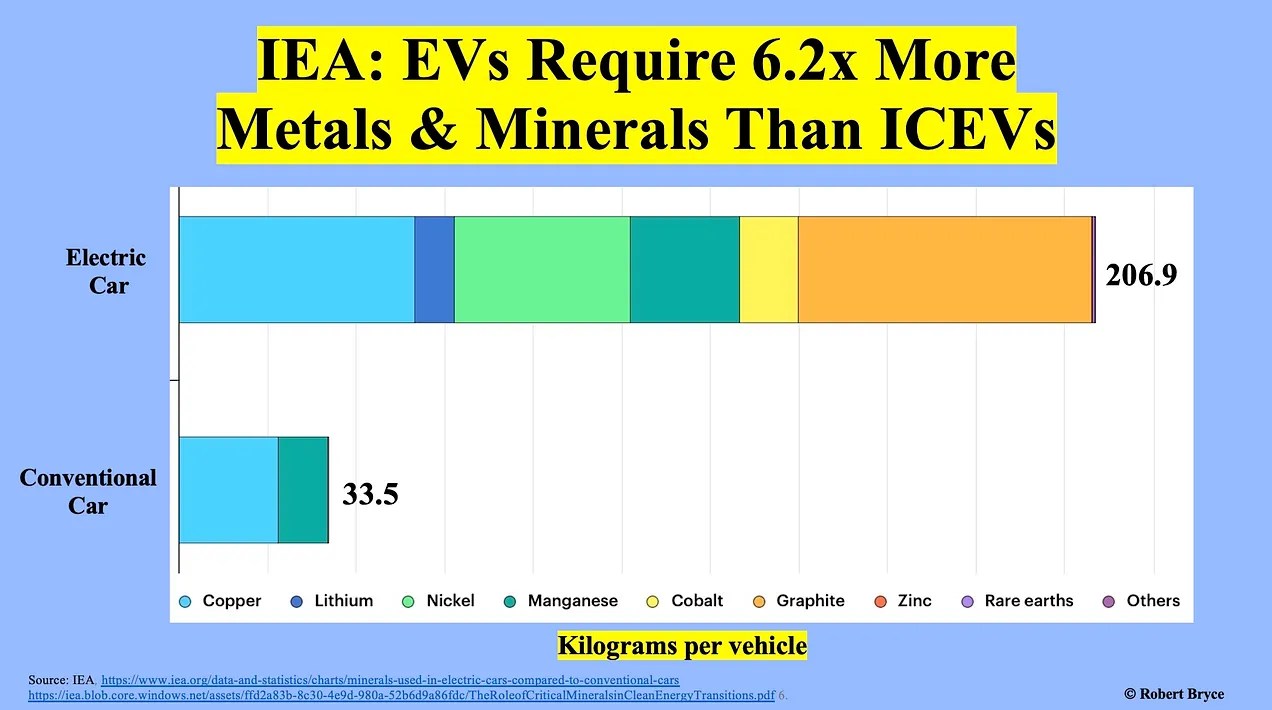
The report underscores China’s dominance in EVs, which require six times more metals and minerals than internal combustion vehicles. This chart is derived from an IEA report published in 2021.
The chart below includes a screen grab from the IEA’s May 17 report.
The new IEA report also spotlights China’s monopoly over the high-strength magnets in wind turbines and EVs. It said that magnet rare earths — that is, praseodymium, neodymium, terbium, and dysprosium — “have the highest geographical concentration for refining of all energy transition minerals.” Those elements are essential ingredients in the NdFeB magnets used in wind turbines, EVs, military weaponry, and a panoply of consumer goods.

The rare earth elements, also known as the lanthanides. Pr, Nd, Tb, and Dy are particularly important for their use in magnets.
The rare earth elements, also known as the lanthanides. Pr, Nd, Tb, and Dy are particularly important for their use in magnets.
According to a report on critical materials published last year by the Department of Energy, about 30% of new wind turbines use NdFeB magnets. A 3-megawatt wind turbine can contain up to 2 tons of the magnets. The DOE also noted that NdFeB motors are found in about 98% of all EVs, and those “percentages [are] likely to stay above 50% through 2040.” (Emphasis added.) And as the chart below shows, the IEA expects China’s share of the refining market for magnet rare earths to increase between now and 2040.
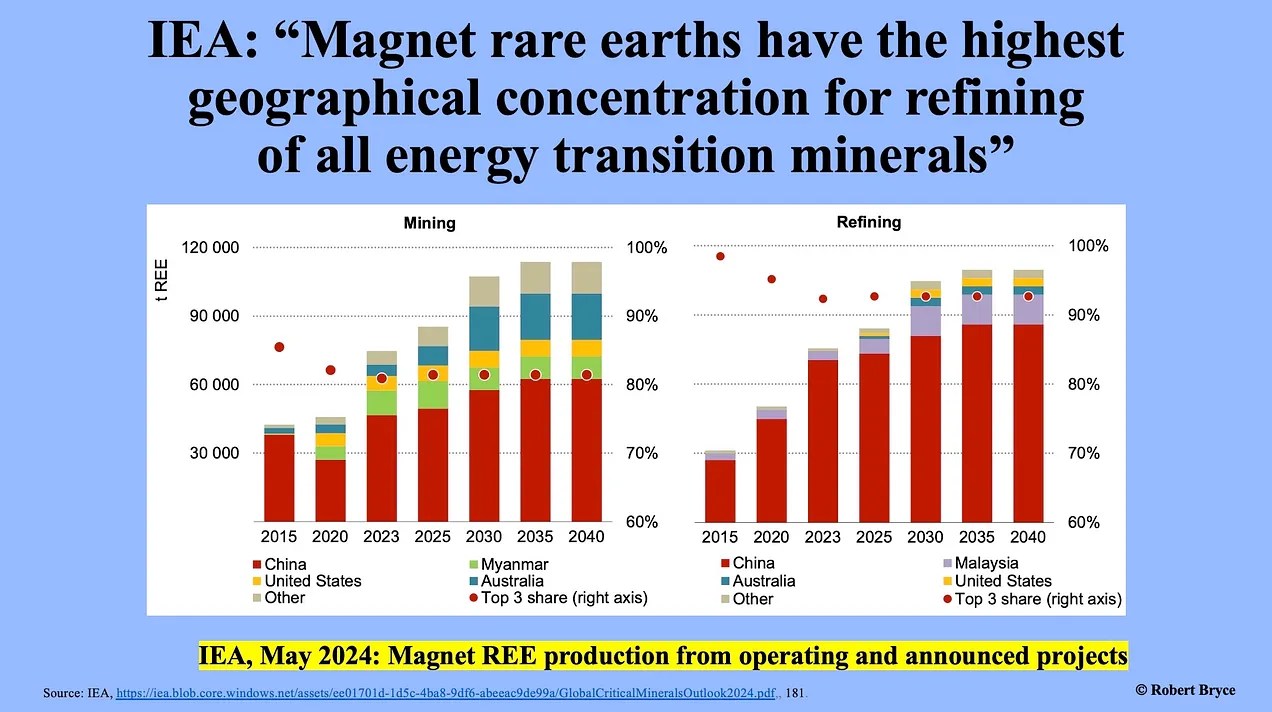
Although the U.S. and other countries are talking about reducing their dependence on China, the IEA report shows that China’s dominance of the alt-energy supply chain isn’t declining, it’s increasing.
If the chart below looks familiar, you may have seen it in a piece I published last May called “The EPA’s China Syndrome.” The graphic is derived from a 2022 DOE report on NdFeB magnets.
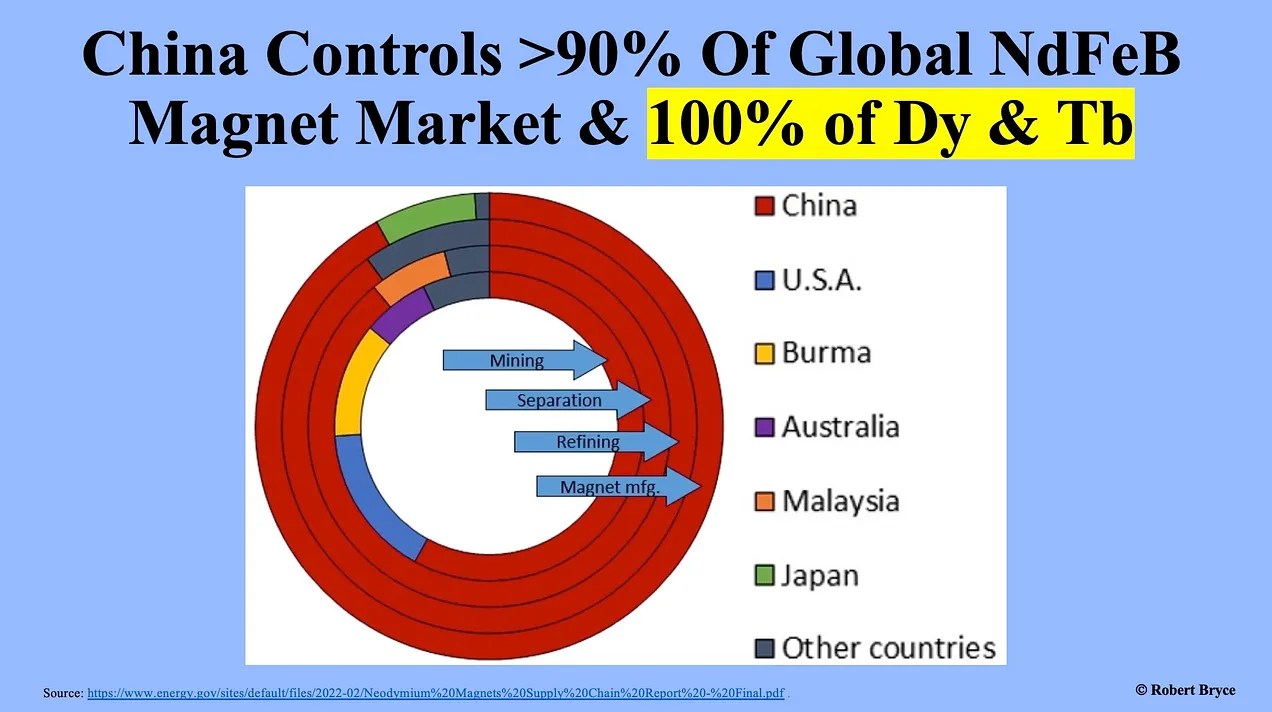
As I explained in that piece, our vulnerability to Chinese supplies of NdFeB magnets must be seen as a national security concern.
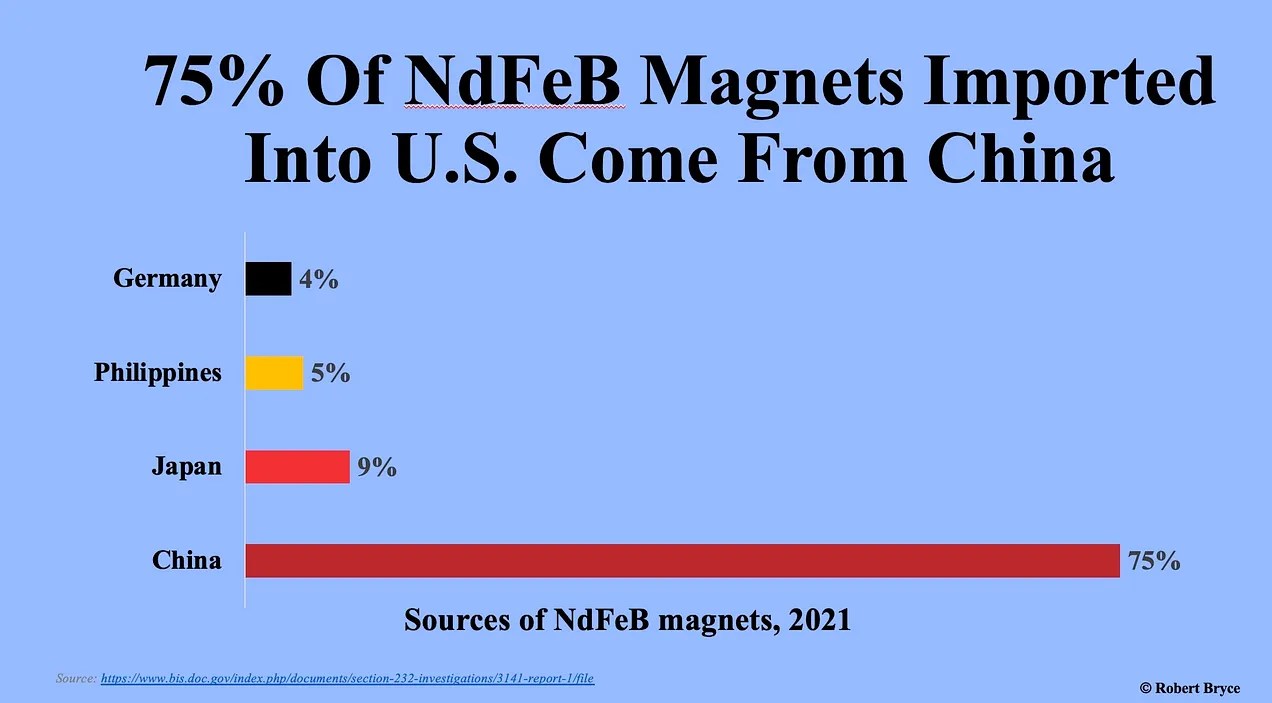
In 2022, the Commerce Department published a heavily redacted report that contains this key sentence: “Based on the findings in this report, the Secretary concludes that the present quantities and circumstances of NdFeB magnet imports threaten to impair the national security as defined in Section 232 of Trade Expansion Act of 1962, as amended.” It continued, noting that the U.S. “has extremely limited capacity to manufacture NdFeB magnets and is nearly one hundred percent dependent on imports to meet commercial and defense requirements. In 2021, the United States imported 75 percent of its sintered NdFeB magnet supply from China, with nine percent, five percent, and four percent coming from Japan, the Philippines, and Germany, respectively.”
As I explained last Friday, environmentalism in America is dead. It has been supplanted by climatism and renewable energy fetishism. And no object in the alt-energy kink closet has been fetishized more than the photovoltaic solar panel. (As Ken Girardin of the Empire Center recently noted, offshore wind probably runs a close second.)
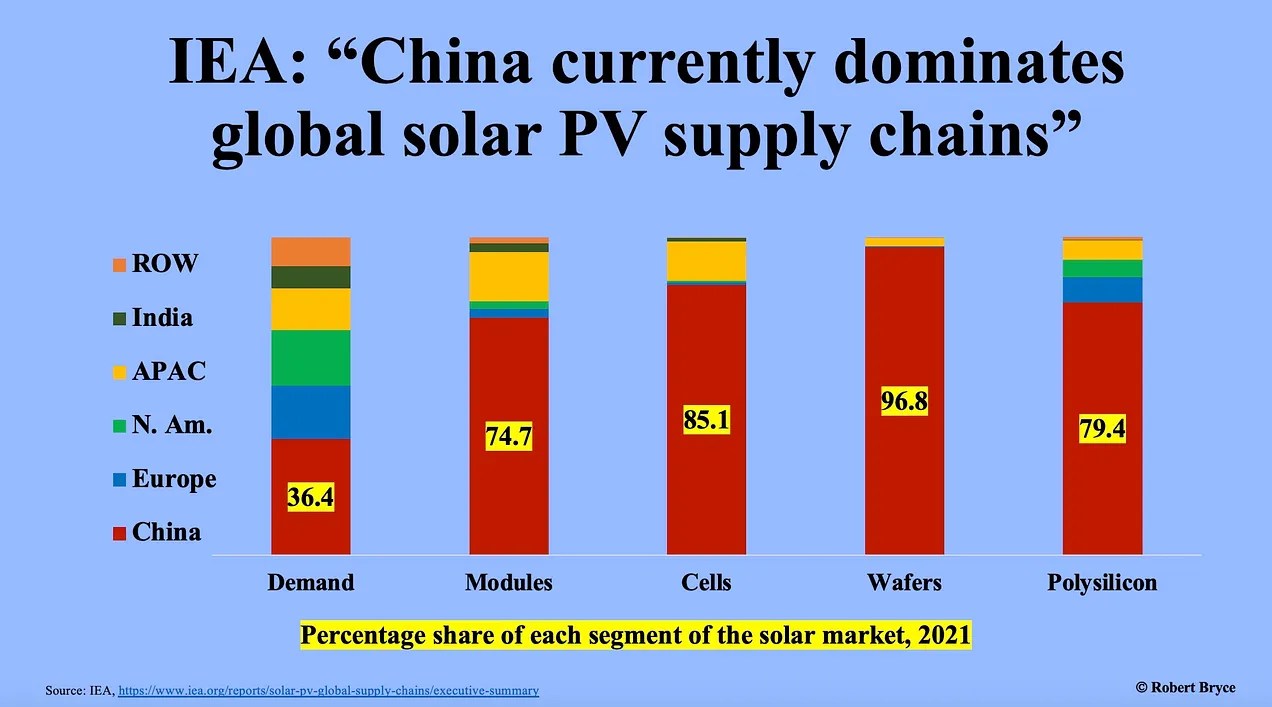
Solar PV fetishism depends on Chinese suppliers. The new IEA report says, “China’s share of solar-grade silicon grew from 27% in 2010 to over 80% today.” I created the chart below using numbers from a 2022 IEA report on solar supply chains.
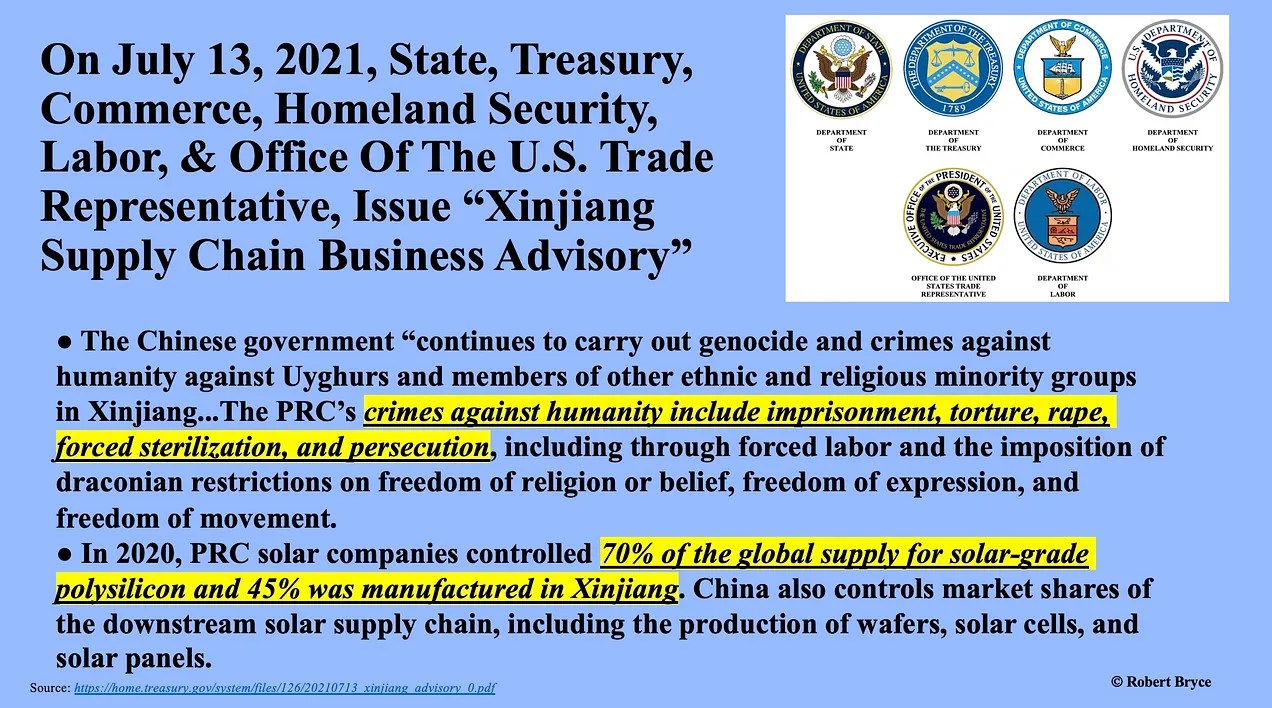
Recall that three years ago, the Biden administration determined that China’s solar sector was connected to the repression of Uyghurs in Xinjiang province. Last September, the Biden administration issued an addendum to the 2021 advisory on doing business in Xinjiang, saying it contains new information “about the ongoing, widespread, and pervasive risks in supply chains posed by state-sponsored forced labor and other human rights abuses in Xinjiang.” In December, the State Department updated Congress on the sanctions imposed on Chinese suppliers under the Uyghur Human Rights Policy Act.
Since the 1973 Arab Oil Embargo, American policymakers have decried our dependence on foreign oil. But in 1973, the U.S. only imported about a third of the oil it used. And that oil came from several different countries, including members of OPEC.
Today, in the name of climate change, top U.S. policymakers are making rules that will make our transportation and alt-energy sectors almost wholly dependent on a single country — China — for numerous critical commodities. Furthermore, it will be reliant on Chinese suppliers at the same time that the U.S. and China are increasingly at odds over the origins of COVID-19, human rights abuses, which include the use of Uyghur slave labor in Xinjiang Province to produce polysilicon for solar panels, Taiwan, and navigation in the South China Sea.
In other words, by trying to force automakers to produce EVs, Buttigieg and the EPA want to trade reliance on domestically produced gasoline and diesel fuel for near-total reliance on Chinese metals, minerals, and magnets.
It’s difficult to imagine a more foolish trade.
Substack

 STOP THESE THINGS
The prominence of China in the renewable energy sector is causing catastrophic problems for their people and Western countries are assisting this by their demand for more and more of these items from China. Whether its batteries, magnets cars or anything else the manner in which they procure the materials to manufacture these things is causing catastrophic harm.
Back in January 2011 (Mailonline) Researchers Simon Perry in China and Ed Douglass in Scotland wrote the article “In China the true cost of Britain’s clean, green wind power experiment: Pollution on a disastrous scale”.
It’s a worthwhile read to gain an insight into the damage that was being caused then and with thie damage probably even greater now in 2024 when China has such a strong hold on manufacture of battery vehicles, turbines, solar panels etc.
Western Countries should be ashamed at the devastation being rort on the Chinese people to meet our need for energy production and manufactured products.
Here in Australia we have the ability to build our own nuclear energy sector to provide this country with a cheap energy and a cleaner industry to build our own vehicles, white goods etc all it take is for our Government to accept we have no need to destroy another country’s population and keep our own people free of energy poverty and overly expensive electrical goods etc.
All it takes is for our political leaders to show some gumption and do what it is the right thing to do and they know what the right thing is – to apply our own knowledge, capabilities and materials to lift this country to what it is more than capable of being – a country that can provide its citizens with all they need such a healthy, contented lifestyle free of the burden of unemployment and resulting debt.