
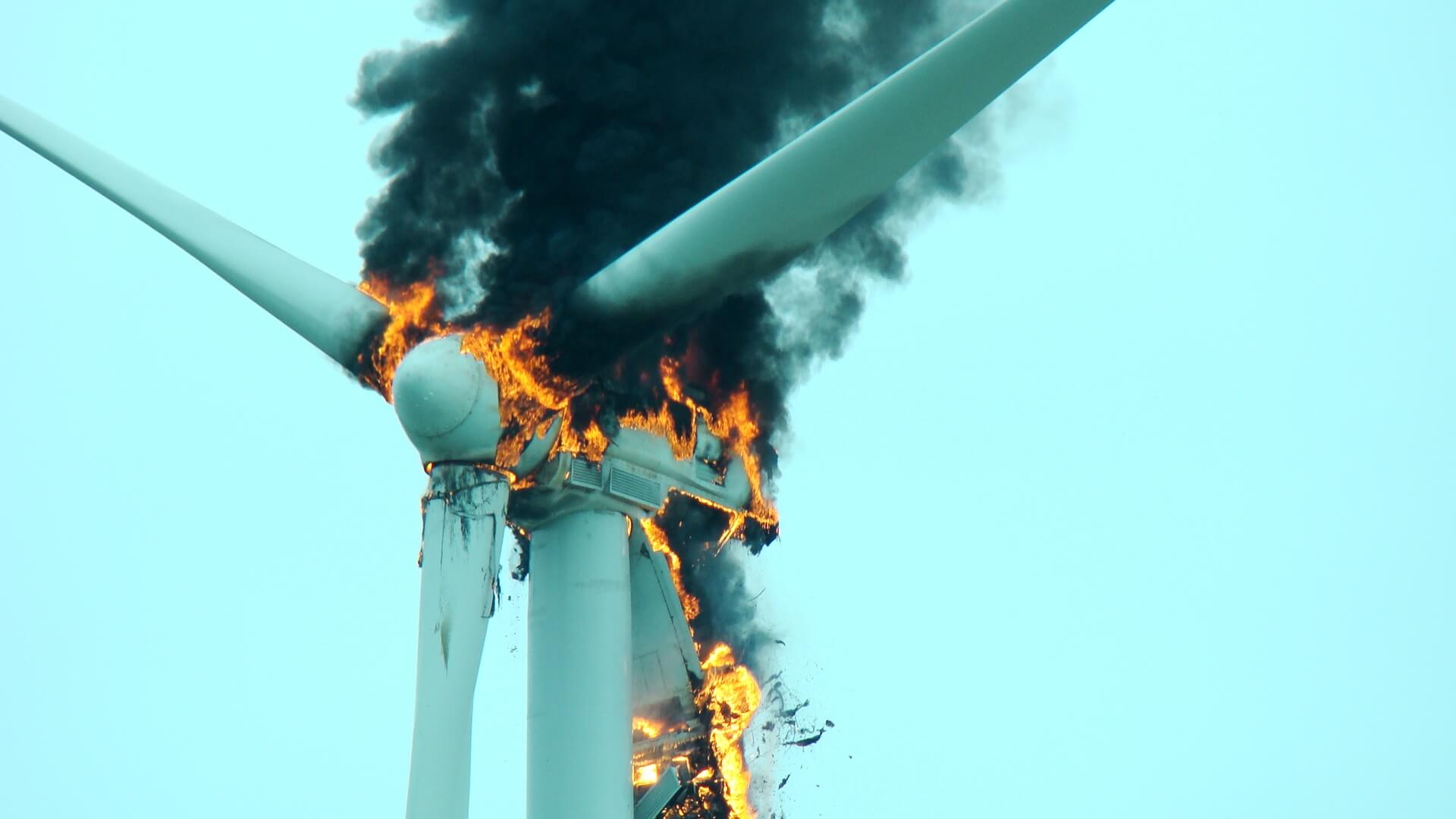
As the sun sets on a calm afternoon, talk about a ‘wind and solar transition’ sounds delusional, because it is.
The cult is driven by that very delusion, however. But those who have been dragged along for the ride are finally waking up to the fact that first world economies can’t run on sunshine and breezes: never have; never will.
Even wild talk about giant lithium-ion batteries saving the day has fallen away. Now the talk is all about ‘firming’ generation. By which they mean expensive to run and inefficient open cycle gas turbines fuelled by gas or diesel, or diesel generators (including piston engined numbers of the kind you’ll find pushing ships around the ocean).
Quietly, behind-the-scenes, governments are doing deals with coal-fired power generators to keep on going as long as possible (using taxpayer’s money, of course). Knowing that the proles will surely revolt when there continually left freezing or boiling in the dark and/or when their power bills render consumers technically bankrupt, politicos are now seeking to extend the date upon which this imaginary transition is said to occur.
Michael Asten is a retired professor of geophysics, and a regular speaker on natural cycles of climate change and options for energy security.
Michael brings a little pragmatism to Australia’s energy crisis, by pointing out that if Australia’s coal-fired power stations close as planned, there will be nothing available to keep the lights on.
Energy ‘black hole’ inevitable without modern coal-fire stopgap
The Australian
Michael Asten
24 March 2024
Peter Dutton has a vision for nuclear power that is a valuable solution to our nation’s energy security by 2050 but it leaves a gap across the next two decades as coal-fired power stations close.
Climate Change and Energy Minister Chris Bowen is sure renewable energy sources, principally offshore wind farms, will cover the gap, but his optimism appears to exceed his arithmetic.
With either policy we face a black hole in energy supply from the late 2020s to the 2040s, with the difference that the Opposition Leader’s nuclear option provides light at the end of the tunnel while Bowen’s solution may ultimately depend on candlelight.
We now read of a similar realisation of limitations of renewable energy options in a recent study by Black Rock chief executive Larry Fink. He has a strong record of advocacy for investment in green technologies and oil and gas-fired plants. His recognition of a new era of “energy pragmatism” where fossil fuels still will be needed is significant. But he does not mention a role for nuclear power.
I agree with the notion of ongoing need for fossil fuels, but as long as net zero remains a goal for carbon dioxide emissions, nuclear power is vital and an achievable solution in future decades.
For the purpose of this exercise I consider only NSW and Victoria, which between them have 14.7 gigawatts of coal-fired power capacity. Data from the Australian Energy Market Operator shows that in these states coal-fired electricity generation capacity is planned to reduce by 12.3GW between 2025 and 2035, an 83 per cent reduction. For reference, the largest coal-fired power stations in Victoria and NSW are the Loy Yang A and Eraring stations with generating capacities about 2GW and 3GW respectively.
We have advice from US nuclear energy company Westinghouse given to an energy and climate summit in Sydney last year, when senior vice-president Rita Baranwal said its new-generation small modular reactors could be operational in Australia by the late 2030s. This would be about a decade later than in North America due to Australia lacking at present a legal and social licence framework for nuclear power.
The cost is $1.5bn an SMR, and a row of seven such devices operational in the 2040s, and covering an area equivalent to three soccer fields, could replace a Loy Yang A coal-fired station at an indicative cost of about $5bn a gigawatt.
Can renewable sources of electricity bridge the gap in supply between 2025 and the 2040s? Look to the recently completed Hornsea 1 and 2 offshore wind farms east of Yorkshire in Britain. Approximate figures for each are a completion time from planning approval to commissioning of about five years, maximum output 1.3GW for a project cost of $4.8bn a gigawatt. That is similar to the cost of the SMR option but the Hornsea wind farms produce power at a utilisation of only 33 per cent capacity because of wind variability.
Supposing we were to embrace offshore wind as the solution to our 12.3GW coal-fired generator deficit, and NSW and Victoria could each build a sequence of wind farms simultaneously, it would take 25 years to attain a generation capacity equivalent to the scheduled retired coal-fired generators. This would become up to 75 years allowing for the well-established 33 per cent effective utilisation of wind-dependent systems, and depending on the level of hydro power and continuing gas plants available.
Solar generators may close a small part of this gap but their limitations in capacity and utilisation (zero after sunset) do not affect significantly the arithmetical realities of supply.
Britain is a decade or two ahead of us in offshore wind and nuclear technology. It is notable that British Prime Minister Rishi Sunak said in January: “Nuclear is the perfect antidote to the energy challenges facing Britain; it’s green, cheaper in the long term and will ensure the UK’s energy security for the long term (and) puts us on course to achieve net zero by 2050 in a measured and sustainable way.”
Renewable energy risks potentially disastrous shortages of electric supply in Australia from the 2030s for most of the rest of this century. The available technology for nuclear offers energy security from sometime in the 2040s. On either scenario Australia faces a black hole in energy generation capability from the late 2020s. The solution lies in use of modern, low-emissions, coal-fired generation capacity into the 2040s.
NSW and Victorian coal-powered generators are 30 to 40 years old and all are obsolete technology. But current global technology for coal-fired power uses boilers operating at high temperatures and pressures – high efficiency, low emissions systems. The advantage of these is that emissions of carbon dioxide per gigawatt power generation are reduced by up to 30 per cent.
There would be a real cost involved for Australia, but it is mitigated by the existence of the coal supply and waste disposal being available from existing plants. A useful rule of thumb in this comparison would be a HELE plant below half the cost per gigawatt compared with offshore wind or nuclear generation, while the security of energy supply to industry agriculture and domestic users would be a definite thumbs up for the economy.
We can thus work towards a scenario where instead of shutting obsolete coal-fired generators, we refurbish them with HELE boilers and turbines and create a two-decade window of secure power supply. And as a huge step towards net-zero emissions we are able to reduce carbon emissions from power generation by 30 per cent until our emissions-free nuclear program is fully operational.
The Australian

 STOP THESE THINGS
Next decade, here’s the question for schoolchildren:
Q. What did Australians use for light at night before candles?
A. Cheap and reliable coal-fired electric power plants.
This is coming to a head… don’t be surprised if one, or more, auto manufacturers briefly shuts down production, because their impractical battery-powered vehicles are not selling, while liberal’s insanely strict exhaust emission limits -meant to eliminate ICE vehicles- are impossible to meet.
The movie
Critically important points about keeping the coal fires burning but ruined at the end by a braindead and gratuitous statement about getting to net zero.
“And as a huge step towards net-zero emissions…”
Talk about selling the other guy’s product.
Give us a break, we are practically running on empty with the supply of CO2 for the plants, it is on the up fortunately, because it went down to a point where life on earth was threatened.
See the new climate science movie and tell everyone about it!
https://www.imdb.com/title/tt31851190/