

Dilute, diffuse, intermittent and unreliable, wind and solar make no sense. They will never constitute meaningful power generation sources. They were only designed as subsidy generation sources.
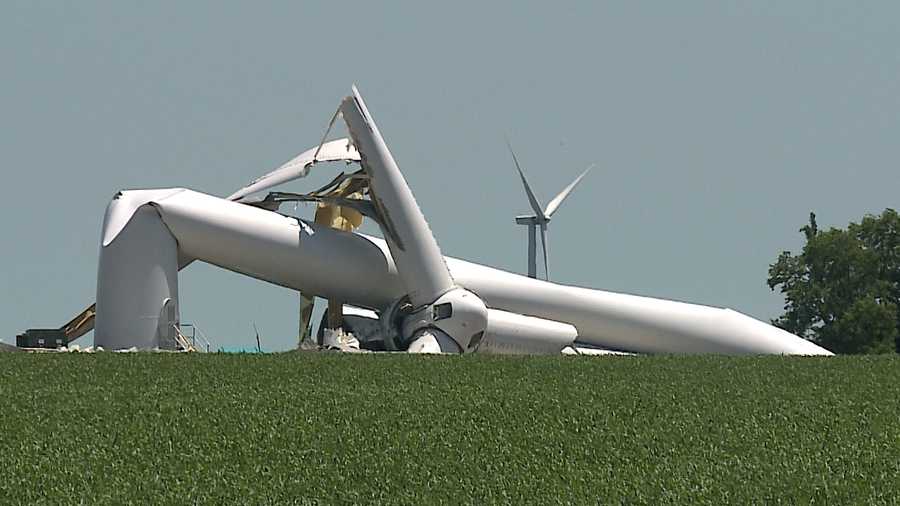
As governments pull the plug on subsidies, wind power outfits and turbine makers are pulling the plug on their projects and production. Siemens Energy is losing cash like a drunk gambler and last week announced it would offload its wind turbine manufacturing arm.
The article below from Stephen Wilson, and the very detailed research paper linked within the article, provide a detailed and careful analysis of why subsidised wind and solar are not just pointless, they are economically destructive and undermine our ability to defend ourselves from external threats.
While the paper is written from an Australian perspective, the analysis and conclusions apply to any modern economy attempting to run on sunshine and breezes, alone.
Energy Security Is National Security – A Framework For Better Energy Outcomes In Australia
IPA
Stephen Wilson
1 November 2023
This paper is intended to reframe the foundations of energy policy in Australia, to stimulate debate, and to guide future research (including, but not only, that under-taken by the IPA). It will describe the nature and importance of energy security and explain why it must be the pre-eminent consideration for energy and related policies, not least because energy security is national security.
Australia has been at an impasse in energy policy-making for some time, and this is having real-world negative effects. The National Electricity Market (NEM), which covers all states except Western Australia, was suspended in the middle of 2022. The east coast gas market was effectively nationalised when the Federal Government imposed price controls and mechanisms to direct supplies. Meanwhile, costs to consumers continue to rise, and the market operators report increased risk of blackouts.
The Federal Government has an official plan for the NEM, in the shape of the Integrated System Plan (ISP), but its unrealistic assumptions and deficiencies are becoming more apparent by the day. While existing baseload capacity is being shut down, the promised pipeline of investment in renewables, and the massive expansion of the physical grid that it promised, is not occurring – because it can’t.
We have also seen the flow-on effect of this on our geopolitical position and international reputation, with the lack of a commitment to supplying our friends and allies with the energy they need resulting in unprecedented outcomes, like public expressions of concern by the Japanese Prime Minister and Japanese energy customers. And, in a more roundabout way, the willingness of countries like India to continue relying on Russian oil and gas at a time when the latter country is supposedly an international pariah.
[The following is an extract from the Introduction]
If wind and solar energy are cheap, then they are also nasty. Low value energy— dilute, intermittent, unstable, and unreliable—is not cheap after value-adding to upgrade its quality, match it to our real-world service needs, back it up, and stabilise the electricity system.
Contrary to popular opinion, the more wind and solar power that is added to a system, the more expensive it becomes to deliver as a service.
You get what you pay for, or in this case what your neighbours have unwittingly been compelled to subsidise.
On top of the high economic cost and hidden financial burdens of harvesting flows of wind and solar energy are vast physical footprints. Nuclear energy requires similarly tiny land areas as do coal, oil, and natural gas: a small fraction of the land area required by wind or solar power, hydropower or biomass. Nuclear power requires a small fraction of the material throughput for construction and lifetime fuel of all other energy forms, whether hydrocarbons or ‘renewable’ energy. An interactive chart shows that nuclear energy has the smallest total environmental and social ‘footprint’ of all energy sources, when mortality, emissions, land use, material use, critical minerals, costs, capacity factor, and solid waste are considered.
So we must ask ourselves:
- What is energy security? Reduced to its essence, energy security is the power to be free and to do work. Energy security is national security. A nation cannot have one without the other.
- Why does energy security matter? Without energy security a nation may be rendered powerless. Without adequate capacity to do work, a nation will rapidly grind to a halt. Civil unrest then becomes a real risk. Unable to defend itself, and without the capacity to do work, such a nation will then be liable to lose its freedom.
- What needs to be done about it? We must raise awareness and understanding—from our own house to Parliament House.
We must re-learn our own history. The Snowy Mountains hydropower scheme was initiated in the late 1940s by Chifley’s government with reference to the Defence Act: thereby acknowledging that energy security is national security.
We need to act on the increasingly mature public discussion that has now opened up on nuclear energy. That means using the precious remaining years of the 2020s to create real options, so that we are in a position to deploy nuclear plants from the 2030s, if we need to.
In the meantime, Australia would do well to follow the common-sense advice of Dr Maria Korsnick, President and CEO of the Nuclear Energy Institute in Washington, D.C.:
‘Stop blowing up your coal plants – you’re not ready to live without them yet!’
Applying explosives to critical infrastructure is usually what hostile forces do. The destruction of these assets is being cheered in many cases before they have completed their design lives.
Not even Germany, whose energy policy settings are suggestive of a collective national sabotage, destroys its old coal plants. Germany currently has around 45 GW of coal power capacity in place. While some has been turned off, part of it is being held in reserve to ensure the country’s security of supply. …
Conclusion
This is a paper about engineering, economics, and the effects of energy on the natural environment. However, it is not an engineering paper, nor an economics paper, nor an environmental policy paper. Sound energy policy must respect, embrace, integrate and ultimately transcend each of those individual fields. High quality data and robust models are necessary, but far from sufficient. Beyond data analysis, information synthesis, and expert knowledge, judgement and wisdom are needed. Governance requires frameworks that withstand the forces of events and the pressures of change. When objectives conflict, as they inevitably will, a clear sense of priorities and responsibilities is required, as well as a deep understanding of the nature of the trade-offs between them. This paper provides the outlines for such a framework.
Environmental stewardship is an important responsibility of governments. That responsibility has been misunderstood by Australian federal and state governments in two major ways. It has been too narrowly interpreted, with an almost one-dimensional focus on greenhouse gas emissions and climate change. This has created significant risk of increased environmental damage of other types. Secondly, the objective of minimising adverse environmental externalities has overwhelmed other important objectives of energy policy, each of which should naturally be accorded higher priority.
Energy affordability is fundamental to economic activity, development and growth, and hence the ability and willingness to pay a ‘green premium’ to minimise adverse environmental impacts. This objective has increasingly been overlooked in the single-issue focus on emissions, to the extent that the electricity market and the underlying physical system are currently being tested to destruction. Energy security is inextricably linked with national security, which is the first responsibility of the State, and indeed the reason for its existence.
IPA
 STOP THESE THINGS