

Clued-up women are fast becoming nuclear power’s most effective advocates. Whether it’s mothers in Germany, MIT grads or beauty pageant contenders, the number of females joining the chorus of the press and their political betters to back safe, reliable and affordable nuclear power is thoroughly impressive.
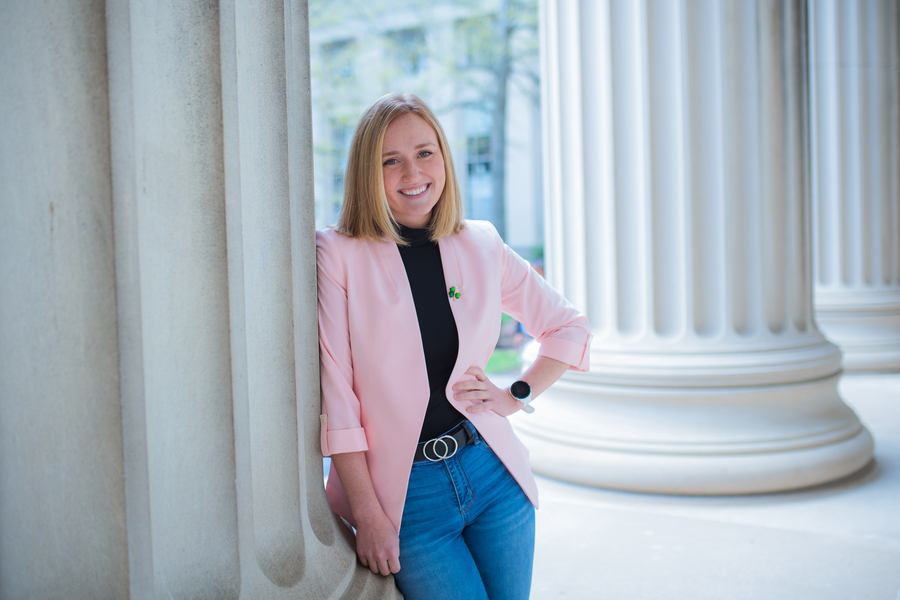
In the following post we’ll first take a look at Kaylee Cunningham, a doctoral student at MIT working in nuclear science and engineering. Kaylee lives and breathes her discipline, knocking the glib and intellectually lazy out of the ballpark. Now known as Ms Nuclear Energy, Kaylee has become one of America’s new guard, promoting ever-reliable nuclear power as the only sensible solution to an energy hungry world.
We follow-up with a story on Grace Stanke, the reigning Miss America, who has also joined the great nuclear power renaissance, with real passion. Grace is not just a pretty face, she is studying nuclear engineering and is actively encouraging others to do likewise.
Ms. Nuclear Energy is winning over nuclear skeptics
MIT News
Poornima Apte
29 August 2023
First-year MIT nuclear science and engineering (NSE) doctoral student Kaylee Cunningham is not the first person to notice that nuclear energy has a public relations problem. But her commitment to dispel myths about the alternative power source has earned her the moniker “Ms. Nuclear Energy” on TikTok and a devoted fan base on the social media platform.
Cunningham’s activism kicked into place shortly after a week-long trip to Iceland to study geothermal energy. During a discussion about how the country was going to achieve its net zero energy goals, a representative from the University of Reykjavik balked at Cunnigham’s suggestion of including a nuclear option in the alternative energy mix. “The response I got was that we’re a peace-loving nation, we don’t do that,” Cunningham remembers. “I was appalled by the reaction, I mean we’re talking energy not weapons here, right?” she asks. Incredulous, Cunningham made a TikTok that targeted misinformation. Overnight she garnered 10,000 followers and “Ms. Nuclear Energy” was off to the races. Ms. Nuclear Energy is now Cunningham’s TikTok handle.
A theater and science nerd
TikTok is a fitting platform for a theater nerd like Cunningham. Born in Melrose, Massachusetts, Cunningham’s childhood was punctuated by moves to places where her roofer father’s work took the family. She moved to North Carolina shortly after fifth grade and fell in love with theater. “I was doing theater classes, the spring musical, it was my entire world,” Cunningham remembers. When she moved again, this time to Florida halfway through her first year of high school, she found the spring musical had already been cast. But she could help behind the scenes. Through that work, Cunningham gained her first real exposure to hands-on tech. She was hooked.
Soon Cunningham was part of a team that represented her high school at the student Astronaut Challenge, an aerospace competition run by Florida State University. Statewide winners got to fly a space shuttle simulator at the Kennedy Space Center and participate in additional engineering challenges. Cunningham’s team was involved in creating a proposal to help NASA’s Asteroid Redirect Mission, designed to help the agency gather a large boulder from a near-earth asteroid. The task was Cunningham’s induction into an understanding of radiation and “anything nuclear.” Her high school engineering teacher, Nirmala Arunachalam, encouraged Cunningham’s interest in the subject.
The Astronaut Challenge might just have been the end of Cunningham’s path in nuclear engineering had it not been for her mother. In high school, Cunningham had also enrolled in computer science classes and her love of the subject earned her a scholarship at Norwich University in Vermont where she had pursued a camp in cybersecurity. Cunningham had already laid down the college deposit for Norwich.
But Cunningham’s mother persuaded her daughter to pay another visit to the University of Florida, where she had expressed interest in pursuing nuclear engineering. To her pleasant surprise, the department chair, Professor James Baciak, pulled out all the stops, bringing mother and daughter on a tour of the on-campus nuclear reactor and promising Cunningham a paid research position. Cunningham was sold and Backiak has been a mentor throughout her research career.
Merging nuclear engineering and computer science
Undergraduate research internships, including one at Oak Ridge National Laboratory, where she could combine her two loves, nuclear engineering and computer science, convinced Cunningham she wanted to pursue a similar path in graduate school.
Cunningham’s undergraduate application to MIT had been rejected but that didn’t deter her from applying to NSE for graduate school. Having spent her early years in an elementary school barely 20 minutes from campus, she had grown up hearing that “the smartest people in the world go to MIT.” Cunningham figured that if she got into MIT, it would be “like going back home to Massachusetts” and that she could fit right in.
Under the advisement of Professor Michael Short, Cunningham is looking to pursue her passions in both computer science and nuclear engineering in her doctoral studies.
The activism continues
Simultaneously, Cunningham is determined to keep her activism going.
Her ability to digest “complex topics into something understandable to people who have no connection to academia” has helped Cunningham on TikTok. “It’s been something I’ve been doing all my life with my parents and siblings and extended family,” she says.
Punctuating her video snippets with humor — a Simpsons reference is par for the course — helps Cunningham break through to her audience who love her goofy and tongue-in-cheek approach to the subject matter without compromising accuracy. “Sometimes I do stupid dances and make a total fool of myself, but I’ve really found my niche by being willing to engage and entertain people and educate them at the same time.”
Such education needs to be an important part of an industry that’s received its share of misunderstandings, Cunningham says. “Technical people trying to communicate in a way that the general people don’t understand is such a concerning thing,” she adds. Case in point: the response in the wake of the Three Mile Island accident, which prevented massive contamination leaks. It was a perfect example of how well our safety regulations actually work, Cunningham says, “but you’d never guess from the PR fallout from it all.”
As Ms. Nuclear Energy, Cunningham receives her share of skepticism. One viewer questioned the safety of nuclear reactors if “tons of pollution” was spewing out from them. Cunningham produced a TikTok that addressed this misconception. Pointing to the “pollution” in a photo, Cunningham clarifies that it’s just water vapor. The TikTok has garnered over a million views. “It really goes to show how starving for accurate information the public really is,” Cunningham says, “ in this age of having all the information we could ever want at our fingertips, it’s hard to sift through and decide what’s real and accurate and what isn’t.”
Another reason for her advocacy: doing her part to encourage young people toward a nuclear science or engineering career. “If we’re going to start putting up tons of small modular reactors around the country, we need people to build them, people to run them, and we need regulatory bodies to inspect and keep them safe,” Cunningham points out. “ And we don’t have enough people entering the workforce in comparison to those that are retiring from the workforce,” she adds. “I’m able to engage those younger audiences and put nuclear engineering on their radar,” Cunningham says. The advocacy has been paying off: Cunningham regularly receives — and responds to — inquiries from high school junior girls looking for advice on pursuing nuclear engineering.
All the activism is in service toward a clear end goal. “At the end of the day, the fight is to save the planet,” Cunningham says, “I honestly believe that nuclear power is the best chance we’ve got to fight climate change and keep our planet alive.”
MIT News
The New Face of Nuclear Energy Is Miss America
The Wall Street Journal
Jennifer Hiller
23 September 2023
Does the U.S. need more nuclear power? Miss America thinks so.
So do Oliver Stone, Elon Musk and Sam Altman.
Atomic energy is elbowing its way back into the conversation about future energy supplies, with backers in the Biden administration and oil and gas industries alike.
It has also re-entered the American zeitgeist thanks to movies, billionaire backers and a pageant icon.
Supporters of splitting atoms to make electricity as a way to fight climate change include Stone, who just released a documentary about nuclear power; Musk, who frequently calls himself a “believer”; and Altman, the head of the artificial-intelligence startup OpenAI, who plans to take a nuclear power startup public.
Grace Stanke, the reigning Miss America, is on a charm offensive for the industry as part of a year-long publicity tour.
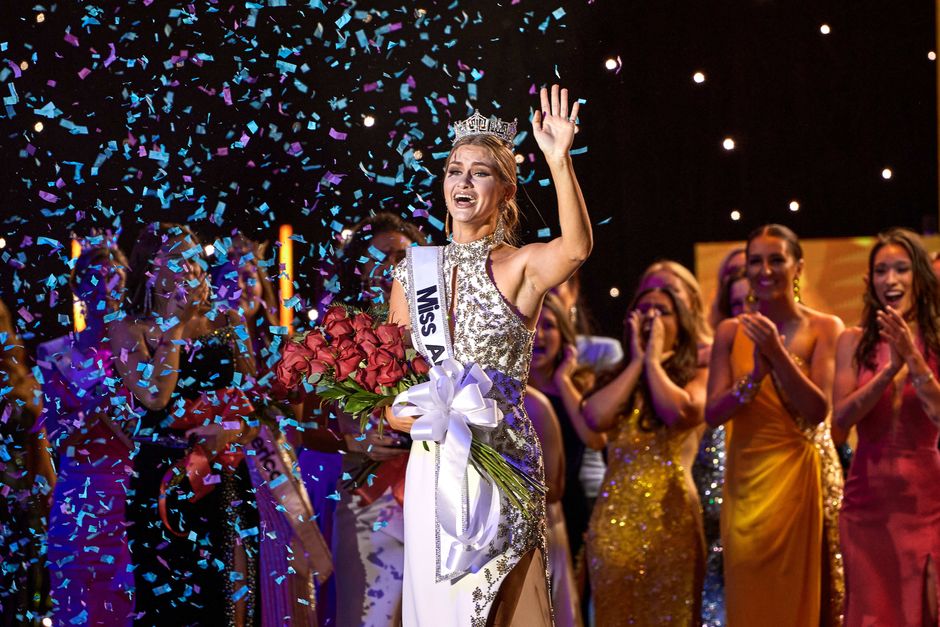
“Why isn’t this being shouted from the rooftops?” asked Stanke, a 21-year-old nuclear engineering student at the University of Wisconsin-Madison. She is too Wisconsin-nice to shout, but in more than 20 states so far she has touted clean energy and nuclear medicine at schools, nursing homes, a state legislature and once on a water-skiing podcast.
“It’s the industry that saved my dad twice from cancer,” Stanke said, referring to radiation and other treatments. “It powers 20% of America.”
The youngest of three children, Stanke grew up in Wausau, Wisc. She started participating in pageants at age 13 as a way to improve her performance skills for violin and got interested in nuclear science in high school when her dad, a civil engineer, told her not to go into the field because there was no future in it. “I got into it out of spite,” Stanke said. “When you’re a 16-year-old girl and your dad tells you not to do something, you go and do it.”
Stanke spoke at the World Nuclear Association’s symposium in London this month and aims to remain an industry voice even after she crowns the next Miss America. She is completing her last elective class online and has accepted a job with Constellation Energy, which owns the nation’s largest collection of nuclear power plants. The job, which will start in 2024, will include a mix of technical work—as a nuclear fuels engineer—and public advocacy.
America’s nuclear power sector has for decades faced public-relations challenges, burdened by high costs, long construction timelines, plant closures and concern over disasters such as Fukushima and radioactive waste.
Its Hollywood image includes giant mutants, the HBO series “Chernobyl” and the atomic- weapons race in the summer blockbuster “Oppenheimer.” Springfield Nuclear Power Plant employee Homer Simpson dropped a doughnut into a reactor core to try to make the pastry bigger.
“It’s always playing the villain,” Stanke said. “It’s what created Godzilla.”
Godzilla appears in Stone’s new documentary, “Nuclear Now,” though it argues that nuclear power is an obvious way to reduce the impact of climate change. It is a similar message to Stanke’s with a crustier delivery.
“We have to build and build fast,” Stone said in an interview. “What’s wrong with nuclear energy was never wrong. It was a brilliant, brilliant gift that we turned our back on. Americans get bored. They want a new car. They want a new TV. They’ve got to have constant technological change, but we have to ask ourselves, what’s wrong with the original evidence of nuclear power?”
At one time atomic energy had a glitzy image, inspiring mushroom-cloud hairstyles and starburst-patterned home décor. In a 1957 Walt Disney television presentation called “Our Friend the Atom” atomic energy was portrayed as a genie—“Here with my right hand, I give you the magic fire of the atom”—whose destructive force could be controlled for good.
Tourists in the 1950s flocked to the desert near Las Vegas to watch bomb tests. In a publicity photo of “Miss Atomic Bomb,” a showgirl wears a bathing suit decorated with a cottony mushroom cloud.
“It was exciting because it was American,” Spencer Weart, physicist and author of “The Rise of Nuclear Fear,” said. “It was a thumb in the eye to the Communists and at the same time it was seen as something that would bring vast economic benefits. It was the future. It was going to be run by nuclear energy.”
The advent and proliferation of the hydrogen bomb during the Cold War changed public perception, leading to the antinuclear movement, Weart said. A former Miss America, 1951’s Yolande Betbeze Fox, joined the antinukes movement. By the 1960s, objections to weapons started to migrate to nuclear power, later solidified by plant accidents.
Americans still hold ambivalent views on the technology and are far more supportive of wind and solar energy, though opinion is shifting, according to the Pew Research Center. Around 57% of Americans favor more nuclear power plants, up from 43% in 2020, according to a Pew survey released in August.
The industry now has a shot at billions of dollars in federal funding through the climate-focused Inflation Reduction Act, the 2021 infrastructure law and government-backed loans for new projects because of its ability to provide 24-7 power without greenhouse-gas emissions.
Investors in the dozens of startups pursuing smaller reactor designs include Bill Gates, co-founder of Microsoft; Dustin Moskovitz, co-founder of Facebook; and Altman, who thinks more nuclear power will be needed in part for artificial intelligence. Musk has been calling on the utility industry to build more generation and called himself an advocate for fission at The Wall Street Journal’s CEO Council in May.
It has been the topic of TED Talks and popular social-media accounts. This past spring, Stanke posted a photo of her 21st birthday celebration, spent traveling to and touring the Vogtle nuclear power plant in Georgia, which was on her wish list of appearances as Miss America. Another highlight: a tour of the Palo Verde Generating Station in Arizona.
More-typical appearance requests for a Miss America might include a USO tour or a trip to the White House, said tour and appearance manager Liz Brown. Those who travel with Stanke have had to swap out their dress clothes and heels “for jeans, boots and hard hats for all of the nuclear plant visits,” Brown said.
“That’s the beauty of it,” said Kathleen Barrón, executive vice president and chief strategy officer at Constellation, which employed Stanke for a college work-study program. “It’s an unexpected messenger.”
One of Stanke’s main messages is the need to recruit younger workers.
The average age of a nuclear reactor operator is over 40, she said. “That’s a big problem.” Jon Wentzel, vice president of communications at the industry trade group Nuclear Energy Institute, who falls into that age group, agrees.
“What’s exciting about her is she’s not 50 years old,” he said.
The Wall Street Journal
 STOP THESE THINGS
Thank you Australia for not embedding ’WOKE’ into the Australian Constitution. And thank you to the NO campaigners. A resounding NO to the VOICE. Or as I like to call it, Labor XL!
We would appear to have reached ‘peak woke’ in this country… thank goodness. We are ALL Australians now. Hopefully the soul of this great nation has not been harmed during the course of this referendum. How you or I view or interact with this great wide land is between you, and Australia. That is your soul engaging with the beauty of this country, which has been here for billions of years. And no one has the right to come between you and your soul! If however you should wish to delve into the history of people who have been here before you, then that should be entirely up to the individual. Freedom of choice.
Now if only we could have a referendum on wind farms, or ‘soul shredders’ as I like to call them! Yet another ‘Left’ leaning element that continues to destroy and divide regional communities all over Australia.