
Germany and Australia share delusional obsessions with wind and solar power; but they also share a desperate demand for reliable coal-fired power. Hidden from sight, both Germany and Australia have recognised (albeit a little too late) that the only way of delivering 24 x 365 power, whatever the weather at prices everyone can afford is by using coal-fired power plants.
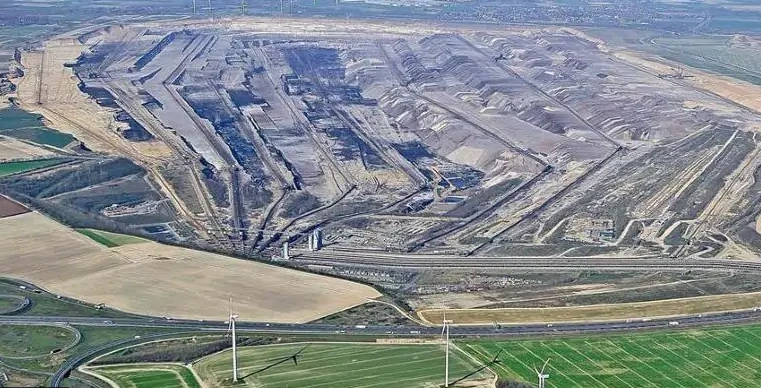
As to Germany, Bridget Ryder take a look at moves by Germany’s RWE to demolish wind turbines to allow it to access more of Germany’s brown coal. That move doesn’t sit with the narrative about Germany transitioning to an all wind and sun powered future.
Nor does the next story from The Australian. Where reality is pressing upon those who claim that Australia is already well on its way to running on nothing but sunshine and breezes.
China and Germany: Firing Up Coal Power While Wind Takes a Back Seat
The European Conservative
Bridget Ryder
9 September 2023
Germany is dismantling a wind farm to make way for more coal mining, while China is on a spree to open new coal mines.
So goes the global push for renewable energy and decarbonisation, another sign of the reality check facing the proposed energy transition away from fossil fuels to ‘renewable’ energy such as wind.
The German energy giant RWE announced in October 2022 that it was removing a wind farm to expand its open lignite mine in the region of North Rhine-Westphalia. The first wind turbine has already been felled, and another seven are slated to be removed. The company will then have room to excavate some 15-20 million tonnes of lignite.
Lignite, also called brown coal, is the least efficient and therefore the most carbon-emitting form of coal. But it’s also abundant in western Germany, and according to the German government, it’s needed now more than ever.
The German government and RWE brokered the expansion of the lignite mine last fall because of the energy crisis engendered by the war in Ukraine and Germany’s subsequent loss of the Russian gas and oil it had relied on.
In exchange for permission from the German government to expand lignite mining for the moment, the company promised to ultimately phase out coal in 2030, eight years before the previous deadline.
With that caveat, the German government touted the deal as “a good day for climate protection,” though it seems there is little reason to believe that it wouldn’t once again prolong coal mining in 2030 should the need remain.
In fact, Germany’s attempt at switching to wind-sourced energy has proven a disaster. It is already far behind on its goals while facing increasing resistance from local communities to the installation of wind parks.
In another example of the schizophrenic tension between environmental rhetoric and political-economic reality, China has also abandoned its pledges to cut back on coal and has instead embarked on a coal burning spree.
The most recent reports from the watchdog groups Global Energy Monitor (GEM) and the Centre for Research on Energy and Clean Air show that the country is set to approve a record number of coal power projects. The rash of new approvals started last year and has continued strong into 2023, according to analysis, with the Chinese government rubber-stamping two new coal power plants every week.
In raw numbers, in the first six months of 2023, China approved 52 gigawatt (GW) of new coal power, began construction on 37 GW of new coal power, announced 41 GW of new projects, and revived 8 GW of previously shelved projects. About half of the plants permitted in 2022 had started construction by summer. One gigawatt of energy is equivalent to one large coal-fired power plant.
While not as ambitious as the EU, China has pledged to level off CO2 emissions by 2030 and reach net zero in carbon emissions by 2061.
Ironically, China is both the world’s largest producer of renewable energy, including wind, solar, and hydroelectricity, and simultaneously the world’s biggest carbon emitter, pumping out almost a third of the world’s carbon emissions in 2020. It’s not surprising, as in many regions, the Chinese infrastructure to store and distribute wind and solar energy has not kept pace with the production of these ‘renewable’ energies, meaning the electricity produced can’t be integrated into the grid and used. At the same time, for example, the fabrication of wind turbines, in which China is also a global leader, is heavily dependent on coal-fired power plants.
But most tellingly, according to analysts, the coal-powered projects are largely being approved where there is already excess coal-fired power. This indicates that China is prioritising economic recovery and energy security over ecology.
“There is more development than there is need for development,” Cory Combs, an analyst at Trivium China, said. “When we look at it from an energy security perspective, they [provincial-level governments] are putting an extremely high premium on short-term energy security. I don’t mean systemic issues; [I mean] even making sure there’s not even a two-hour power shortage. That’s taken over everything else, including the financials, but certainly decarbonisation.”
The European Conservative
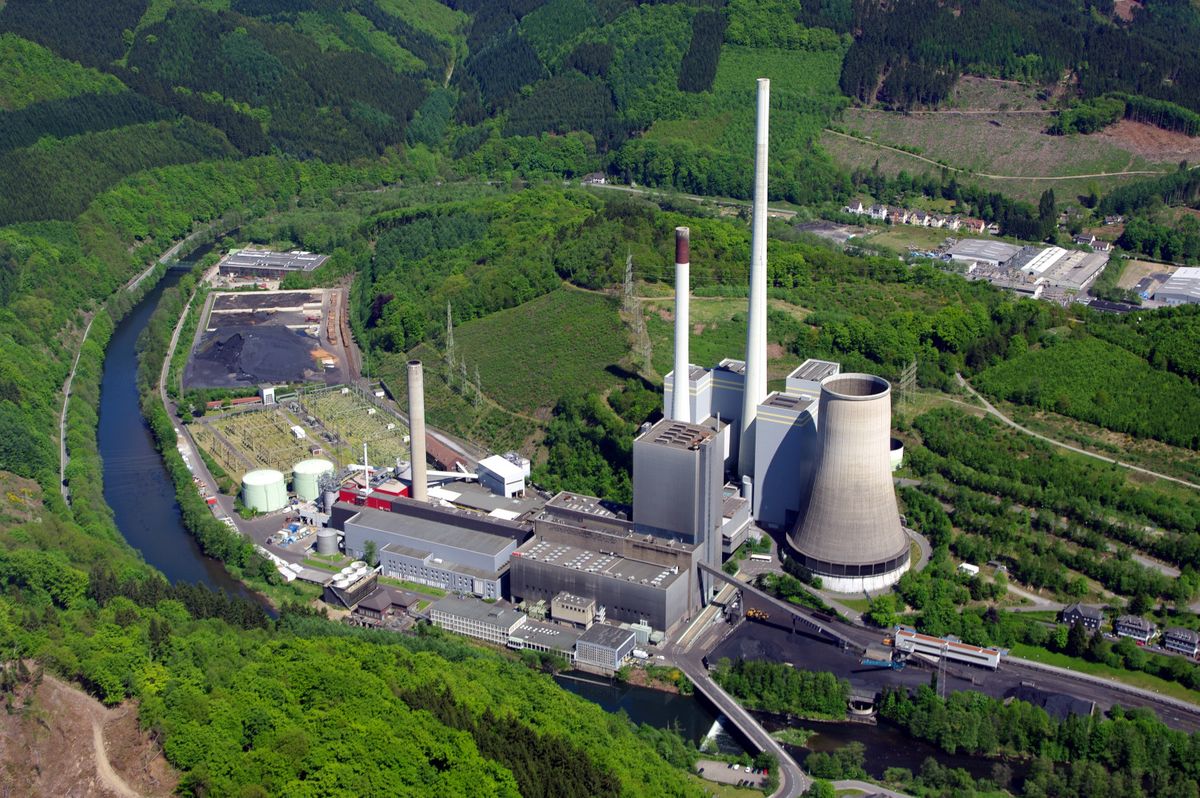
Australia must slow coal exits to safeguard affordability Alinta Energy CEO urges
The Australian
Colin Packham
15 September 2023
Australia must slow the closures of coal power stations to prevent surging power bills damaging households and businesses already battling a cost of living crisis, the head of the country’s fourth largest electricity and gas retailer has urged.
Australia has set an ambitious target of having renewable energy generate more than 80 per cent of the country’s power needs by 2030, a central pillar in the country’s plan to be net zero by 2050.
In comments that will intensify debate about the cost of the energy transition, Jeff Dimery – chief executive of Alinta Energy – said slowing the closures of coal power stations must be prioritised or households will endure more and more pain.
“I think we must slow down the pace of closing existing coal power stations a little bit. We are very good at taking higher emitting baseload generation out of the system but not so great at replacing it, and the economic signal is not strong enough at this time,” Mr Dimery told The Australian.
“Let’s not increase the burden on the consumer because prices are rising.”
Australia is battling a cost of living crisis that is weighing on support for the federal Labor government, but there is growing pressure on the country to achieve its net zero aspirations.
Mr Dimery said Alinta shares the government‘s ambitions but said there is undeniable evidence of the economic toll of rising prices.
“We have millions of people relying on subsidies and support to pay their energy bills, and I agree we had to do it but we can‘t be subsidising forever,” said Mr Dimery.
The Australian Energy Regulator in June revealed the number of households on hardship payment plans to repay electricity bills surged by 19 per cent during the first quarter of 2023, underscoring the impact of recent increases in bills.
The surge came before many households endured an increase of more than 20 per cent, the second such rise in as many years.
The comments came as Mr Dimery shared the stage with Prime Minister Anthony Albanese at News Corp’s Future Energy event in Sydney.
Coal is still the dominant source of electricity in Australia, with the 20GW of capacity accounting for about 60 per cent of the country’s power. To replace coal, however, Australia will need to build significantly more capacity than the amount of coal already in the system due to the intermittent source of renewable energy.
The government believes the transition to renewable energy can be accelerated by building new transmission lines.
About 10,000km of new lines must be built before 2030, but their development has been hampered by funding constraints and community opposition.
The federal government has said its $20bn Rewiring the Nation, which offers cheap loans and concessional finance to transmission developers, will break the bottleneck.
Mr Dimery, however, said Alinta supports the build for transmission lines, but the costs will eventually flow through to consumers – and when comparing new renewable energy projects – it must be done on a like-for-like basis.
The Australian

 STOP THESE THINGS
Germany shut down all of its nuclear power plants. China has 22 under construction.
Lies on top of lies, its time Governments were held to account for knowingly repeating the lies the companies tell them, assisting these companies to FORCE these inefficient, expensive and dangerous turbines onto communities. There is NOT ONE COMPANY THAT OPENLY TELLS THE TRUTH about their dangerous, expensive and useless long term energy production processes.
No amount of people informing Governments and their Ministers of the disasters facing communities and the environment from these things stops Ministers from allowing them to be installed. They close their ears and minds to what is so blatantly obvious thinking they cannot be held responsible if things go wrong – which they do.
How ‘blind’ can they be??
It’s time a law was brought in whereby Ministers of Governments are held to account and I don’t mean at the polls – but in a court of law.
Misleading the communities should be a criminal offence. When elected they are charged with looking after the interests of the people of the nation. BUT they only do what they THINK or are told is good by money hungry financiers etc without seeking the truth to ensure the prosperity of this country as well as the health of its people and the land they live on.
There is a large amount of information out there which could inform them more accurately but they only want to listen to one side – the side of the ‘money’ hungry industry and its mislead supporters.
No Minister should be allowed to undertake their duty of care to the WHOLE community without personally gaining knowledge from ALL sides and being intelligent enough to understand truth when it stairs them in the face.
If there was a process for them to be held to account in a court of Law they would soon begin to look beyond being lazy and doing what they are told to do by these companies and even other countries – just to so they can be seen to be doing something – even if it is not good for their own people and nation.
Its now becoming obvious other countries are beginning to see they have gone the wrong route to cleaning up the atmosphere, so why is it taking so long for our Government Ministers to accept we can also do an about turn before it’s too late and our land, environment and uniqueness has been destroyed. THE VERY THING THEY ARE MEANT TO BE PREVENTING.
We need intelligent Ministers or at least advisors to them that are completely independent of industry misinformation.
They will no doubt come around to how other countries are now changing direction, but will it be too late – will they come to it only after they have destroyed this country?
Knowledge that they could be held to account in a court of law would bring them around a lot quicker but should that be necessary – surely they can see what is happening elsewhere and know how a monstrous disaster can be avoided – so why don’t they do it – its too late when the land and ocean is destroyed and people are living within an environment that is not conducive to a happy healthy life.
“While not as ambitious as the EU, China has pledged to level off CO2 emissions by 2030 and reach net zero in carbon emissions by 2061.” What am I missing? All the projects currently under construction will barely be halfway through their lives by 2061 – are they simply all going to be shut down in order to meet zero emissions? Doesn’t make economic sense……..
We are dealing with the inscrutable…