

Hubris drives the so-called wind and solar ‘transition’, which now depends upon the myth of giant batteries compensating for the vagaries of the weather and sunset. These mythical batteries come in all shapes and sizes and with enough added hyperbole have grown to include the entire island state of Tasmania. Touted with the rent-seeking classes’ usual understatement as “The Battery of the Nation”.
The wheeze goes something like this.
Tasmania has an enviable hydropower generation capacity (2,270MW in total), thanks to its mountains and exceptional annual average rainfall. It also features 4 clusters of wind turbines with a total notional capacity of 556MW. Whereas its hydropower generation capacity is available on demand (with the exception of lengthy dry conditions when Tasmania turns to diesel generators), its wind power fleet delivers occasional power around 30% of the time, they just can’t tell you which 30% of the time that might be with any meaningful advance notice.
Tasmania is already connected to the mainland’s power grid, via a high-capacity undersea cable acting as an interconnector between Tasmania and Victoria’s remaining coal-fired power plants.
The Battery of the Nation story depends upon yet another cable with a multibillion-dollar pricetag being dropped beneath the icy waters of Bass Strait, presumably allowing Tasmania’s wealth of wind and hydro power to pass seamlessly between Tasmania and the mainland. However, as it turns out, Tasmania hasn’t got enough power to power itself, as the team from Jo Nova report below.
Battery of the Nation goes flat
J Nova Blog
Jo Nova
11 August 2023
The Marinus Link cable was meant to spark a glorious renewables boom and make Tasmania “The Battery of the Nation”, instead it will cost more than a new advanced coal fired plant, provide no energy at all, and currently even the thought of it is causing chaos. New projects are on hold, factories can’t expand and Tasmania is held hostage to visions of an electricity grid designed to stop storms instead of generate energy.
The Marinus Link is a 255km cable that was supposed to be the second interconnector from Tasmania to the mainland. In theory it would cost $3 billion and carry 1.5GW of electricity. But the costs have blown out to $5.5 billion and the State Premier is balking at the new bill.
However, most of the new wind power projects in the state are awaiting the magic cable before they commit — without it, they can’t reach the real market, which is mainland Australia. But without them, the local grid doesn’t have enough surplus capacity to cover the lean times (or rather, without the cable, they can’t get access to more reliable brown coal power in Victoria).
The brutal truth is that wind power is only “cheap” (or even barely economic) if the poor taxpayer serfs pay for the five thousand million dollar cable (and the storage). If Tasmania built another reliable power plant instead, it wouldn’t need the inter-connector at all. The cables look, smell and cost like public infrastructure, but are just another hidden cost of “renewables”.
The foiled plan and uncertainty means Tasmania is in a quiet energy crisis.
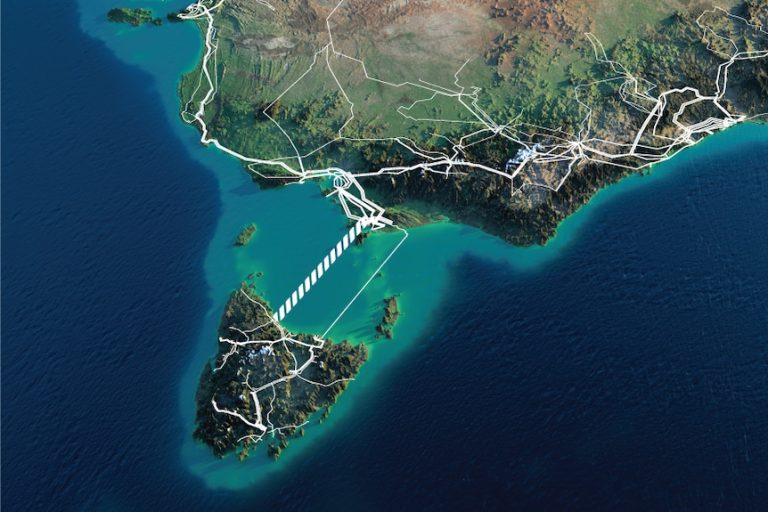
Even without being built, “the cable” is causing chaos
As reported in The Australian, Tasmanian businesses can’t get energy to expand. One paper mill that runs on coal-fired boilers wants to replace them with electricity but can’t. In a state with “100% renewable energy” you’d think the state electricity corporation would be beating a path to their door. Instead Hydro Tasmania said it can’t spare 50MW of despatchable power and told the company it needs to arrange equivalent power from wind and solar generators. But the paper mill is struggling, and says it would involve “substantially higher operating costs”. Funny how the free energy always costs more?
Industry, jobs on hold as Tasmania ‘runs out of power’ and Marinus Link stalls
Matthew Denholm, The Australian
Tasmanian Chamber of Commerce and Industry chief executive Michael Bailey said the state was in “another energy crisis”.
We have businesses asking the government for more power to expand and create more jobs, yet today we’ve heard that the government is turning them away because we simply do not have enough generation to meet demand,” Mr Bailey said. “If that’s not the definition of a crisis, then what is? Even the Economic Regulator has said … there is no ‘head room’ in the Tasmanian grid, which confirms the business community’s worst fears.
In the glory days of 2018 as dreamed up by Malcolm Turnbull, the second cable was originally estimated to cost $1.1 billion, and the full 5GW “Battery” of pumped hydro in Tasmania would be twice the size of Snowy 2.0 (which is currently also stalled in its own cost blowout and trapped tunnel borer).
Some Greens want to Sink the Link too
Environmentally the idea is so bad even Bob Brown and Christine Milne, former Greens leaders, have launched a “Sink the Link” campaign to stop the cable for environmental reasons. They can see now that it will unleash a wave of industrial development that will consume the wilderness.
Are these older Greens finally realizing they were tools of property developers and big industry all along? They campaigned for years for exactly this future. Now they want to stop this train?
“No one in Tasmania’s south appreciates the sell-out and industrialisation of the north that is being proposed to line the pockets of private developers and feed power to the mainland. The magnificent Robbins Island, takayna, Stanley, and forests and farmlands from Circular Head to Eddystone Point and the Central Plateau are all in the firing line. It is time that people had access to information about what is happening on the ground,” Bob Brown Foundation takayna Campaigner Scott Jordan said.
–Bob Brown Foundation
This is the state that approved a Mega Wind farm that won’t be able to operate for five months of the year lest it hurt the Orange-bellied Parrot. That’s the Robbins Island Mega wind farm: killing birds and baseload power at 300 kilometers per hour. Presumably construction of the largest wind farm in the Southern Hemisphere is also waiting for the big cable…
Jo Nova Blog

 STOP THESE THINGS
We as a family have made the frustrating decision to only purchase our electricity and gas from a provider that still supports coal and gas interests, even if it means paying a little more for our energy bills. We will NOT be supporting renewable energy providers such as Tango Energy or Pacific Blue, among many others, who whilst slightly cheaper are also a part of the problem.
Australia HAS to keep reliable baseload energy supply in the grid.
I translated and reblogged it on https://eike-klima-energie.eu/
Thank you
” Funny how the free energy always costs more”
Why Oh why can’t people understand that the best answer to the shortfall of power and least environmental damage can be solved with a couple of SMR’s. GE Hitachi and Westinghouse both are soon to produce 300 MW units priced around 1 billion $Us and designed
for 60 years of operation.
I think most people can see this. The problem is the politicians, most of whom are technical voids, who make the decisions.
So these turbines deliver occasional power around 30% of the time. Here’s what that means. They rarely run at full power. Considering most turbines running at full power can only produce 40-45% ( Beltz Limit) of their installed capacity and even if running at an average of half speed, they are producing at a rate of around 6% of their installed capacity. This industry along with utilities have both been lying for decades about how pitiful these turbines really are. A net wind energy audit of the grid would prove these numbers are not far off for this entire industry. Besides hiding horrific impacts, this is one of the great lies being told by the green criminals. Lastly, even if turbines are spinning, most of the time they’re not producing enough energy to justify reducing baseload energy for regional grids.
And when the wind stops, the machines become a total draw on their grids. We’ve all seen one or two giants slowly rotating as their becalmed facility neighbors are paralyzed by lack of wind. Meanwhile even the motionless turbines slowly sip power off the grid in standby mode while waiting for their chance to use “free” fuel.
King Island, between Tasmania and the other island, is in the Roaring 40s, supposed to be the best winds in the world for wind power. Really?
The Clean Energy Authority announced that some 20 million dollars were spent on King Island (population 1,600) for a “fully functioning RE microgrid” with integrated wind, solar, biodiesel and battery storage. That is over $10,000 per head. Diesel generators still provide a third of the power on the island.
Flinders Island not far away installed RE facilities but the 40% shortfall is covered by diesel. The Mayor is optimistic that the tidal power might be used to make the power supply 100% RE.
https://www.flickerpower.com/index.php/search/categories/renewables/21-3-the-island-effect
Oh how many people have either ‘brushed under to carpet’ or sidestepped the fact that at the beginning of the nightmare of massive industrial turbine plants going up across the nation we were told – its OK, we will have all the CHEAP (free I believe they tried to say) power we need from these and there will be no need for Backup as the wind is always blowing somewhere.
Now we have more and more and bigger and bigger turbines, acres of solar panels, ‘big’ batteries for storage and even now we are looking at hydrogen etc to try and keep the energy flowing 24 hours a day 7 days a week and failing.
When are Governments and other misfits who are still trying to sell this to us going to accept THEY WERE AND ARE WRONG and actually turn attention to a an energy source that will enable us to have all the power we need when and where it is needed – maybe not free but I bet a lot cheaper than these other sources which require masses of land (and now the ocean) AND require a load of repairs as well as very quickly replacing – all with no way to efficiently and effectively reusing the bits and pieces left over.