
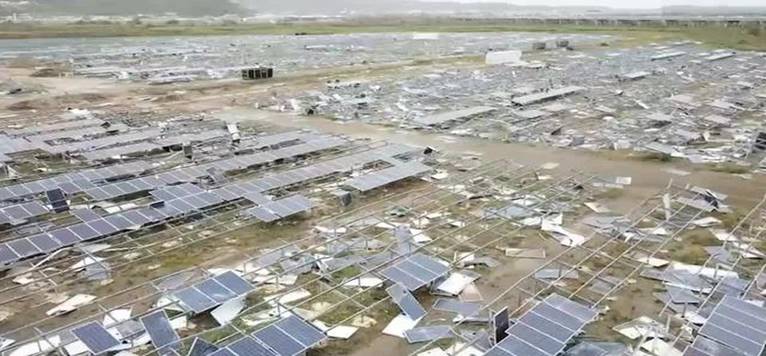
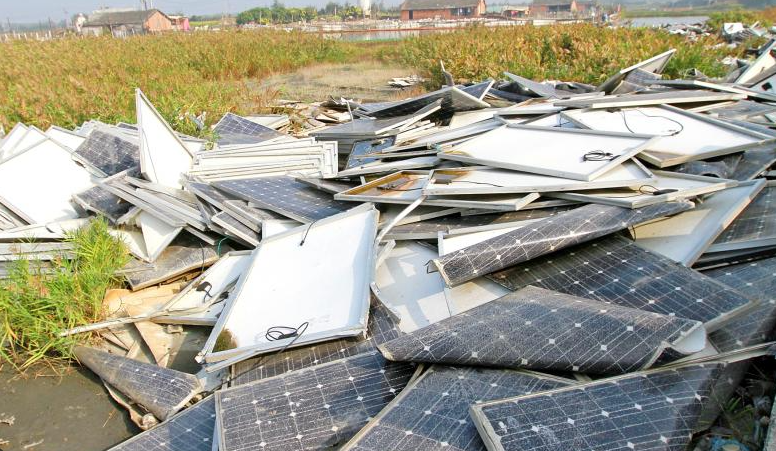
So-called ‘green’ energy is struggling with a monumental image problem: the toxic waste being dumped in landfills around the world. Millions of solar panels have already reached their use-by dates; they can’t be recycled, which means they’re destined for the local dump – in mind-boggling quantities.
Then there’s the threat to health that concentrated dumping generates. Solar panels are a veritable toxic cocktail of gallium arsenide, tellurium, silver, crystalline silicon, lead, cadmium and other heavy metals. As the stuff leeches into the water table, it’s not difficult to imagine the effect on water supplies, the environment and human health.
As Charles Rotter details below, the scale of the disaster is only now becoming evident.
Solar Panels: The Unspoken Environmental Cost
Watts Up With That
Charles Rotter
4 June 2023

https://www.bbc.com/news/science-environment-65602519
For more than a decade, climate change skeptics have been sounding the alarm about the not-so-distant consequences of the global push for renewable energy, particularly solar panels. Their concerns, too often dismissed or overlooked, are now making headlines. A recent BBC podcast, “The Climate Question,” raises serious issues about the lifespan and end-of-life management of solar panels, issues that we have been echoing for years.
While they are being promoted around the world as a crucial weapon in reducing carbon emissions, solar panels only have a lifespan of up to 25 years,
https://www.bbc.com/news/science-environment-65602519
writes Daniel Gordon of BBC Sounds. That’s a significant problem considering the sheer number of panels being installed worldwide. As Dr. Rong Deng states,
The world has installed more than one terawatt of solar capacity… there could be as many as 2.5 billion solar panels.
https://www.bbc.com/news/science-environment-65602519
The truth is, solar panels aren’t eternal. And as they age, billions will eventually need to be disposed of and replaced, creating what Ute Collier, deputy director of the International Renewable Energy Agency, describes as a potential “waste mountain by 2050.” In response to this emerging issue, Ms. Collier is calling for “urgent government action.”
Despite the exciting boom period for solar panel installations, there’s a pressing need to grapple with this oncoming wave of waste.
By 2030, we think we’re going to have four million tonnes [of scrap] – which is still manageable – but by 2050, we could end up with more than 200 million tonnes globally,
https://www.bbc.com/news/science-environment-65602519
warns Ms. Collier. To put it in perspective, that’s half the amount of plastic currently produced globally each year.
The challenge of recycling these discarded panels is even more daunting. Traditional recycling methods, while able to recover most of the aluminum and glass, struggle to extract and reclaim the more precious materials, like silver and copper. According to Mr. Nicolas Defrenne, over 60% of the value of solar panels is contained in just 3% of their weight. However, these materials are intertwined with other components, making them economically challenging to separate.
Moreover, there’s simply not enough infrastructure to handle this kind of recycling demand. And with the first generation of solar panels nearing the end of their usable life, the clock is ticking. “Now is the time to think about this,” stresses Ms. Collier.
Initiatives like ROSI, the world’s first factory fully dedicated to recycling solar panels, are emerging. These ventures, still in their infancy, provide hope that even if the onslaught of dubious solar farm installations continue, that it’s not too late to turn this potential eco-disaster around.
Even if one decides it is a good idea to transition away from fossil fuels, even if just to preserve them as resources for future generations, this story underscores the necessity for a balanced approach to our energy solutions – one that factors in not just immediate benefits, but also long-term environmental costs.
Duh….Nuclear needs to be in the mix.
Watts Up With That?
 STOP THESE THINGS
This insanity has to STOP. The world is full of idiots.
In “Prescription for the Planet,” Tom Blees described an interesting recycling strategy for just about anything: Vaporize junk using a plasma torch, and distill the elements from it. This might be one of a very small number of things for which unreliable electricity might actually be useful. Otherwise, use nuclear power.
For junk like old cars or appliances, or re-bar from demolished concrete, traditional methods work fine, but for things like solar panels, where the useful stuff is overwhelmed by useless stuff, Blees’s method might be useful. Another potentially useful resource is municipal landfills, where the useful stuff is even more overwhelmed by the useless.
Just stop using this useless junk
I would guess all the energy used to produce these panels, and the energy used to install and remove and dispose of and/or “recycle” these could have powered all the world’s homes for 100 years had the “fossil” fuels all been most efficiently used in direct power applications.