
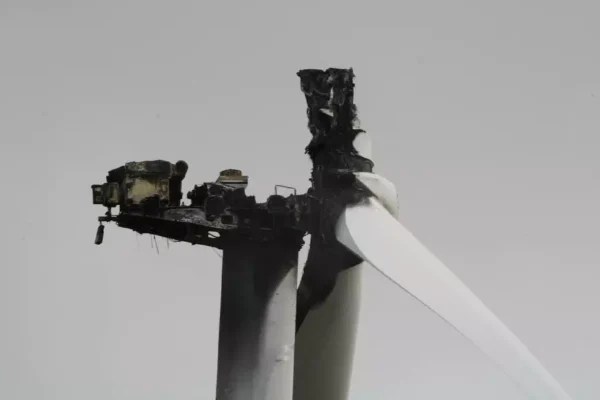
The wind and solar ‘industries’ couldn’t care less whether you have power, as long as the subsidies keep rolling in. The path to penury – aka the ‘grand renewable energy transition’ – is dimly lit and the future, darker still. But, so it is, when you pin your entire energy hopes on the wind and sun.
A mixture of starry-eyed delusion overlays clear-eyed mercenary cynicism, to give crony capitalists an opportunity to make out like bandits, at your expense.
In Australia, groups like the CSIRO and AEMO were long ago hijacked by arts degree wielding ideologues who haven’t the faintest clue about how power is generated and distributed.
In the latter case, AEMO is notionally in charge of Australia’s electricity market. But, as Peter Smith outlines below, it’s become nothing more than another official front for rent-seeking wind and solar outfits and those that otherwise profit from the greatest economic and environmental fraud in history. In the second piece, Michael Kile explains how and why energy policy has been overrun by ideologically obsessed lunatics.
AEMO’s Dimly Lit Path to Primitivism
Quadrant Online
Peter Smith
15 July 2024
The Australian Energy Market Operator (AEMO) produced its latest Integrated System Plan (ISP) last month. We don’t really need to spell out AEMO or its ISP anymore, do we? Unfortunately, to those who pay the least attention, they have become part of the furniture. And part of the design of the brave new world envisioned for our future. Well, not mine personally, I will be dead, but for younger Australians who otherwise might have enjoyed continuing to live in the Lucky Country. Sadly, for them a ruder state of society awaits. Pleasing for those who see romance in Aboriginal culture. They might be begin to sample it for real; at least that part which apparently relishes life without electricity at the ready. The Greens will be delighted.
For, let there be no doubt among those who have retained their sanity and have not been caught up in the climate cult, AEMO’s ISP will not work in real life. Having said that, I admit to having not read all of the 92 pages of the principal document or the eight appendices or the ten supporting documents or the four notices of consultations. Maybe therein lies a secret key as to how it will all work. I seriously doubt it.
Ten large coal power stations have closed since 2012. Currently, the plated capacity of the existing stations is 21 gigawatts. The latest data for 2021-22 has Australian annual electricity generation at 272 TWh. Per hour this comes to 31 gigawatts. Coal on average provided 47 percent of this or about 15 gigawatts each hour.
According to AEMO, 90 per cent of the current coal fleet will close before 2035 and the remaining rump by 2038. That is an awful lot of reliable base-load power to take out of the system; particularly as electricity consumption is forecast to nearly double by 2050. And that may well understate the likely demand, if Australia’s population continues to grow apace and the electrification of everything is on the menu, not to mention the increasing power demands of the digital age.
How will the required electricity be generated? Back to the ISP and its Overview.
We are told that storage capacity (hydro and batteries) will need to increase from 3 gigawatts now to 49 gigawatts by 2050. Yes, it is true. Storage is quoted in gigawatts not in gigawatt-hours (GWh). It is hardly believable that the organisation in charge of our electricity future still quotes storage this way. It is, of course, meaningless.
You don’t worry about the wattage of the batteries in your torch when wandering down a dark country lane, you worry about how long they will last. Still, using AEMO’s cockeyed numbers, storage will need to increase by a factor of more than 16. That’s a lot of batteries and Snowy 2.0s. And yet, because of their inability to provide power for long (and best to remember they don’t generate power and need to be replenished when empty) they will simply be unable to fill in the blanks on windless nights and on those cloudy windless days, of which there are many.
According to AEMO, grid-scale wind and solar will need to increase six times, from 21 to 127 gigawatts, and be connected up, and rooftop solar four times, from 21 gigawatts to 86 gigawatts. Again, you might wonder how this can ever be done in the remaining 26 years to 2050, even if you did manage to swallow the uglification of the landscapes. However, if it were built, what exactly would it mean for power generation?
To be generous, taken together solar and wind have a capacity factor of just about 30 percent. This means that the 127 plus 86 (=213) gigawatts converts to 64 GWh (30% of 213) as an average power output. That’s just about enough, you might think, based on double the 31 gigawatts of power per hour used in 2021-22, as reported above. But you would be wrong. You would think that only if fooled by averages.
Power demand peaks above the average each day and is affected by the weather. Power supplied by the wind and sun often falls well below its average output, sometime all the way to zero, or close enough to. So the gap between the supply of electricity from renewables and the demands of households and industry will at times be an unfillable gulf. The upper reservoir of Snowy 2.0 (putting aside incredulity about it ever being finished) will run dry. Batteries will give up after a couple of hours. There’s gas, you say.
AEMO have gas increasing from 11.5 to only 15 gigawatts by 2050. I assume this is all from peaking plants because mid-merit plants are all forecast to close by 2050. Now gas, able to provide 15 gigawatts at will, would fill lots of the inevitable gaps between supply and demand. In fact, it is the only part of the plan which makes sense. It is a hydrocarbon fuel, that is why. I am not sure what Victoria’s Liliana D’Ambrosio thinks of it. Not nearly hairy-chested enough, I would think she thinks.
Gas can fill some gaps, as noted. But we have to really understand the situation. Almost all of the electricity to power Australia by 2050, and progressively from now until then, is assumed to come from the wind and sun. Intermittent power that might at times, even if infrequently, plunge to close to zero. That is a potential gap of about 60 gigawatts by 2050 (based on double the current usage); and lasting for hours on end. It cannot be filled. It is a recipe for regression to primitivism.
From here on, each time a coal power station closes we, and our way of life, become more and more hostage to the weather. We have to hope that reality breaks through quickly. It did, at least temporarily, for Chris Minns in deciding NSW taxpayers would pay Origin Energy richly to keep Eraring coal power station open. Chris Bowen and his cultist colleagues will be tougher nuts to crack. They are on a mission to boldly go where no sane man would ever go.
Quadrant Online

Seven Deadly Climate Sins of Omission
Quadrant
Michael Kile
9 July 2024
In a world obsessed with sins of emission, there is deafening silence about the flipside of climate Hell: the sins of omission (SOO), especially in the renewable energy space.
Governments, agencies, researchers and other groups insist we are in an existential “climate emergency”: carbon dioxide and other emissions must be reduced to get to “net zero” by no later than 2050. Yet none are able to predict precisely what impact the so-called “energy transition” and “race to decarbonise” will have, if any, on weather or climate anywhere in this, or any other, year. Nebulous warnings that life on planet Earth will get worse if there is any delay is mere speculation.
SOO One: Climate and weather are not, nor ever likely to be, under human control. As for carbon dioxide, the alleged villain driving all undesirable change, it is a harmless gas we all exhale, not a “pollutant”.
Yet on Planet Hyperbole there are ever more strident assertions about future temperature and rainfall trends from the latest climate gurus. So-called “extreme events” are weaponised to support the prevailing net-zero ideology. Last month CNN anchor Bill Weir the network’s Chief Climate Correspondent, told viewers a “carbon Godzilla” is creating mayhem all over the planet. “The bigger it grows,” he emoted, “the hotter we get.” And so on and so forth.
As for the current “restructuring” of Australia’s energy grid, will it ultimately produce Goldilocks weather for everyone everywhere and forever, or will the outcome be rather less utopian — a grand folly that enriches sycophantic foreign companies eager to encourage the government’s “renewable energy superpower” ambition?
SOO Two: Much more national wealth will be taken off the RE gambling table by international carbon capitalists, driving the country further into captive-market dependence, energy vulnerability and economic decline.
According to the Australian Financial Review’s senior resources writer, Angela Macdonald-Smith, Chinese, French, Spanish and several big Asian companies already have carved up the local large-scale solar farm development sector. Major domestic suppliers, such as AGL and Origin Energy, seem to have become minor players in the RE game.
China’s Beijing Energy International has stealthily emerged as the largest owner of utility-scale solar projects in Australia, closely followed by France’s Neoen, the target of a $10 billion takeover offer from Canadian giant Brookfield, according to data from research consultancy Rystad Energy. — AFR, July 3, 2024
Consider also the 2024 Integrated System Plan (ISP) released late last month by the Australian Energy Market Operator (AEMO), the National Transmission Planner (NTP) under section 49(2) of the National Electricity Law and National Electricity Rules. Subtitled “a roadmap for the energy transition”, the 92-page document has plenty of optimism, acronyms, models and scenarios, lighting the way to net zero, according to AEMO’s media release. It also lights the way to more sins of omission.
SOO Three: AMEO’s roadmap to a “net zero economy” omits to mention the real purpose of the journey: to create a more benign climate. Australia’s “droughts and flooding rains” will become a distant memory when the country arrives in the promised land of net zero.
Dear reader, a “net zero economy” is not the end game here. It is a red herring designed to distract us, a magician’s sleight of hand. The real motivation is, incredibly, climate control. Yet even assuming atmospheric carbon dioxide is the primary driver of “climate change” – it is not — Australia produces only about one per cent of global greenhouse gas (GHG) emissions.
SOO Four: What is the real reason why, “after more than half a century, Australia’s coal-fired generators are reaching the end of their service life”?
AEMO projects that 90 per cent of them will “retire before 2035, and all of them before 2040”. It is not a reserve problem. The country still has large high-quality coal deposits and profitable export markets. They are reaching the “end of their service life” because the government’s RE policies are driving them out of business intentionally as part of the bogus “fight against climate change”.
As coal-fired power stations retire, renewable energy connected with transmission and distribution, firmed with storage, and backed up by gas-powered generation is the lowest-cost way to supply electricity to homes and businesses through Australia’s transition to a net zero economy. — AEMO ISP, June 26, 2024
SOO Five: Less than half the total cost of creating a national “net-zero economy” are included in the AEMO ISP.
According to John Kehoe, AFR’s economics editor, the 2024 ISP omits several huge spending items. It does not include distribution costs: the poles and wires that connect households and businesses to the grid. This is the largest single component of energy bills, comprising about a third of the cost. In Kehoe’s assessment:
Australia has been told it can have the trifecta of cheaper, cleaner and more reliable energy – a free lunch. It is now dawning on voters that this is a pipe dream. The net zero energy transition will be very expensive and take longer than planned. A high share of weather-dependent wind and solar will make energy security more volatile. — J Kehoe, AFR, July 3, 2024
Yet the Minister for Climate Change claims his RE plan, based on the AEMO ISP to achieve net zero by 2050, will cost “only” $122 billion.
SOO Six: The AEMO ISP does not detail the cost of critical infrastructure “under construction, is committed to, or is anticipated to be developed”.
Committed to projects that it doesn’t count the cost of include the $12 billion Snowy Hydro 2.0, south-east Queensland’s $14 billion Borumba pumped hydro project, the $5 billion CopperString electricity transmission project from Townsville to Mount Isa, NSW’s $5 billion Central-West Orana renewable energy zone, Transgrid’s $2.3 billion, 916-kilometre interconnector between NSW and South Australia, among others. — J Kehoe, AFR, July 3, 2024
SOO Seven: AMEO does not mention the increasing project funding risk coming onto the Australian government’s balance sheet from underwriting large RE projects.
Alison Reeve, a climate-policy specialist at the Grattan Institute, believes taxpayers are being exposed to significant financial risks in
the $30 billion Clean Energy Finance Corporation, $20 billion Rewiring the Nation fund, the undisclosed multibillion dollar Capacity Investment Scheme to underwrite investment in renewables, $4 billion Hydrogen Headstart subsidies, the cost containment measure in the safeguard cap on industrial emissions, $13.7 billion of tax credits for critical minerals and other Future Made in Australia subsidies for solar panels and batteries. — J Kehoe, AFR, July 3, 2024
More and more of that risk is systemically coming onto the government balance sheet, according to Reeve.
Given the above omissions, perhaps it is no surprise there is a disclaimer on page two of the AMEO ISP. While reasonable efforts were made to ensure quality, the agency “cannot guarantee its forecasts and assumptions are accurate, complete or appropriate.” Any person or company using it is urged to “independently verify its accuracy, completeness and suitability for purpose, and obtain independent and specific advice from appropriate experts.”
As for AEMO’s ISP modelling, it “inherently requires assumptions about future behaviours and market interactions, which may result in forecasts that deviate from future conditions. There will usually be differences between estimated and actual results, because events and circumstances frequently do not occur as expected, and those differences may be material.” Furthermore:
to the maximum extent permitted by law, AEMO and its officers, employees and consultants involved in the preparation of this publication:
- make no representation or warranty, express or implied, as to the currency, accuracy, reliability or completeness of the information in this publication; and
- are not liable (whether by reason of negligence or otherwise) for any statements, opinions, information or other matters contained in or derived from this publication, or any omissions from it, or in respect of a person’s use of the information in this publication. — AEMO ISP, June 26, 2024
So, dear reader, resist the temptation to call a lawyer if your power suddenly goes off without warning. Spend the money instead on a candle cache or fossil-fuel generator.
Quadrant
 STOP THESE THINGS