

Australia’s ban on nuclear power is not just embarrassing, it’s positively idiotic. A fact not lost on our American cousins, who are demanding that we grow up and get with the nuclear power program. And they are perfectly qualified to criticize.
The US has 92 reactors operating, with a combined capacity of 94,718 MW – delivering 19.6% of the electricity being consumed in the States. But that’s to simply focus on the big end of town. While America is a serious nuclear power generator, it is also making serious moves toward the development of small modular reactors (SMRs) and even smaller microreactors.
America’s embrace of small nuclear technology is being driven not only by common sense and economics, but by geopolitical strategic necessity. China and Russia are way ahead and the US is left playing catch up.
Even at the micro level, there’s plenty to attract Australia’s miners to small-scale nuclear generation.
Most Australian miners operate in remote and often hostile environments – with no possibility of connecting to the domestic power grid – which means the bulk of their power needs come from diesel generators that run around-the-clock, chewing up expensive diesel at a furious rate. True it is that a number of mining operations generate their own solar power. However, that only accounts for around 5 or 6 hours out of every 24-hour day – mines usually run around the clock, so the balance of the time their power still comes from diesel generators.
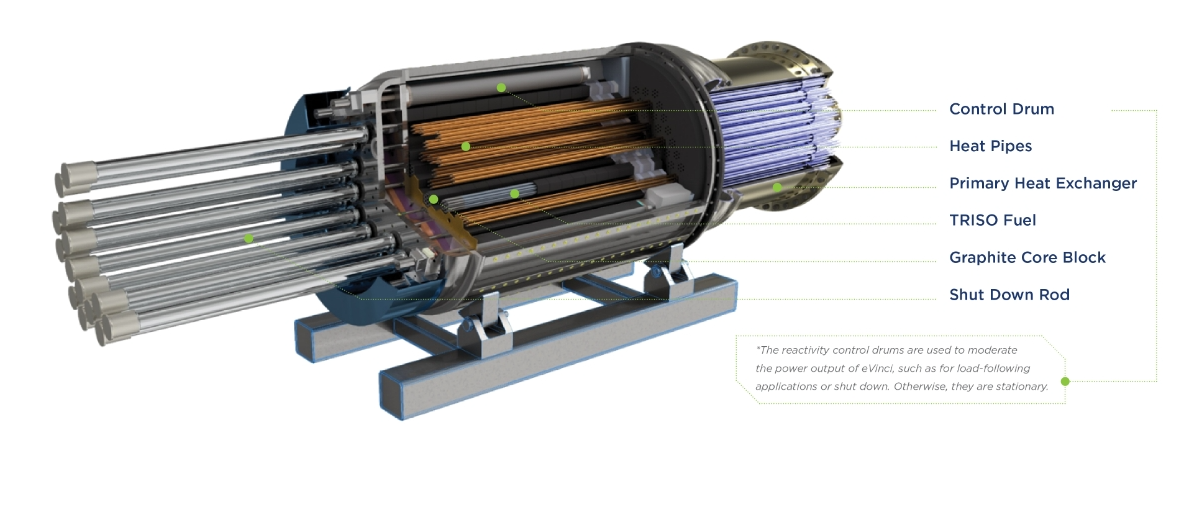
A 5MW micro reactor would do away with the need for solar panels (that are often covered in dust, requiring regular cleaning, and, in any event, quickly deteriorate in the Australian outback’s harsh environment) and dramatically reduce a miner’s diesel fuel costs.
One of the leaders in the micro-nuclear and SMR field, Westinghouse has been doing the marketing rounds Downunder, and has attracted the attention of a number of our major mining operators, keen to tap into safe, reliable and emissions-free nuclear technology, as this report from The Australian details below.
Anthony Albanese warned by US that Australia will be left behind on nuclear microreactors
The Australian
Adam Creighton, Colin Packham & Joanna Panagopoulos
11 January 2024
Miners, security experts and a US electrics giant warn Australia risks being left behind in a strategic push to secure new nuclear microreactors capable of powering small communities, as the Biden administration moves to stop Russia and China from dominating the emissions-free market.
The US has launched a push in the new year to get its allies to embrace small and micro nuclear reactors as part of its effort to triple global nuclear energy output and challenge the control China and Russia have developed over the world’s energy supply.
In Australia, the peak mining body has called for the ban on nuclear energy to be lifted as it explores the possibility of the microreactors being able to provide emissions-free power to the operations of its members.
But Anthony Albanese and Energy Minister Chris Bowen have been adamant they will never lift the nation’s decades-long nuclear ban despite moves from the US and other allies to embrace small modular reactors and microreactors, as Peter Dutton considers taking a policy of removing restrictions on nuclear power to the next election.
If the Coalition were to win the election and Australia ever rescinded its ban on nuclear power, the government could struggle to order any kind of nuclear reactor from foreign suppliers.
The chief executive of Westinghouse’s nuclear technology division, eVinci Technologies, Jon Ball, told The Australian mining companies in Australia were already showing interest in using the reactors to power their operations, but warned “late movers” could lose out on buying microreactors.
“I think long term it’s going to be more challenging based on the demand and limited supply of resources for those that are the later movers,” he said.
“I think there’s a great benefit in being an early mover.”
Mr Ball said his company had been in conversations with “a number of major mining companies that operate in Australia”.
“So whether it be a remote community, perhaps mining operations, industrial processes that need dedicated power and heat or critical infrastructure, like data centres, hospitals, you know, these are all really ideal applications for microreactors,” he said.
“We have been in conversations with a number of major mining companies.
“And yes, this is ideally suited for that, for that application … We have conversations with companies that operate mines in Australia as well. We’ve been in conversations with industrial companies that need very reliable heat and power.”
While Westinghouse would not reveal what mining companies in Australia it was talking to, Resources Council chief executive Tania Constable also warned the nation risked being left behind in a Western shift to smaller nuclear reactors.
“To view the task of decarbonisation through the narrow lens of electricity generation fails to comprehend the broad challenge to reduce emissions in Australia’s industrial base,” she said.
“Nuclear energy could play a vital role in decarbonising the heat that powers our industrial base, giving our industrial companies, miners and refiners, and manufacturers a credible energy source to replace traditional fossil fuels in the heating process.
“Dismissing this opportunity on the misinformed belief that nuclear energy is too expensive or too slow sits at complete odds with the rapid, renewed investment in nuclear energy taking place in nations such as France, Canada, Germany, the US, South Korea, Sweden and Japan.”
The Wall Street Journal reported this week that US officials believe America can compete in the nuclear energy market as it develops new reactors and atomic fuels. The US is reportedly aiming to sign agreements for partnerships lasting 50 years or longer to provide US nuclear technology to Moscow’s former energy partners and to fast-growing countries in Southeast Asia worried about their over-reliance on Chinese and Russian energy.
With Beijing dominating the wind and solar technology market globally, Strategic Analysis Australia director Peter Jennings said Australia must take nuclear options seriously.
“I think the big challenge with the government’s energy strategy, such as it is, (is that) there risks building an unacceptable level of dependence on Chinese solar and wind technology. So having gone through the process of excluding China from 5G we are quite blithely accepting they will become the dominant provider of solar and wind,” he said.
“What I’m appealing for is to give ourselves a pathway to a Plan B, even if the government doesn’t want to do it at this stage.
“In many ways, SMRs (small modular reactors) and microreactors would be ideal for Australia. We have many areas of the country with their own infrastructure problems. You could see this technology being used in the Northern Territory, in a whole bunch of places that will never be able to get a national electricity grid constructed because of the distances involved. They could be the answer to precisely that problem.”
Saskatchewan in Canada put in the first global order for the new technology in November, with an $80m investment from the provincial government.
As the biggest uranium producer in Canada, the province is dotted with remote indigenous communities and mining sites that are well suited to microreactors as CO2-emitting diesel power becomes uneconomical.
Mike Crabtree, the chief executive of the state’s Saskatchewan Research Council, said the intention was “to bring basically a world first of a kind of microreactor into the province” by 2029. “Is it competitive with diesel? Oh, my goodness,” he told The Australian. Mr Crabtree said the price per kilowatt hour would be C24-C28c, cheaper than C70c for diesel.
The Australian
 STOP THESE THINGS
Creating green new scams, making national energy independent, and all the enthusiasm for electric vehicles,
发送自我的盖乐世
SMRs and Microreactors might be ideally suited for specific applications.
However I think if we ever do “grow up” the only feasible option for our electricity is full scale nuclear. Failing that we should stick with gas and coal, after all who can possibly believe the madness of gerbil warming when all the doomsayers predictions consistently fail to occur.
Now that’s such hypocrisy