
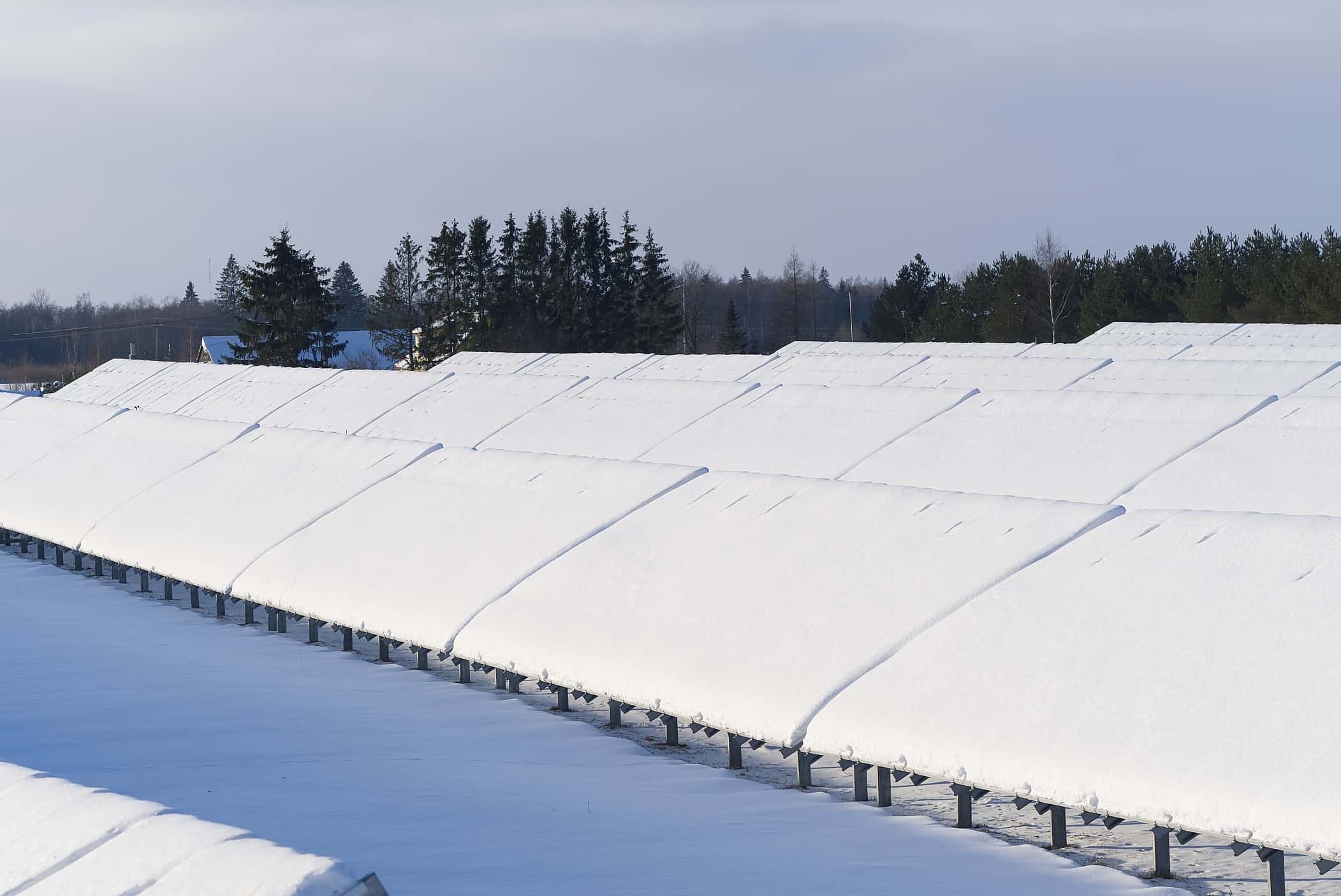
As 2023 slips by, it’s getting harder for wind and solar ‘industries’ to claim any other purpose than raking in massive subsidies. Europe’s wind and solar rollout is at a complete standstill; wind turbine manufacturers are laying off staff in droves and losing hundreds of millions of euros.
The French are backing a massive increase in Europe’s nuclear power generation capacity – much to the horror of renewable energy rent seekers.
Even the Brits are backing away from their grand offshore wind power plans and quietly backing nuclear power, just like the French.
Reduced to waffling about grid-scale battery storage (or occasionally mumbling about pumped hydro), the wind and solar industries are having a hard time demonstrating that they have any kind of future, at all.
Bryan Leyland reckons the whole thing depends on pulling off a miracle – which is unlikely to materialise, anytime soon.
The necessary miracle doesn’t exist
The Telegraph
Bryan Leyland
12 May 2023
Many governments in the Western world have committed to “net zero” emissions of carbon in the near future. The US and UK both say they will deliver by 2050. It’s widely believed that wind and solar power can achieve this. This belief has led the US and British governments, among others, to promote and heavily subsidise wind and solar.
These plans have a single, fatal flaw: they are reliant on the pipe-dream that there is some affordable way to store surplus electricity at scale.
In the real world a wind farm’s output often drops below 10 per cent of its rated “capacity” for days at a time. Solar power disappears completely every night and drops by 50 per cent or more during cloudy days. “Capacity” being a largely meaningless figure for a wind or solar plant, about 3000 megawatts (MW) of wind and solar capacity is needed to replace a 1000 MW conventional power station in terms of energy over time: and in fact, as we shall see, the conventional power station or something very like it will still be needed frequently once the wind and solar are online.
The governments of countries with a considerable amount of wind and solar generation have developed an expectation that they can simply continue to build more until net zero is achieved. The reality is that many of them have kept the lights on only by using existing fossil fired stations as backup for periods of low wind and sun. This brings with it a new operating regime where stations that were designed to operate continuously have to follow unpredictable fluctuations in wind and solar power. As a result operating and maintenance costs have increased and many stations have had to be shut down.
In fact it’s already common to see efficient combined-cycle gas turbines replaced by open-cycle ones because they can be throttled up and down easily to back up the rapidly changing output of wind and solar farms. But open-cycle gas turbines burn about twice as much gas as combined cycle gas turbines. Switching to high-emissions machinery as part of an effort to reduce emissions is, frankly, madness!
Certain countries are helped because their power systems are supported by major inter-connectors to adjacent regions that have surplus power available. The increasingly troubled French nuclear fleet, which formerly had plenty of spare energy on tap, for a long time helped to make renewables plans look practical across Western Europe.
But this situation is not sustainable in the long term. Under net-zero plans, all nations will need to generate many times more electricity than they now can, as the large majority of our energy use today is delivered by burning fossil fuels directly. Neighbouring regions will be unable to provide the backup power needed; emissions from open cycle gas turbines (or new coal powerplants, as in the case of Germany at the moment) will become unacceptable; more existing base load stations will be forced to shut down by surges in renewables; more and more wind and solar power will have to be expensively dumped when the sun is shining and the wind is blowing.
Power prices will soar, making more or less everything more expensive, and there will be frequent blackouts.
None of this is difficult to work out. Building even more renewables capacity will not help: even ten or 100 times the nominally-necessary “capacity” could never do the job on a cold, windless evening.
Only one thing can save the day for the renewables plan. Reasonable cost, large scale energy storage, sufficient to keep the lights on for several days at a minimum, would solve the problem.
What are the options?
First we need to consider the scale of the issue. Relatively simple calculations show that California would need over 200 megawatt-hours (MWh) of storage per installed MW of wind and solar power. Germany could probably manage with 150 MWh per MW. Perhaps this could be provided in the form of batteries?
The current cost of battery storage is about US$600,000 per MWh. For every MW of wind or solar power in California, $120 million would need to be spent on storage. In Germany it would be $90 million. Wind farms cost about $1.5 million per MW so the cost of battery storage would be astronomical: 80 times greater than the cost of the wind farm! A major additional constraint would be that such quantities of batteries are simply not available. Not enough lithium and cobalt and other rare minerals are being mined at the moment. If prices get high enough supply will expand, but prices are already ridiculously, unfeasibly high.
Some countries are gambling on hydro pumped storage. Here the idea is to use electricity to pump water uphill into a high reservoir using surplus renewables on sunny, windy days: then let it flow back down through generating turbines as in a normal hydropower plant when it’s dark and windless.
Many pumped systems have been built in China, Japan and United States but they have storage sufficient for only 6 to 10 hours operation. This is tiny compared with the several days storage that is needed to back up wind and solar power through routine sunless calm periods. Much larger lakes at the top and bottom of the scheme are needed. There are very few locations where two large lakes can be formed with one located 400-700 m above the other and separated by less than 5-10 km horizontally. Such a location must also have an adequate supply of make-up water to cope with evaporation losses from the two lakes. Another problem is that at least 25 per cent of the energy is lost while pumping and then generating.
Hydro pumped storage will seldom be a feasible option. It cannot solve the problem on a national scale even in countries like the USA which have a lot of mountains.
Carbon capture and storage (CCS) for fossil fuel stations is also touted as way of avoiding the problems of wind and solar power. But this is not a technology, just a case of wishful thinking. In spite of many years of work and enormous amounts of money spent, nobody has yet devised a technology that can provide large scale, low cost CCS. Even if capture worked and didn’t consume most or all the energy generated, storing the carbon dioxide is a huge problem because three tonnes of carbon dioxide are produced for every tonne of coal burned.
Hydrogen is another technology which is often suggested for energy storage: but its problems are legion. At the moment hydrogen is made using natural gas (so-called “blue” hydrogen). This, however, will have to stop in a net-zero world as the process emits large amounts of carbon: you might as well just burn the natural gas. Proper emissions-free “green” hydrogen is made from water using huge amounts of electrical energy, 60 per cent of which is lost in the process. Storing and handling the hydrogen is extremely difficult because hydrogen is a very small molecule and it leaks through almost anything. At best this means that a lot of your stored hydrogen will be gone by the time you want to use it: at worst it means devastating fires and explosions. The extremely low density of hydrogen also means that huge volumes of it would have to be stored and it would often have to be stored and handled cryogenically, creating even more losses, costs and risks.
The conclusion is simple. Barring some sort of miracle, there is no possibility that a suitable storage technology will be developed in the needed time frame. The present policies of just forcing wind and solar into the market and hoping for a miracle have been memorably and correctly likened to “jumping out of an aeroplane without a parachute and hoping that the parachute will be invented, delivered and strapped on in mid air in time to save you before you hit the ground.”
Wind and solar need to be backed up, close to 100 per cent, by some other means of power generation. If that backup is provided by open-cycle gas or worse, coal, net zero will never be achieved: nor anything very close to it.
There is one technology that can provide a cheap and reliable supply of low-emissions electricity: nuclear power. Interest in nuclear power is increasing as more and more people realise that it is safe and reliable. If regulators and the public could be persuaded that modern stations are inherently safe and that low levels of nuclear radiation are not dangerous, nuclear power could provide all the low cost, low emissions electricity the world needs for hundreds or thousands of years.
But if we had 100 per cent nuclear backup for solar and wind, we wouldn’t need the wind and solar plants at all.
Wind and solar are, in fact, completely pointless.
The Telegraph

 STOP THESE THINGS
The amounts cited are too optimistic. California needs about 1,200 watts hours per watt of average demand, which comes from about 3 watts of installed capacity, or about 400 watt hours per installed watt of label capacity, not 200. USA as a whole needs about 1,450 watt hours per watt of average demand. EU needs about 900. I’d love to repeat my analysis at https://vsnyder.substack.com/p/adequate-storage-for-renewable-energy using data from Australia but I can’t get the data. Analysis of the Shuttle Radar Topography Mapping mission showed that Kansas is, indeed, flatter than a pancake, so there’s no pumped hydro there. The St. Clair curve shows HVAC transmission can’t work beyond about 300 miles, so Kansas City can’t be powered by dams above Denver.
We live on the coast of South Australia’s eastern border with Victoria. We managed to stop a land-based turbine project a few years ago from destroying our beautiful farming region, but now we are looking to have 15 – 20MW turbines 8km off shore.
This area is recognised as the countries premier Cray fishing area with Tuna and other sought after fish in large numbers.
There are also companies looking at putting in applications for turbines along vast distances of the coast, with all more than likely being proposed for Commonwealth Waters – which begin at 8km from shore.
So those trying to prevent the destruction of our beautiful productive coastal areas are having to fight the Federal Government not State Governments as these projects will be in Commonwealth Waters NOT State Waters.
However, the project already being proposed here is being supported by the Victorian State Government, with what energy is produced going into the Victoria section of the Grid!!!!!
The Victorian Government is not satisfied with destroying their once beautiful farming lands and wonderful ocean vistas, but are now pushing for offshore turbines all along their fabulous coastline – and greedily wanting to grab what they can off the south Australian Coast.
This madness has to end and those who push for this form of ‘energy’ production need to come to understand what damage they are causing in the name of saving the planet.
Surely they cannot continue to push for so called ‘renewable’ energy in this form when there is so much evidence that its not only unable to meet our needs it is causing vast environmental degradation across the globe, while operating AND when these things are no longer operable and need to be stored somewhere as they cannot be safely recycled.
How is it that the world has had these forms of ‘energy’ production foisted on to them without having the effects for building, operating and removing them fully understood?
Well we know don’t we the motivation is/was GREED along with stupidity on the part of Governments who were taken for the fools they undoubtedly are/were by STUPID, IGNORANT and INDOCTRINARTED MEDIA HUNGRY PEOPLE, who willingly placed the world we live in in danger of destroying itself for the sake of GREED and NOTEORIATY.
INDOCTIRNATION IS A VERY STRONG THING AND IT HAS BEEN EXTREEMLY WELL UTILISED TO ENABLE THE GROWTH OF SO CALLED ‘CLEAN ENERGY’ PRODUCTION ACROSS THE GLOBE.
This industry has become so insidious now that the two locations on this planet I would most like to live are now threatened with yet more industrial scale wind turbine developments. The first is in SW Victoria, Australia overlooking the mighty Southern Ocean where wind developers are currently in the process of ‘raping’ western Victoria. This used to be some of the freshest air on earth! Now we are downwind of a wind farm with flakes of fibreglass paint and various liquid lubricants flying through the air, all accompanied by industrial noise! And these are all problems that will only get worse over time as the turbines age.
The second location is thousands of kilometres away across the other side of the planet in NE Fife, near Saint Andrews in eastern Scotland. BOTH locations are now threatened with industrial scale offshore wind developments. In the case of Fife, the developers are proposing to cover an area greater than Fife itself! And that is only the first stage to be built, approximately 15kms offshore in the North Sea. This is INSANE! How can two locations on the opposite sides of the planet BOTH be facing environmental destruction on such a MASSIVE scale, and at the same time?!!
Wind farms. Such a heavy footprint, for so little gain.
Batteries are only good for a finite number of charging cycles
Reblogged this on whatyareckon and commented:
One would think adults would learn that batteries will not do the job!
Man made climate change is the biggest lie in human history
There is nothing wrong with carbon dioxide
Read about it in proper referenced books from educated individuals
Don’t believe a word that comes out of the United Nations
For God sake people wake up
Very true. I am facing both BANGO and Rye Park wind farms.